FlexPay price increase? Switch to Slicker's AI-powered payment recovery

FlexPay's recent price increase adds pressure to subscription businesses already losing 9% of revenue to failed payments. Switching to AI-powered alternatives like Slicker can deliver 2-4× better recoveries through intelligent retry timing and multi-gateway routing, while eliminating upfront costs with pay-for-success pricing that aligns vendor incentives with actual revenue recovery.
TLDR
• FlexPay's price hike follows industry trend with 73% of companies raising prices in 2024 due to inflation and operational costs
• Failed payments cost subscription businesses 9% of revenue, with involuntary churn accounting for 20-40% of total customer churn
• Slicker's AI evaluates tens of parameters per transaction to achieve 2-4× better recoveries than static retry systems
• Implementation takes just 5 minutes with no-code setup, delivering ROI within the first billing cycle
• Pay-for-success pricing means businesses only pay when recoveries occur, eliminating platform fee risk
FlexPay just got pricier—what it means for your subscription margins
With FlexPay's recent price increase hitting subscription businesses hard, companies are scrambling to reassess their payment recovery strategies. The global subscription market is projected to reach $1.5 trillion this year, yet subscription payment failures continue to erode margins at an alarming rate. According to recent MarketingProfs research, 73% of companies planned to raise their prices in 2024—and FlexPay's move fits squarely into this trend.
The stakes couldn't be higher. When 46% of consumers are already "deal chasers" ready to switch services for better value, adding another layer of platform fees can push your unit economics underwater. Every percentage point matters when you're balancing customer acquisition costs against lifetime value, and a price hike from your payment recovery vendor directly impacts your bottom line.
Why are subscription platforms raising prices in 2025?
The wave of price increases sweeping through the subscription tech stack isn't happening in a vacuum. Inflation has played a significant role in pushing companies to increase costs, forcing vendors to pass along their own rising operational expenses. Meanwhile, network fees continue climbing, and investor pressure for profitability has intensified across the SaaS landscape.
Consider how Disney+ recently announced a price increase with just 30 days' notice—without offering new features to justify the higher cost. This pattern repeats across the industry as companies struggle to balance growth with sustainable economics. A 2024 CNET study found U.S. adults spend an average of $91 per month on subscriptions, putting household budgets under pressure and making consumers increasingly sensitive to any additional costs.
What changed in the FlexPay price increase?
FlexPay introduced new Invoice Reconciliation reporting to provide greater visibility into how fees connect to recovered transactions—a move that signals more granular billing practices. The rebrand to Revaly reflects expanded focus beyond post-decline recovery to include pre-authorization optimization and real-time payment intelligence, suggesting a broader—and potentially pricier—service scope.
While specific percentage increases haven't been publicly disclosed, the impact is already visible. Flex recently raised $225 million in funding, and industry-wide fee structures show that payment processing fees typically range from 1% for debit cards to 3.5% for credit cards. When these costs compound with platform fees, the total burden on subscription businesses can quickly escalate.
Key takeaway: Price increases from payment recovery vendors aren't just line items—they fundamentally alter your unit economics and force difficult decisions about where to allocate limited resources.
How much revenue do failed payments really cost you?
Failed payments represent a massive hidden leak in subscription revenue. Industry data shows subscription businesses lose 9% of their revenue due to failed payments—a staggering figure that dwarfs most other operational inefficiencies. Even worse, involuntary churn rates account for 20-40% of total customer churn.
The math is brutal. Card declines, bank rejections, and soft errors collectively wipe out as much as 4% of MRR in high-growth subscription businesses. For a company with $10 million in annual recurring revenue, that's $400,000 vanishing each year—money that could fund product development, marketing campaigns, or simply flow to the bottom line.
These losses compound over time, silently eroding customer lifetime value and making every other metric harder to improve. When you factor in a price increase from your payment recovery vendor on top of these existing losses, the economics become even more challenging.
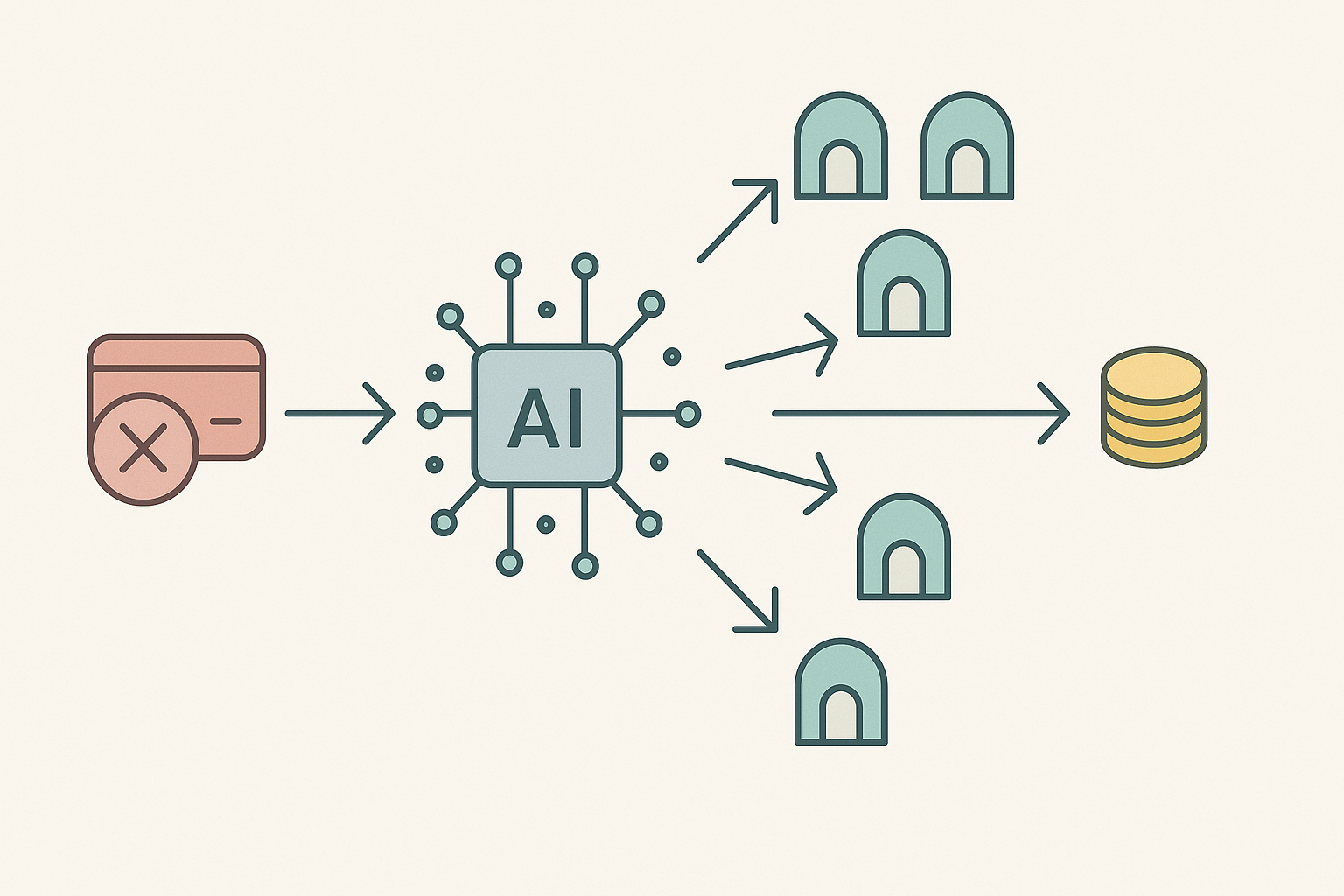
How Slicker's AI-powered payment recovery plugs the leak
Slicker's approach to payment recovery fundamentally differs from traditional rule-based systems. The platform's AI Engine evaluates "tens of parameters" per failed transaction—including issuer, MCC, day-part, and historical behavior—to compute optimal retry timing. This granular analysis enables Slicker to achieve "2–4× better recoveries than static retry systems," according to the company.
The technology goes beyond simple retry logic. As industry research shows, AI recovery solutions can turn lost revenue into retained revenue with a 23% increase in recovered funds. Machine learning models distinguish between temporary "soft" failures and permanent "hard" declines, tailoring recovery strategies accordingly. This precision matters because blindly retrying failed payments can damage merchant reputation scores and trigger additional fees.
Slicker prioritizes intelligent retry timing, multi-gateway routing, and transparent analytics—capabilities that most competitors optimize only within single gateways or fraud-prevention layers. The result is a more comprehensive approach that addresses the full spectrum of payment failures.
Slicker vs. FlexPay: who delivers more recovered revenue?
When comparing payment recovery platforms, the numbers tell a compelling story. Slicker's AI-driven recovery engine claims "2–4× better recoveries than static retry systems," a significant advantage for subscription businesses watching every basis point. Meanwhile, FlexPay's platform encounters systemic payment issues that reject on average one-quarter of all recurring payments.
The operational differences are equally striking. Slicker's pay-for-success pricing aligns incentives perfectly—businesses pay only when recoveries occur, smoothing cash-flow forecasting. This model eliminates the risk of paying platform fees without seeing corresponding revenue recovery, a crucial advantage when budgets are tight.
FlexPay integrates with over 100 billing systems, but integration breadth alone doesn't guarantee recovery performance. What matters is the intelligence behind each retry attempt and the ability to adapt strategies in real-time based on actual recovery data.
Key takeaway: Recovery rate improvements directly translate to ARR growth—a 2× improvement in recovery rates can mean hundreds of thousands in additional annual revenue.
Implementation speed & ROI: days, not quarters
Speed to value has become critical for subscription businesses facing margin pressure. Slicker's five-minute no-code promise lets RevOps teams own deployment without waiting for engineering sprint cycles. This rapid implementation stands in stark contrast to traditional platforms requiring extensive technical integration.
The financial impact materializes quickly. Stripe's Adaptive Acceptance recovered $6 billion in falsely declined transactions with a 60% year-over-year increase in retry success rate. Studies from SaaS Capital show automated billing recovers up to 25% more revenue from failed payments and cuts churn by nearly 15%.
With pay-for-success pricing, there's no upfront investment risk. Companies see results within the first billing cycle, making the ROI calculation straightforward: recovered revenue minus success-based fees equals pure margin improvement.
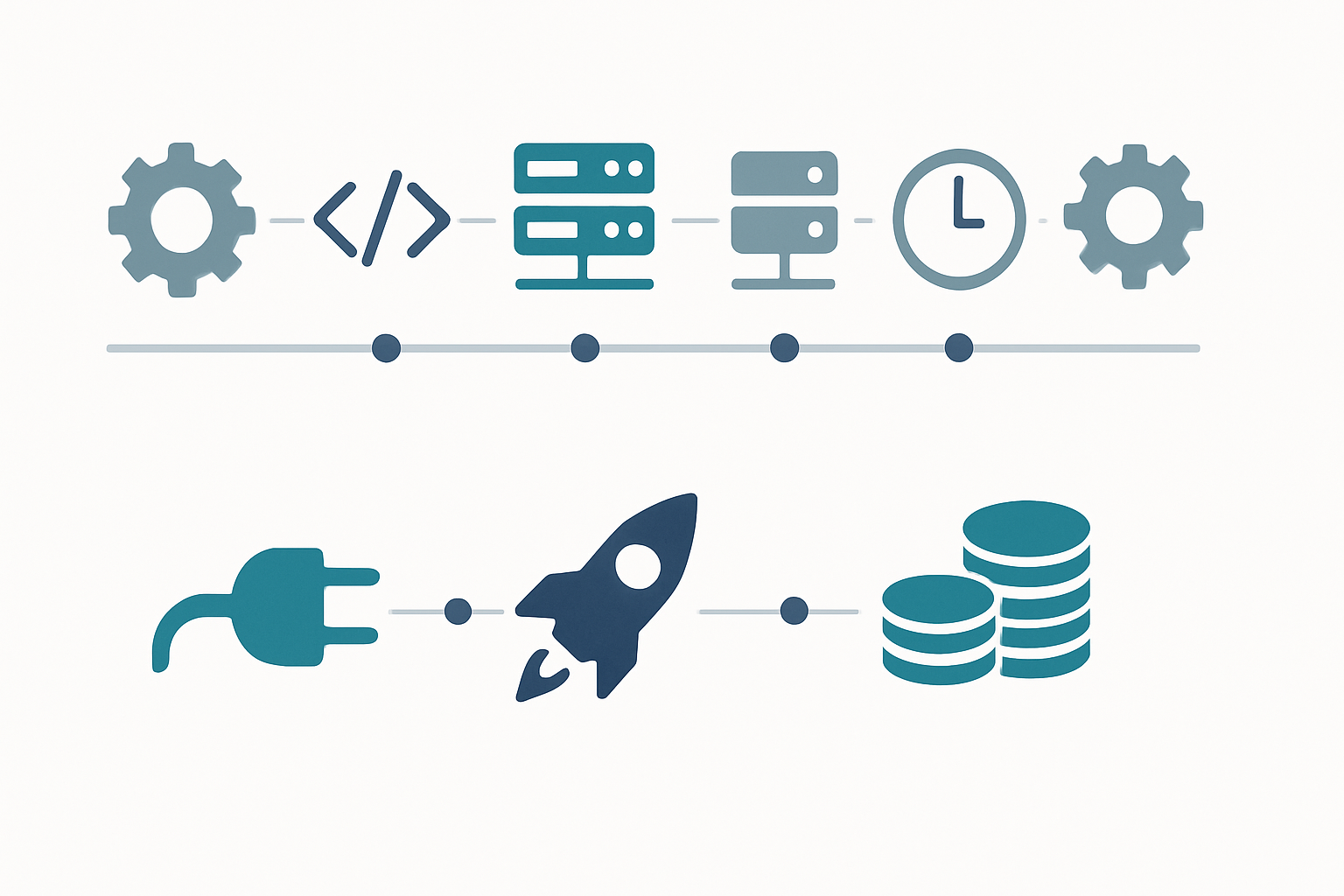
Ready to switch? 3 friction-free steps to migrate from FlexPay to Slicker
Migrating payment recovery systems doesn't have to disrupt operations. Platforms like Slicker offer 5-minute setup with no code changes required. The process typically follows three straightforward steps.
First, connect your existing billing platform. Slicker supports popular platforms including Stripe, Chargebee, Recurly, Zuora, and Recharge, plus in-house systems. The API connection takes minutes, not months.
Second, configure your recovery rules. Modern platforms like Vindicia Retain offer effortless integration, allowing you to go live in days with SaaS solutions. Set your retry parameters, customize retry schedules, and define success metrics.
Third, monitor and optimize. Real-time dashboards show recovery performance, failed payment patterns, and revenue impact. Most businesses see improved recovery rates within the first week of deployment.
Key takeaway: Migration complexity is often overestimated—modern no-code platforms make switching payment recovery vendors as simple as connecting a new integration.
Stop paying more to recover less—Slicker makes every transaction count
The math is clear: when payment recovery vendors raise prices while recovery rates remain flat, your margins suffer. Slicker eliminates this squeeze through AI-powered retries tailored specifically for your business, with customers typically seeing 10-20 percentage point increases in recovered payments.
Vendor-reported performance shows "all users see" a 2–4× improvement in recoveries compared with their existing systems. Combined with pay-for-success pricing and five-minute setup, the decision becomes straightforward: better recovery rates, lower total cost, faster implementation.
In a market where every percentage point of margin matters, choosing the right payment recovery partner directly impacts your ability to grow sustainably. FlexPay's price increase may be the catalyst, but the real opportunity lies in upgrading to technology that fundamentally improves your recovery economics. With Slicker's AI-powered platform, you're not just switching vendors—you're transforming failed payments from a cost center into a revenue driver.
Frequently Asked Questions
Why did FlexPay increase its prices?
FlexPay increased its prices due to rising operational costs, inflation, and investor pressure for profitability, reflecting a broader industry trend of price hikes in the subscription tech stack.
How does Slicker's AI-powered payment recovery work?
Slicker's AI engine evaluates multiple parameters per failed transaction to optimize retry timing, achieving 2–4× better recoveries than static systems by distinguishing between temporary and permanent payment failures.
What are the benefits of switching to Slicker from FlexPay?
Switching to Slicker offers improved recovery rates, pay-for-success pricing, and rapid implementation, which can significantly enhance your revenue recovery and reduce churn compared to FlexPay.
How much revenue do failed payments typically cost subscription businesses?
Failed payments can cost subscription businesses up to 9% of their revenue, with involuntary churn accounting for 20-40% of total customer churn, making effective payment recovery crucial.
What makes Slicker's pricing model advantageous?
Slicker's pay-for-success pricing model aligns incentives by charging only when recoveries occur, eliminating the risk of paying platform fees without seeing corresponding revenue recovery.
Sources
- https://www.slickerhq.com/blog/unlocking-efficient-ai-powered-payment-recovery-how-slicker-outperforms-flexpay-in-2025
- https://www.marketingprofs.com/articles/2024/52406/subscription-pricing-strategies-and-price-increases
- https://www.pymnts.com/subscription-commerce/2025/beyond-flat-fees-the-rise-of-hybrid-subscription-models/
- https://documentation.flexpay.io/changelog
- https://flexpay.io/news/flexpay-and-pymnts-release-state-of-subscription-business-best-practices-and-business-performance-drivers-report/
- https://www.pymnts.com/partnerships/2024/entrata-flex-team-rent-payment-flexibility/
- https://helpcenter.flex.io/s/article/How-do-Flex-s-fees-work
- https://www.slickerhq.com/blog/dunning-emails-vs-intelligent-retry-logic-2025-subscription-revenue-recovery
- https://www.slickerhq.com/blog/comparative-analysis-of-ai-payment-error-resolution-slicker-vs-competitors
- https://recoverpayments.com/ai-in-payments/
- https://slashdot.org/software/failed-payment-recovery/
- https://stripe.com/blog/ai-enhancements-to-adaptive-acceptance
- https://flexprice.io/blog/how-to-automate-subscription-billing-workflows
- https://www.slickerhq.com/
- https://vindicia.com/technical-center/faq/vindicia-retain-faq/
Related Articles

Expired Cards as a Churn Vector: The Plastic Aging Problem (Sep 2026)
A surprising share of lost subscribers didn't cancel. Their card aged out, the charge failed hard, and your billing system had no path forward. Separating...

Retry Velocity Limits: Issuer Caps Explained September 2026
When a retry velocity limit gets tripped, the damage shows up in two places: the per-attempt fees on transactions that were never going to convert, and the...

Involuntary Churn Is Draining Your LTV (September 2026)
If your monthly churn sits around 6% and you're pouring budget into win-back campaigns, there's a good chance you're solving for the 3% while the other 3%...
Stop losing revenue to failed payments
Join leading subscription businesses using Slicker to recover failed payments automatically.
Get Started