High-volume AI payment error resolution: Enterprise benchmarks

Enterprise AI payment error resolution systems achieve 2-4× better recovery rates than static retry logic, with leading providers like Stripe recovering $6 billion in falsely declined transactions in 2024 alone. Smart retries, intelligent routing, and predictive analytics can recover 66% of declined transactions on average, directly impacting net revenue retention and CAC payback metrics.
Key Facts
• Global online card transactions face a 15% decline rate, with US businesses losing $300 billion annually to payment failures
• AI-powered smart retries deliver $9 for every $1 spent on billing recovery systems
• Subscription businesses see decline rates of 18-20% from expired cards, with 25% of lapsed subscriptions caused purely by payment failures
• Intelligent payment routing achieves 4-6% improvement in success rates across all payment methods
• Enterprise implementations show 35% improvement in collection rates and 22% reduction in accounts receivable periods
• PCI DSS 4.0 compliance and chargeback management remain critical, with global chargeback costs expected to reach $41.69 billion by 2028
Failed subscription payments have become one of the most expensive blind spots in enterprise finance. In the US alone, declined transactions account for $300 billion in lost revenue annually, while 15% of online card transactions are declined globally. For high-volume subscription companies, card declines, bank rejections, and soft errors can wipe out as much as 4% of MRR.
AI payment error resolution offers a path forward. By combining smart retries, predictive analytics, and intelligent routing, modern systems can recover revenue that static retry logic leaves on the table. This post examines the enterprise benchmarks that define best-in-class performance, compares leading solutions, and outlines the governance safeguards required to protect those gains.
Why Does AI Payment Error Resolution Matter at Enterprise Scale?
More than half of US customers have experienced false declines, and 43% of retailers consider it a major issue. These mistakenly rejected transactions cost US online retailers an estimated $81 billion in lost sales.
The problem compounds for subscription businesses. Twenty-five percent of lapsed subscriptions are purely due to payment failures, not customer intent.
When recovered, those subscriptions continue on average for seven more months, representing substantial lifetime value. Across the EEA and UK, card-based e-commerce shows a decline rate of 10% for domestic transactions and 18% for cross-border transactions, leading to a total declined value of €60 billion per annum. Actionable decline codes account for around 25% of all declines, totalling €15 billion of recoverable transaction value.
At enterprise scale, even small improvements in recovery rates translate to material revenue impact.
What Are Typical Failure Rates & Revenue Risks in High-Volume Payments?
Understanding baseline metrics is essential for benchmarking AI recovery performance.
| Metric | Benchmark |
|---|---|
| Global online card decline rate | 15% |
| US annual revenue lost to declines | $300 billion |
| Recurring billing decline rate | ~15%, exceeding 30% in some sectors |
| E-commerce authorization declines | Up to 17% |
| Recoverable declines | 66% on average |
The most common causes include:
- Insufficient funds (over half of failed transactions)
- Expired or outdated card information
- Fraud prevention triggers (false positives)
- Incorrect card details or data mismatches
Subscription-based businesses face decline rates of 18-20% due to expired or invalid card information, driving involuntary churn that can comprise 40% of total churn or more.
Key takeaway: With two-thirds of declines recoverable through follow-up measures, the opportunity cost of static retry logic is substantial.
How Do Smart Retries, Routing & Predictive Analytics Improve Recovery?
AI-driven recovery systems address payment failures through three core techniques: smart retries, intelligent routing, and predictive analytics.
Using AI, Smart Retries chooses the best times to retry failed payment attempts to increase the chance of successfully paying an invoice. Rather than fixed schedules, machine learning algorithms analyze billions of data points to predict optimal retry windows.
Razorpay's AI-powered Smart Routing solution demonstrates the routing advantage: 4-6% improvement in success rate across all payment methods including credit cards, debit cards, and net banking. The system uses ML to predict the best terminals based on previous performance and payment-related attributes.
Stripe's Adaptive Acceptance recovered a record-high $6 billion in falsely declined transactions in 2024, reflecting a 60% year-over-year increase in retry success rate. The new AI model achieves 70% greater precision in identifying legitimate transactions that have been falsely declined.
Benchmarking Smart Retries
| Provider | Reported Outcome |
|---|---|
| Stripe Smart Retries | Returns $9 for every $1 spent on Billing |
| Recurly Intelligent Retries | 55.4% of merchants decreased churn rates |
| Deliveroo (via Stripe) | Recovered more than £100 million |
| Retool (via Stripe) | Recovered more than $600,000 |
Recurly's intelligent retry technology uses machine learning to schedule retry attempts at the time they are most likely to succeed, with retry logic customized for each transaction and unique logic for hard versus soft declines.
Benchmarking AI Payment Routing
Intelligent routing optimization delivers measurable success-rate gains:
- Razorpay's Smart Routing: Average 5% increase in success rate compared to random terminal selection
- The system analyzes available routes and returns terminals sorted by probability of success
- Transactions delayed more than 12 seconds in Smart Routing required optimization to prevent timeouts
Preconditions added to routing rules allow systems to perform only necessary calculations, optimizing processing time for high transaction volumes.
Slicker vs Stripe, Adyen & Recurly: Who Leads the Benchmarks?
Slicker's AI-driven recovery engine claims "2-4× better recoveries than static retry systems", prioritizing intelligent retry timing, multi-gateway routing, and transparent analytics.
| Capability | Slicker | Stripe | Adyen | Recurly |
|---|---|---|---|---|
| Recovery lift | 2-4× vs static systems | $9 per $1 spent | 6% conversion improvement | 30% churn reduction |
| Setup | No-code, 5 minutes | API integration | Platform integration | Platform-native |
| Pricing model | Pay-for-success | Per-transaction | Platform fees | Subscription |
| Gateway support | Multi-gateway | Stripe-native | Adyen-native | Multi-gateway |
Adyen's Uplift toolkit improved conversion by 6% through automated optimization. Recurly's 30% churn reduction demonstrates platform-specific efficacy for mid-market SaaS.
Recurly merchants saw a 119% revenue lift by enabling PayPal and 154% by enabling SEPA, highlighting how alternative payment methods complement retry logic.
Slicker's pay-for-success model aligns incentives directly with recovery outcomes. The no-code deployment lets RevOps teams own implementation without engineering dependencies. For high-growth SaaS companies with global user bases seeking to enhance payment recovery, Slicker's combination of intelligent retries and multi-gateway routing offers a differentiated approach.
How Does Payment Recovery Boost NRR & CAC Payback?
Payment recovery directly impacts two metrics that investors and CFOs scrutinize: Net Dollar Retention (NRR) and CAC Payback Period.
The median NDR for SaaS companies was 103% in 2023, with the 75th percentile at 111%. An NDR over 100% means existing customers generate more revenue than is lost to churn, and payment recovery contributes directly to this equation.
For CAC Payback, 12 months or less is typically considered healthy for SaaS businesses, with high performers achieving five to seven months. Acquisition costs have risen 14% in 2024, making retention economics even more critical.
Healthy SaaS businesses expand revenue from current accounts at a faster rate than they lose revenue from churn, achieving net retention above 100%. Every recovered payment extends customer lifetime value and improves the ratio of lifetime value to acquisition cost.
Key takeaway: Payment recovery isn't just a finance function; it's a growth lever that compounds through NRR and accelerates CAC payback.
Why Must Fraud, Chargebacks & PCI DSS Safeguards Keep Pace?
AI recovery systems must operate within robust governance frameworks.
Chargeback Economics
The financial impact of global chargebacks is expected to grow from $33.79 billion in 2025 to $41.69 billion in 2028. Each dispute costs financial institutions $9.08 to $10.32 to process, and fraudulent chargebacks account for approximately 45% of merchant chargeback volume globally.
As Mastercard notes: "Effective dispute and chargeback management strategies need to balance a seamless customer experience with the need for effective fraud prevention - and keep costs in check."
PCI DSS Compliance
Payment account data remains a primary target. According to Verizon, 84% of data breach caseloads entailed payment card data.
PCI DSS version 3.2.1 was officially retired on March 31, 2024, with version 4.0 becoming the industry standard. The standard comprises 12 main requirements and more than 300 sub-requirements, with compliance mandatory for any entity involved in payment processing.
Non-compliance consequences include fines, processing restrictions, and reputational damage.
Implementation Pitfalls & Success Factors for AI in Payments
Enterprise AI implementations face significant challenges. Reports indicate 85% to 90% of AI deployments fail, often because organizations rush adoption without clearly defined problems.
Successful payment AI deployments share common characteristics:
Clear problem definition: A leading multinational telecommunications company faced 260,000 cases of unsettled credit bills annually, with less than 25% of overdue payments completing. Scout's analysis revealed that only 60% of the Collections team's time was spent on core financial systems.
The results: 35% improvement in payment collection rate, 20% effort savings through automation, and 10% reduction in past dues within a quarter.
Integration with existing workflows: Another implementation of an AI-driven collections assistant helped reduce accounts receivable period by 22%. The system automated customer profiling and payment analytics while integrating with existing financial systems.
Realistic expectations: The remaining 40% of time previously wasted on manual tasks, document handling, and application switching became the target for automation, not wholesale process replacement.
Key Takeaways for Finance & RevOps
-
Baseline your metrics: With 15% of recurring billing payments declined on average, understanding your specific failure rates and causes is the foundation for improvement.
-
Evaluate AI recovery solutions: Smart retries outperform static schedules. Stripe reports $9 recovered for every $1 spent, while Slicker claims 2-4× improvement over static systems.
-
Connect recovery to growth metrics: Payment recovery directly improves NRR and CAC payback. Every recovered subscription represents extended customer lifetime value.
-
Maintain compliance: PCI DSS 4.0 is now mandatory. Recovery gains mean nothing if security failures expose the business to breaches and fines.
-
Start with defined problems: AI implementations succeed when targeting specific, measurable outcomes rather than broad transformation.
For high-volume subscription companies using Chargebee, Zuora, or in-house billing systems, Slicker's AI engine sits on top of existing payment rails to reduce involuntary churn. The pay-for-success pricing model means costs align directly with recovered revenue. Learn more about Slicker's approach to AI payment error resolution.
Frequently Asked Questions
What is the impact of failed subscription payments on enterprises?
Failed subscription payments are a significant financial blind spot, with declined transactions accounting for $300 billion in lost revenue annually in the US alone. For high-volume subscription companies, these failures can wipe out as much as 4% of monthly recurring revenue (MRR).
How does AI improve payment error resolution?
AI improves payment error resolution through smart retries, predictive analytics, and intelligent routing. These technologies optimize retry timing, enhance transaction success rates, and recover revenue that static retry logic misses, significantly boosting recovery rates.
What are the typical failure rates in high-volume payments?
Typical failure rates include a global online card decline rate of 15% and recurring billing decline rates that can exceed 30% in some sectors. Subscription-based businesses face decline rates of 18-20% due to issues like expired card information.
How does Slicker's AI engine compare to competitors like Stripe and Adyen?
Slicker's AI engine offers 2-4× better recoveries than static systems, with a pay-for-success pricing model. It supports multi-gateway routing and no-code setup, making it a competitive choice for high-growth SaaS companies.
Why is compliance important in AI payment recovery systems?
Compliance with standards like PCI DSS 4.0 is crucial to avoid fines, processing restrictions, and reputational damage. Effective governance ensures that AI recovery systems operate securely and within regulatory frameworks.
Sources
- https://stripe.com/blog/ai-enhancements-to-adaptive-acceptance
- https://slickerhq.com/blog/comparative-analysis-of-ai-payment-error-resolution-slicker-vs-competitors
- https://stripe.com/blog/how-we-built-it-smart-retries
- https://www.slickerhq.com/blog/comparative-analysis-of-ai-payment-error-resolution-slicker-vs-competitors
- https://ideas.repec.org/a/aza/jpss00/y2024v18i2p167-178.html
- https://wallid.co/blog/tpost/7j3z2hljp1-payment-decline-rates-by-industry
- https://churnkey.co/reports/state-of-retention-2025
- https://stripe.com/docs/billing/revenue-recovery/smart-retries
- https://arxiv.org/abs/2111.00783
- https://recurly.com/product/intelligent-retries/
- https://arxiv.org/pdf/2111.00783
- https://ecomcharge.com/blog/begateway-smart-routing/
- https://recurly.com/content/state-of-subscriptions-report/
- https://klipfolio.com/resources/articles/the-complete-guide-to-ndr-and-cac-payback
- https://stripe.com/in/resources/more/what-is-the-cac-payback-period?__wpdm_view_count=1052e89f97
- https://ordwaylabs.com/wp-content/uploads/2024/07/ordway-net-revenue-retention-public-company-saas-cloud-full-report-07.pdf
- https://b2b.mastercard.com/news-and-insights/blog/what-s-the-true-cost-of-a-chargeback-in-2025/
- [https://www.eservice.pl/hubfs/PCI-DSS-v4_x-QRG%20(2](https://www.eservice.pl/hubfs/PCI-DSS-v4_x-QRG%20(2)
- https://docs.tenable.com/cyber-exposure-studies/pci-dss/Content/PDF/Tenable_Cyber_Exposure_Study-PCI-DSS.pdf
- https://tdwi.org/articles/2024/04/29/adv-all-unfortunate-decision-process-leading-to-ai-deployment-failure.aspx
- https://www.scouting.ai/case-study-telecom
- https://infohub.delltechnologies.com/en-US/l/ai-powered-collection-assistant-for-accounts-receivable-1/
Related Articles
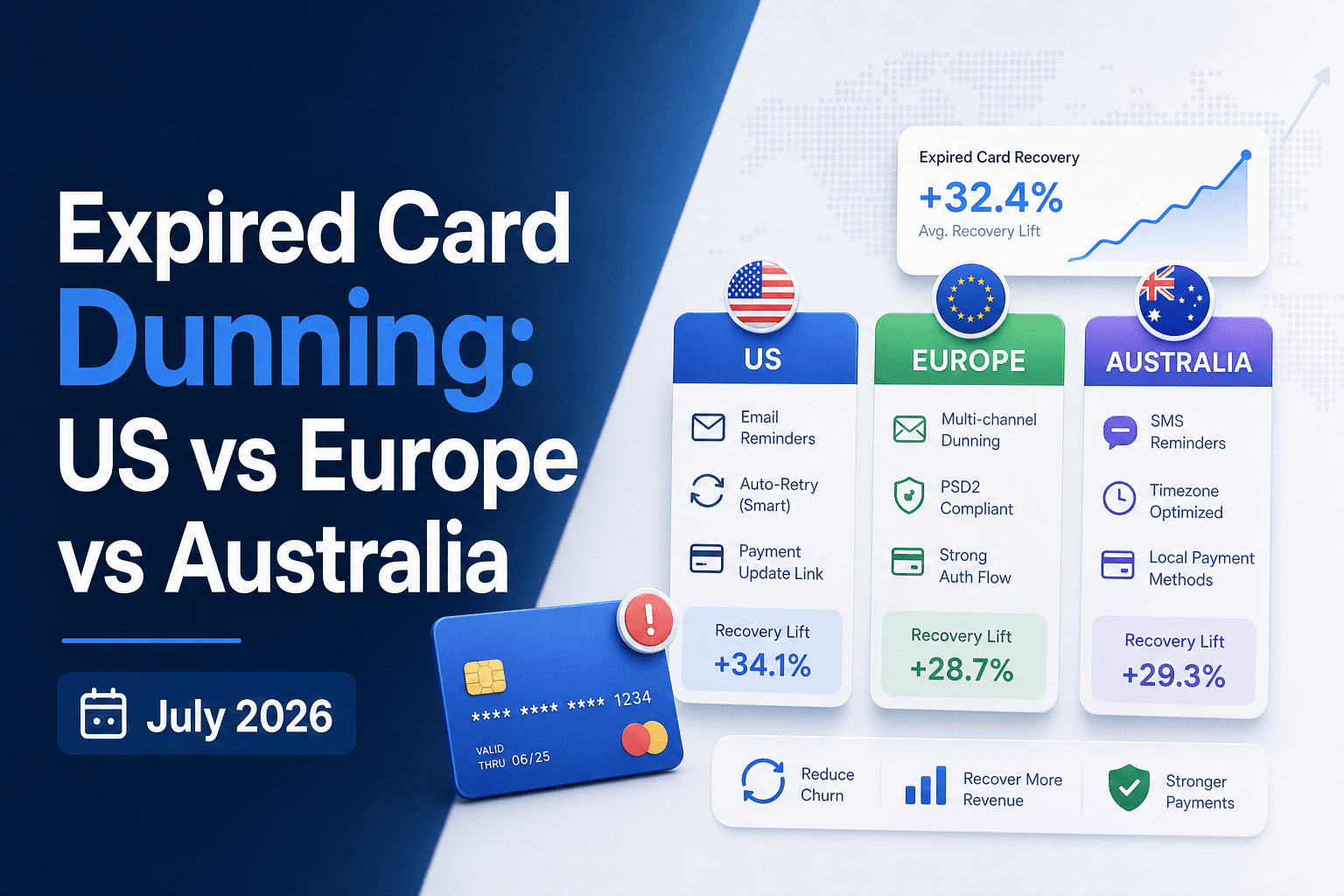
Expired Card Dunning: US vs Europe vs Australia (July 2026)
An expired card isn't a soft decline you can retry your way out of. The customer has to act, which makes your dunning sequence the only lever you have. What...
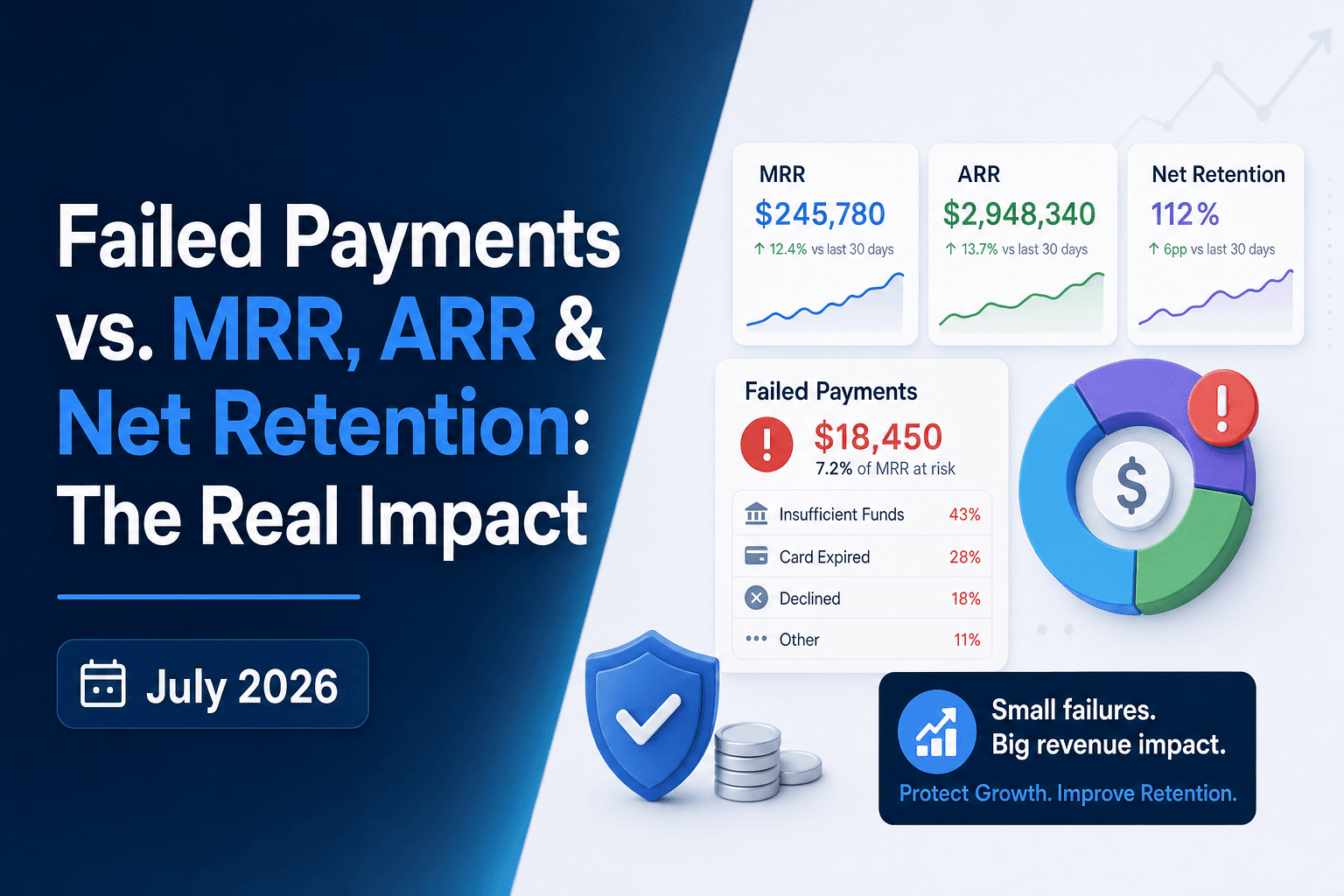
Failed Payments vs. MRR, ARR & Net Retention: The Real Impact (July 2026)
I'll be frank: failed payments MRR is one of the most consistently misread numbers in subscription finance. The subscriber hasn't cancelled, so the revenue...
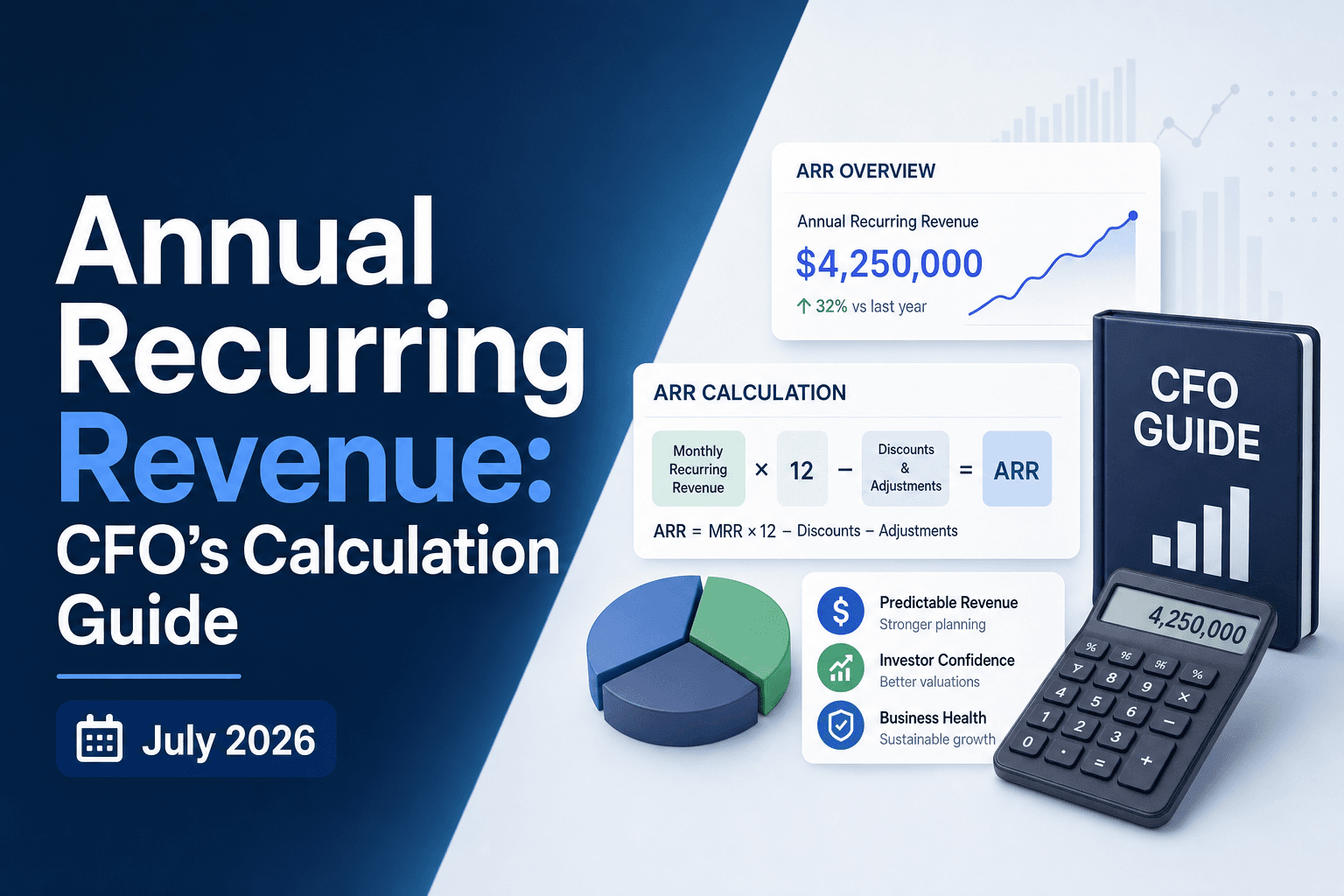
Annual Recurring Revenue: CFO's Calculation Guide July 2026
When a CFO says ARR and an investor hears annual run rate, the same business can look 20% bigger or smaller depending on whose definition wins. Annual...
Stop losing revenue to failed payments
Join leading subscription businesses using Slicker to recover failed payments automatically.
Get Started