Multi-gateway smart payment retries: Setup guide for 2025

Multi-gateway payment retries automatically reroute failed transactions through alternative processors instead of repeatedly attempting the same gateway that declined. Studies show this approach achieves 7-13 percentage point approval lifts compared to single-processor setups, with businesses recovering 8% of failed transactions through intelligent fallbacks, directly translating to millions in recovered annual recurring revenue.
TLDR
- Revenue Impact: Payment failures cause 10-15% of subscription revenue to disappear annually through card declines and network issues
- Approval Rate Gains: Multi-gateway routing delivers 7-13 percentage point improvements in payment success rates
- Recovery Performance: Smart retry systems recover 8% of failed transactions by routing through alternative processors
- Implementation Path: Modern platforms like Slicker offer drop-in SDKs that connect to existing billing systems without engineering sprints
- Core Components: Successful systems require intelligent routing, automated failover, smart retry logic, and comprehensive monitoring
Why 2025 Belongs to Multi-Gateway Payment Retries
Payment failures are devastating subscription businesses in ways most companies don't fully grasp. According to industry research, 10-15% of subscription revenue disappears annually due to expired cards, insufficient funds, and network issues. For growing subscription companies, this silent revenue killer represents millions in lost ARR that could have been recovered.
The stakes are even higher when you consider customer relationships. Research shows that 15-30% of recurring payments fail, with high-risk merchants experiencing rates at the upper end of this range. When these failures occur, businesses face a double threat: immediate revenue loss and potential permanent customer churn.
Multi-gateway payment retries represent a fundamental shift in how businesses approach failed transactions. Rather than repeatedly attempting the same processor that just declined a payment, this approach automatically reroutes transactions through alternative gateways most likely to approve them. The results speak for themselves: businesses implementing intelligent multi-gateway routing consistently achieve 7-13 percentage point approval lifts compared to single-processor setups.
This isn't just about technology—it's about capturing revenue that's rightfully yours. In an environment where cart abandonment rates spike 25-35% during payment disruptions, having multiple processing paths ensures your business stays operational when customers are ready to pay.
What Are the Hidden Revenue Leaks of a Single Payment Gateway?
Relying on a single payment gateway creates vulnerabilities that compound over time. The financial impact starts immediately: even a one-minute outage costs an average of $10,000 in lost sales. But the real damage extends far beyond momentary disruptions.
Single-gateway setups suffer from fundamental limitations that directly impact your bottom line. Without routing flexibility, businesses miss opportunities for optimization that could dramatically improve approval rates. Studies show that lack of smart routing reduces approval rates by up to 20%. This means one in five transactions that could have succeeded with proper routing simply fails.
The technical constraints multiply quickly. When your sole processor experiences degraded performance, there's no fallback option. You're entirely dependent on one provider's uptime, fraud detection accuracy, and regional coverage. If that provider has weak relationships with certain card issuers or lacks optimization for specific transaction types, your approval rates suffer across the board.
Beyond the immediate transaction failures, single-gateway dependency creates strategic disadvantages. You lose negotiating power with your processor since switching requires significant technical work. You can't A/B test different processors to optimize for specific customer segments. And perhaps most critically, you're unable to leverage regional payment preferences that could unlock entirely new customer bases.
Which Components Power a Multi-Gateway Retry Stack?
A robust multi-gateway retry system requires several interconnected components working in harmony. At its core, Hyperswitch supports four intelligent routing strategies: Auth Rate Based Routing, Least Cost Routing, Elimination Routing, and Contracts-Based Routing. Each serves a specific optimization goal while contributing to overall system resilience.
The foundation of any multi-gateway system is the routing engine that makes split-second decisions about where to send each transaction. Modern implementations use automated systems that detect failures and instantly reroute transactions to backup gateways, achieving five nines reliability with less than 0.01% annual downtime.
Beyond basic routing, sophisticated retry orchestration manages the entire lifecycle of failed transactions. As one payment platform describes it: "Smart Retry is about what happens after a decline"—recovering the transaction with fallback logic that considers decline reasons, processor capabilities, and optimal timing.
The monitoring layer provides real-time visibility into system performance. Health monitoring continuously checks gateway status via metrics like latency, triggering failover when thresholds are breached. This proactive approach prevents cascading failures before they impact customers.
1. Intelligent Routing
Intelligent routing represents the brain of your multi-gateway system. Smart Routing leverages intelligence to optimize the payment path for each transaction by selecting the best-performing payment methods, cost-efficient channels, and providers with faster response times and higher authorization rates.
The sophistication of modern routing engines cannot be overstated. They analyze dozens of variables in milliseconds: card type, issuing bank, transaction amount, merchant category, historical success rates, and current gateway performance. This analysis happens invisibly to the customer but dramatically impacts success rates.
2. Automated Failover
Failover mechanisms ensure business continuity when primary processors fail. Active-active setups distribute load across both gateways simultaneously, enhancing scalability and reducing latency for high-volume operations.
The choice between active-active and active-passive configurations depends on your specific needs. Active-passive setups keep backup gateways dormant until needed, conserving resources for cost-sensitive operations. Active-active configurations, while requiring more sophisticated synchronization, eliminate switchover delays entirely.
3. Smart Retry Logic
Smart retry logic transforms failed payments from dead ends into recovered revenue. Smart retries supercharge recovery by automatically attempting failed payments at optimal times through optimal routes to maximize success.
The intelligence behind retry timing cannot rely on fixed schedules. Network limits must be respected—Visa and Mastercard restrict merchants to approximately 15 retry attempts within 30 days. Strategic spacing of these attempts, combined with intelligent gateway selection for each retry, maximizes the probability of eventual success while maintaining compliance.
How Do You Set Up Multi-Gateway Payment Retries in 2025?
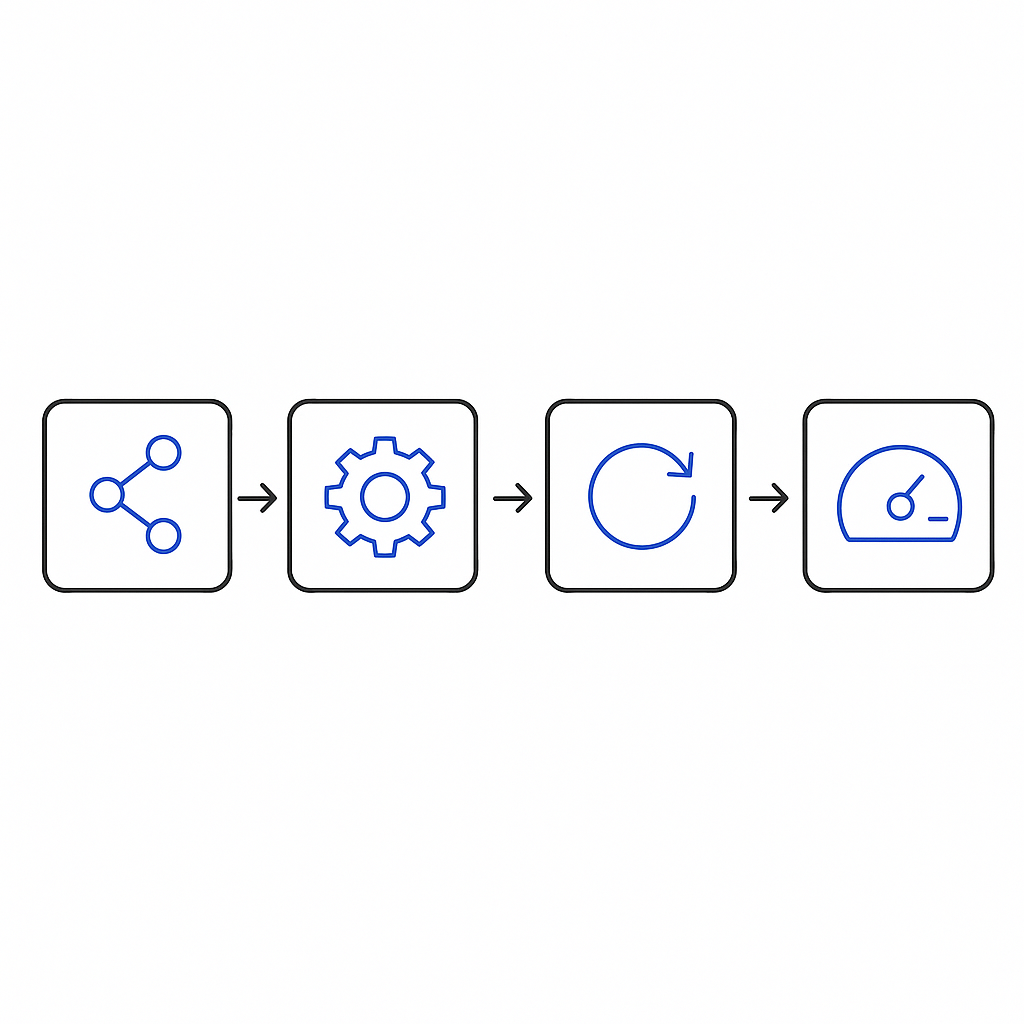
Implementing multi-gateway payment retries requires careful planning but delivers immediate results. Slicker offers a drop-in SDK that connects to Stripe, Chargebee, Recurly, Zuora, Recharge, or custom gateways without engineering sprints, making the technical implementation surprisingly straightforward.
The setup process begins with strategic decisions about gateway selection and continues through technical implementation and optimization. Success requires balancing multiple factors: cost structures, regional coverage, technical capabilities, and business requirements.
For most businesses, the path to multi-gateway processing involves adding an orchestration layer rather than building complex integrations from scratch. A modern orchestration platform provides a single API to manage multiple providers while handling the complexity of routing, retries, and reconciliation behind the scenes.
The key is starting with a clear understanding of your current payment flow and identifying specific optimization opportunities. As demonstrated in real implementations, properly configured multi-acquiring strategies help intelligently route, dispatch, and recover transactions across multiple acquirers—improving success rates, reducing costs, and increasing resilience.
1. Select and Onboard Multiple PSPs
Choosing the right payment service providers forms the foundation of your multi-gateway strategy. Merchants should have multiple gateways configured for each credit card type and currency they accept, ensuring comprehensive coverage across your customer base.
Selection criteria should prioritize complementary strengths. If your primary processor excels at domestic transactions, choose secondary providers with strong international capabilities. Consider processors with different risk appetites—some may approve transactions others decline. Geographic presence matters too, as local processors often achieve higher approval rates in their home markets.
Compliance requirements add another layer of complexity. Each processor must meet your industry's regulatory standards, whether that's PCI DSS for general e-commerce or specific requirements for high-risk verticals. Due diligence during selection prevents painful migrations later.
2. Add an Orchestration Layer
The orchestration layer transforms multiple payment processors from a management nightmare into a strategic advantage. A modular payment gateway stack acts as a control layer between your storefront and multiple payment providers, abstracting away complexity while providing unified control.
Building this layer yourself requires significant investment and ongoing maintenance. Most businesses find greater value in adopting existing orchestration platforms that have already solved common challenges. These platforms provide pre-built integrations, proven routing algorithms, and continuous updates as the payment landscape evolves.
The orchestration layer should handle all aspects of payment flow: initial routing decisions, retry logic, reconciliation, and reporting. It becomes your single source of truth for payment data while managing the complexity of multiple processor relationships behind the scenes.
3. Configure Smart Retry Windows
Timing makes the difference between successful recovery and wasted attempts. Visa and Mastercard limit merchants to around 15 attempts in 30 days—strategic spacing prevents compliance violations while maximizing recovery potential.
Optimal retry windows vary by decline reason. Insufficient funds failures might succeed after payday, while technical timeouts could be retried immediately through a different gateway. Your retry strategy should incorporate these nuances rather than applying blanket schedules.
Data-driven optimization refines retry timing over time. Track success rates by retry attempt number, time of day, and days since initial failure. This data reveals patterns unique to your customer base, enabling continuous improvement of recovery rates.
4. Set Up Monitoring & Analytics
Comprehensive monitoring transforms multi-gateway operations from complex to manageable. A crucial metric to track is "failover MTTR" (Mean Time to Recovery), which measures how quickly your system detects and responds to gateway issues.
Real-time dashboards should display authorization rates by gateway, retry success rates, and processing costs. Anomaly detection alerts your team to degraded performance before customers notice issues. This proactive approach maintains high approval rates even as individual components experience problems.
Analytics extend beyond operational metrics to strategic insights. Which gateways perform best for specific card types? How do approval rates vary by transaction amount or customer geography? These insights drive continuous optimization of routing rules and retry strategies.
How to Measure Success: KPIs & Benchmarks
Measuring multi-gateway performance requires tracking both immediate wins and long-term improvements. The most direct metric is approval rate lift: successful implementations achieve 7-13 percentage point improvements compared to single-processor baselines.
Recovery metrics reveal the true power of smart retries. Leading platforms report 8% of transactions recovered with fallbacks, representing pure incremental revenue that would otherwise be lost. When combined with intelligent retry timing, multi-gateway approaches recover about 8% of failures immediately by trying alternate processors.
Beyond raw approval rates, operational metrics ensure system health. Monitor your mean time to recovery (MTTR) when gateways fail—best-in-class systems achieve switchover in under 200 milliseconds. Track the distribution of transactions across gateways to ensure you're leveraging all available paths. Cost per transaction should decrease as routing intelligence improves, even as approval rates climb.
Key takeaway: Success in multi-gateway payment processing isn't just about having backup options—it's about intelligently orchestrating every transaction through the optimal path while maintaining operational excellence.
Common Integration Mistakes & How to Avoid Them
Even well-intentioned multi-gateway implementations can fail due to predictable mistakes. The most costly error is hardcoding connections: many companies build one-off integrations to each PSP, creating a maintenance nightmare that becomes harder to manage with each new provider.
Skipping orchestration logic ranks as the second major pitfall. Without routing, retry, and fallback rules, transactions aren't optimized—you're simply spreading failures across multiple processors rather than intelligently recovering them. This mistake alone can reduce approval rates by up to 20%.
The absence of unified monitoring creates blind spots that compound over time. When each gateway operates in its own silo, detecting patterns becomes impossible. You might not notice that one processor consistently fails for certain card types or that another performs poorly during specific hours.
Security considerations often emerge too late in the implementation. High integration costs and complexities for small businesses can limit growth if not properly planned. Each gateway connection expands your attack surface, requiring careful attention to data security, tokenization strategies, and compliance requirements across all processors.
Slicker vs FlexPay vs DIY: Who Wins on Approval Lift?
When evaluating payment recovery solutions, real-world performance data tells the clearest story. One merchant using Slicker's multi-gateway routing saw their payment success rate increase from 86% to 93%—a 7 percentage point improvement translating directly to bottom-line revenue.
Competitive platforms show varying results. FlexPay focuses heavily on machine learning optimization, while FlyCode reports impressive metrics including Framer achieving about a 6% lift in ARR with an 18% increase in recovered payments. Another FlyCode client, PlixLife, saw a 12× increase in successful payment recoveries with a 9% reduction in involuntary churn.
The DIY approach tempts many technical teams but rarely delivers comparable results. Building intelligent routing requires massive data sets for training algorithms—something individual merchants can't match. The global payment orchestration market is expected to reach $6.1 billion by 2030, growing at 23.7% annually, indicating that even well-resourced companies increasingly choose specialized platforms over internal builds.
Slicker's advantage lies in its comprehensive approach to the entire payment recovery challenge. While competitors may excel in specific areas, Slicker combines proprietary machine-learning that processes each failed payment individually with seamless integration into existing billing systems. This holistic strategy explains why digital commerce is becoming increasingly important as businesses seek unified solutions rather than point fixes.
Key Takeaways & Next Steps
The path to implementing multi-gateway payment retries is clearer than ever in 2025. The technology has matured, the ROI is proven, and the implementation barriers have largely disappeared thanks to modern orchestration platforms.
Your immediate action items are straightforward. First, audit your current payment failure rates—you might be surprised by how much revenue is slipping through the cracks. Studies show 7-13 percentage point approval improvements are achievable, representing millions in recovered ARR for most subscription businesses.
Second, evaluate your technical readiness. Modern solutions like Slicker require minimal technical investment, connecting to your existing payment stack without extensive development work. The key is choosing a platform that aligns with your current infrastructure while providing room for growth.
Finally, consider the competitive landscape. As more businesses adopt intelligent routing strategies, those clinging to single-gateway setups will find themselves at an increasing disadvantage. The question isn't whether to implement multi-gateway retries, but how quickly you can capture the revenue currently being lost.
Ready to stop leaving money on the table? Slicker's intelligent payment recovery platform can help you implement multi-gateway retries that deliver immediate approval rate improvements. With proven results across diverse industries and seamless integration with your existing billing system, Slicker transforms payment failures from revenue leaks into recovery opportunities. The future of payment processing is multi-gateway—make sure your business is ready.
Frequently Asked Questions
What are the benefits of using multi-gateway payment retries?
Multi-gateway payment retries optimize revenue recovery by rerouting failed transactions through alternative gateways, improving approval rates by 7-13 percentage points compared to single-gateway setups.
How do multi-gateway systems improve payment success rates?
Multi-gateway systems use intelligent routing to select the best-performing gateways for each transaction, considering factors like card type and transaction history, which enhances approval rates and reduces failed payments.
What are the risks of relying on a single payment gateway?
Relying on a single payment gateway can lead to vulnerabilities such as higher failure rates, lack of routing flexibility, and strategic disadvantages like reduced negotiating power and inability to optimize for specific customer segments.
How does Slicker's platform support multi-gateway payment retries?
Slicker's platform offers a drop-in SDK that integrates with existing billing systems, enabling businesses to implement multi-gateway retries without extensive technical work, thus improving payment recovery and reducing churn.
What components are essential for a multi-gateway retry system?
A multi-gateway retry system requires intelligent routing, automated failover, smart retry logic, and comprehensive monitoring to ensure high approval rates and system resilience.
Sources
- https://www.slickerhq.com/blog/machine-learning-multi-gateway-routing-slicker-approval-lift-vs-single-processor
- https://www.y.uno/product/smart-routing
- https://beastinsights.com/blog/failed-payment-recovery/
- https://topmostlabs.com/failover-logic-payment-gateways-high-availability-strategies-2025/
- https://y.uno/post/avoid-these-common-mistakes-when-integrating-multiple-payment-gateways
- https://docs.hyperswitch.io/about-hyperswitch/payments-modules/intelligent-routing
- https://gate2payments.docs.oppwa.com/tutorials/multi-acquiring
- https://docs.recurly.com/docs/gateway-failover
- https://ecommercefastlane.com/modular-payment-gateway-stack
- https://www.globaldata.com/store/report/payment-orchestration-market-analysis/
- https://www.flycode.com/blog/optimizing-failed-payment-recovery-with-flycode-s-orchestration-layer
- https://my.idc.com/research/viewtoc.jsp?containerId=US51168024
Related Articles

Best Payment Recovery Platforms for Media & Publishing Subscription Businesses (May 2026)
When a subscriber's payment fails, most media businesses treat it like a binary outcome: either the retry works or the subscription churns. That framing misses...
What Is AABB Testing in Payment Recovery and Why Does It Matter? (May 2026)
Most subscription businesses track a recovery rate number in their dashboard. When it moves up, the harder question is why. Was it the dunning sequence? Fewer...
What Is a Dunning Email? How Hyper-Personalized Campaigns Outperform Generic Templates (May 2026)
A dunning email lands in your subscriber's inbox after their payment fails, asking them to update their card or complete the transaction. Most billing tools...
Stop losing revenue to failed payments
Join leading subscription businesses using Slicker to recover failed payments automatically.
Get Started