Q1 2026 AI-powered payment recovery rollout: 30-day playbook

Implementing AI-powered payment recovery in 30 days requires systematic execution across four phases: integrations (days 1-7), model training (days 8-14), A/B testing (days 15-21), and go-live with ROI validation (days 22-30). Companies using this structured approach report recovering 70% of involuntary churn while reducing collection costs by 40%.
TLDR
- Week 1 focuses on connecting billing platforms and payment providers via secure OAuth authentication
- Week 2 involves training AI models on decline patterns and configuring dynamic retry intervals
- Week 3 validates performance through A/B testing, targeting 70%+ recovery of involuntary churn
- Week 4 scales to full deployment with outcome-based pricing tied to recovered revenue
- The debt collection software market is growing at 8.99% CAGR, making Q1 2026 critical for competitive advantage
- AI increases collections by 30% while reducing operational costs significantly
Subscription businesses are bleeding cash while they deliberate. Involuntary churn can easily comprise 40% of total churn, and roughly 15% of monthly revenue goes uncollected simply because cards decline. With the debt collection software market growing at a CAGR of 8.99% toward $6.35 billion by 2030, the race to modernize payment recovery is on. The companies that deploy AI-powered smart retries fastest will capture revenue their slower rivals leave on the table.
This 30-day playbook shows you exactly how to go from contract signed to proven ROI in a single quarter. If you are running Chargebee, Zuora, or an in-house billing stack, this guide will help you move quickly without sacrificing enterprise-grade safeguards.
Why does speed matter in 2026 for payment recovery rollouts?
The short answer: every day you wait, competitors recover revenue you are losing.
In 2024 alone, Stripe processed $1.4 trillion across 200 million subscriptions, and a significant slice of that volume encountered payment failures. AI technologies have been instrumental in increasing collections by up to 30% and reducing the cost of collections by up to 40%. The math is simple: if your churn-reduction tooling goes live four weeks ahead of a competitor's, you keep more subscribers, compound more MRR, and widen the gap.
| Metric | What it means for you |
|---|---|
| Market CAGR 8.99% | Buyer urgency is rising; laggards will pay premium later |
| 40%+ of churn is involuntary | The fastest fix is automated retries, not product changes |
| 30% lift in collections with AI | Immediate ROI once models are live |
Speed also matters because modern recovery platforms are designed for rapid deployment. BetterCharge.ai promises to go live in days, OpenPay advertises migration in less than an hour, and ti3 claims setup takes less time than brewing coffee. Slicker's 30-day playbook balances that speed with enterprise-grade safeguards, giving you enough runway to connect data sources, train models, and prove ROI without months of engineering backlog.
Key takeaway: The window to gain a first-mover advantage in AI-powered payment recovery is closing; acting in Q1 2026 positions you ahead of slower competitors.

What does the 30-day AI payment recovery playbook look like?
Payment retry logic automatically attempts to process a failed transaction before canceling a subscription. Doing this well requires four sequential phases:
- Days 1-7: Integrations and data plumbing - Connect billing, PSPs, and data streams.
- Days 8-14: Model training and smart-retry configuration - Let AI learn your failure patterns.
- Days 15-21: A/B testing and churn-reduction experiments - Validate lift before full rollout.
- Days 22-30: Go-live, ROI proof, and pricing optimization - Cut over, monitor, and move to outcome-based pricing.
This structure mirrors how leading recovery vendors onboard clients. Churnkey, for example, reports that 70% of detected involuntary churn was recovered using a similar phased approach that combines smart retries, dunning campaigns, and in-app payment walls.
By week four, you should have hard numbers on recovered revenue, a validated model, and a commercial structure that ties vendor fees to results.
Days 1-7: Nail integrations & data plumbing
Week one is about wiring. Your AI engine needs clean, real-time access to billing events, card-decline codes, and customer metadata.
Step-by-step checklist:
- Authenticate your billing platform (Chargebee, Zuora, Stripe, or in-house) via API.
- Connect your payment service provider to stream decline codes.
- Map customer identifiers so the model can learn per-subscriber retry patterns.
- Validate data flows with test transactions.
Modern integration tools make this faster than ever. Relevance AI notes that you don't need to be a developer to set up payment-processing integrations, and Latenode shows that you can connect Chargebee and AI agents in minutes with a visual editor. Stripe's integration similarly uses secure OAuth authentication and built-in validation to protect payment workflows.
Secure OAuth & data privacy in minutes
Security is non-negotiable. The integration should leverage OAuth authentication to securely access account data without exposing credentials. Look for platforms that:
- Never use your data for model training.
- Provide built-in error handling for edge-case transactions.
- Offer role-based access so only authorized workflows touch payment data.
Completing these steps in week one sets the foundation for model training in week two.
Week 2 - How to train models & configure smart retries?
With data flowing, you can now teach the AI when, how often, and through which channel to retry.
Core retry strategies include:
- Intelligent retries based on bank response codes
- Gradual retry attempts over multiple days
- Notifying users to update payment methods
Ontime's recommendation engine demonstrates the power of smart timing: it knows the right time to call each customer based on factors such as age, location, and past behavior. The result? A reduction in unnecessary contact attempts by up to 45% and an acceleration of time-to-payment by 35%.
"This is the future of communication. Efficient, respectful, data-driven." - Ontime
During this week, configure:
| Setting | Recommendation |
|---|---|
| Max retries | 5-12 depending on decline type |
| Retry cadence | Dynamic intervals based on error codes |
| Fallback channels | Email, SMS, in-app wall |
| Model retraining | Continuous analysis to adapt over time |
By day 14, your model should be running in shadow mode, scoring real transactions without yet influencing outcomes.
Week 3 - How to A/B test & slash involuntary churn?
Never flip the switch without data. Week three is about controlled experiments.
Experiment design:
- Split traffic 50/50 between legacy dunning and AI-powered retries.
- Track recovery rate, time-to-payment, and customer sentiment.
- Run for a minimum of 7 days to gather statistical significance.
Platforms that integrate churn prediction can amplify results. SLSolutions reports that AI-driven analysis can reduce churn rate by 40% and increase the effectiveness of retention campaigns by 25%.
Prodigal Technologies highlights the value of enhanced A/B testing capabilities: "The beauty of AI is you can throw a bunch of factors into a machine, and it spits out - here's a list of who you should call."
KPIs to monitor:
- Recovery rate (target: 70%+ of involuntary churn)
- Time-to-payment (target: 35% faster)
- Contact attempts per recovery (target: 45% fewer)
By day 21, you should have clear evidence that the AI model outperforms static retry schedules.
Days 22-30: Go-live, prove ROI & move to outcome-based pricing
With validation complete, week four is about scaling and commercials.
Go-live checklist:
- Promote AI retry logic to 100% of traffic.
- Set up real-time dashboards for recovery rate and revenue recaptured.
- Document compute costs for compliance and budgeting.
Proving ROI
Intercom offers a compelling example: after implementing outcome-based pricing for its AI agent Fin, the company added an eight-figure business line and now drives more than one million resolutions a week.
Outcome-based pricing aligns costs with measurable results, focusing on the tangible value delivered rather than mere access or usage. Intercom charges just 99 cents per solved ticket, demonstrating that when vendor revenue is tied to real results, both parties win.
Why this matters for payment recovery:
- You pay only for recovered revenue.
- Vendor incentives align perfectly with your churn-reduction goals.
- AI transforms from a fixed IT cost into a variable cost of operations.
By day 30, you should have a signed-off ROI report and a commercial model that scales with success.
How does Slicker's 30-day rollout beat Better, OpenPay & others?
Competitors promise speed, but speed without safeguards creates risk.
| Vendor | Claimed speed | Limitations |
|---|---|---|
| BetterCharge.ai | "Go live in days" | Focused on card-present declines; less depth in subscription dunning |
| OpenPay | "Migrate in less than an hour" | Rapid, but relies on you to configure retry logic |
| Chargebee Smart Retry | Up to 12 retries | Available only for Performance plan and above; limited customization |
| Zuora | AI-assisted retry | High-volume performance at 200K events/second, but heavier implementation lift |
| Slicker | 30 days with enterprise safeguards | Integrates with existing rails, pay-for-success pricing, best-in-class evaluation |
Chargebee's Smart Retry, for instance, will retry up to 12 times based on transaction patterns, but the feature is gated to higher-tier plans. Zuora offers proven high-volume performance, yet its full monetization suite often requires longer integration timelines.
Slicker differentiates by:
- Sitting on top of existing billing and payment systems so you do not rip and replace.
- Offering pay-for-success pricing so you only pay when revenue is recovered.
- Providing a best-in-class evaluation platform so you can prove lift before committing.
Compliance, fraud & other rollout pitfalls to avoid
Moving fast does not mean cutting corners. Here are the most common mistakes:
-
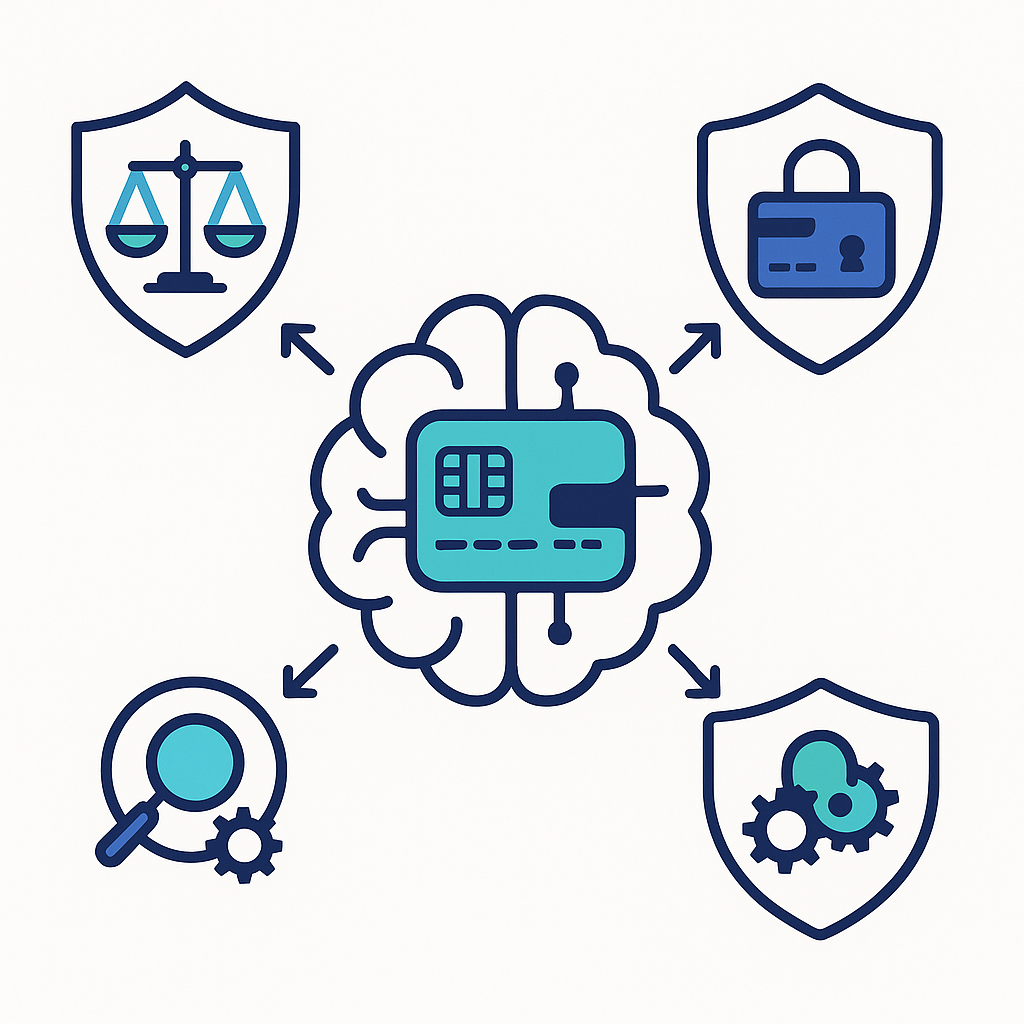
Skipping compliance checks. Adhering to TCPA, GDPR, CCPA and sector-specific regulations demands robust data governance frameworks. Ignoring them exposes you to fines.
-
Under-investing in fraud mitigation. Platforms that add AI-driven fraud rules can cut chargebacks by up to 70%. Skipping this step means recovered revenue could be clawed back.
-
Treating models as set-and-forget. Cost and compute thresholds allow regulators to focus oversight on the most advanced AI models. Document your approach, revisit retry models quarterly, and keep detailed accounting reports.
-
Ignoring uncollected revenue benchmarks. Roughly 15% of monthly revenue goes uncollected due to credit card declines. If your recovery rate is far below that benchmark, your model needs tuning.
Mitigation checklist:
- Build monitoring dashboards from day one.
- Integrate fraud-detection scoring into retry decisions.
- Schedule quarterly model reviews.
- Maintain auditable logs of retry attempts and outcomes.
Ship fast, recover revenue faster
The subscription economy punishes inaction. Every month without AI-powered payment recovery is a month of leaked revenue, higher churn, and ground ceded to competitors.
This 30-day playbook proves you can move quickly and safely:
- Week 1: Wire integrations and secure data flows.
- Week 2: Train models and configure smart retries.
- Week 3: A/B test and validate lift.
- Week 4: Go live, prove ROI, and shift to outcome-based pricing.
Slicker makes this journey straightforward. Our AI engine sits on top of your existing billing and payment systems, reduces involuntary churn, increases recovered revenue, and boosts margins. With pay-for-success pricing, you only pay when we deliver results.
Ready to stop leaking revenue? Start your 30-day rollout with Slicker today.
Frequently Asked Questions
Why is speed important in AI-powered payment recovery rollouts?
Speed is crucial because every day of delay allows competitors to recover revenue that you are losing. Implementing AI-powered payment recovery quickly can help you retain more subscribers, increase monthly recurring revenue, and gain a competitive edge.
What are the key phases of the 30-day AI payment recovery playbook?
The playbook consists of four phases: Days 1-7 focus on integrations and data plumbing; Days 8-14 involve model training and smart-retry configuration; Days 15-21 are for A/B testing and churn-reduction experiments; Days 22-30 cover go-live, ROI proof, and pricing optimization.
How does Slicker's approach differ from competitors like BetterCharge.ai and OpenPay?
Slicker offers a 30-day rollout with enterprise safeguards, integrating with existing billing systems and using pay-for-success pricing. This contrasts with competitors who may offer faster deployment but lack depth in subscription dunning or require more configuration from the user.
What compliance and fraud pitfalls should be avoided during rollout?
Common pitfalls include skipping compliance checks, under-investing in fraud mitigation, treating models as set-and-forget, and ignoring uncollected revenue benchmarks. Adhering to regulations and integrating fraud-detection scoring are essential to avoid fines and chargebacks.
How does Slicker's AI engine enhance payment recovery?
Slicker's AI engine reduces involuntary churn by sitting on top of existing billing systems, increasing recovered revenue, and boosting margins. With pay-for-success pricing, you only pay when results are delivered, aligning vendor incentives with your business goals.
Sources
- https://www.churnkey.co/blog/state-of-churn-2024
- https://www.prodigaltech.com/ltblogs/future-ai-debt-collection#:~:text=How%20is%20AI%20used%20in,and%20customized%20than%20traditional%20methods.
- https://www.researchandmarkets.com/reports/4896683/debt-collection-software-market-global?srsltid=AfmBOoqSO81afibAuK3Dsf3-OPbQPZsKwFkAjc_hI4f19w5PCwE300v1
- https://recurly.com/research/churn-rate-benchmarks/
- https://churnkey.co/blog/state-of-churn-2024
- https://www.bettercharge.ai/
- https://www.openpaystaging.com/
- https://www.ti3.co/post/ti3-cost-effective-alternative-to-cba-debt-collectors-for-overdue-accounts
- https://update.dev/glossary/payment-retry-logic
- https://relevanceai.com/integrations/chargeblast
- https://latenode.com/integrations/chargebee/ai-agent
- https://relevanceai.com/integrations/stripe
- https://www.ontime.fi/platform/recommendation-engine
- https://www.slsolutions.io/en/solutions-finance/customer-churn-probability
- https://stripe.com/customers/intercom
- https://stripe.com/resources/more/outcome-based-pricing-in-saas-a-guide-for-businesses
- https://www.pragmaticinstitute.com/resources/articles/product/outcome-based-pricing-lets-you-pay-for-success-not-just-access/
- https://www.chargebee.com/docs/2.0/smart-retry.html
- https://www.zuora.com/chargebee-competitor/
- https://www.chargebee.com/docs/2.0/dunning-and-retry.html
- https://www.slsolutions.io/en/solutions-finance/anti-fraud-solutions-for-payments-monitoring
- https://arxiv.org/html/2502.15873v1
- https://www.slickerhq.com/blog/how-ai-enhances-payment-recovery
Related Articles

Smart payment retries analytics: Track and optimize recovery rates
Smart payment retries analytics: Track and optimize recovery rates Smart payment retries analytics enables finance teams to track decline patterns, optimize...

What is AI payment error resolution? Complete guide for B2B SaaS
What is AI payment error resolution? Complete guide for B2B SaaS AI payment error resolution uses machine learning to analyze declined transactions, predict...

Smart payment retries aligned with paydays: How AI times recovery
Smart payment retries aligned with paydays: How AI times recovery AI-powered payment retry systems achieve recovery rates above 70% by analyzing customer...
Stop losing revenue to failed payments
Join leading subscription businesses using Slicker to recover failed payments automatically.
Get Started