Single integration to recover failed subscription payments across gateways

Subscription businesses can recover failed payments across multiple gateways through a single AI-powered integration that evaluates each transaction individually and routes payments through the processor with highest success probability. This eliminates the need for separate gateway-specific retry logic, delivering 7-13 percentage point approval lifts compared to single-processor setups.
At a Glance
• Failed payments cost subscription businesses 10-15% of annual revenue, with involuntary churn accounting for 20-40% of total churn
• Traditional approaches require separate retry logic for each payment gateway, creating operational complexity and missing recovery opportunities
• AI-powered routing processes each failed payment individually, scheduling optimal retry times and selecting the best gateway for success
• Real-world implementations show 7-13 percentage point approval lifts, translating to hundreds of thousands in recovered revenue
• Setup takes just 5 minutes with no-code implementation, connecting to Stripe, Chargebee, Recurly, Zuora, Recharge, or custom gateways
• Pay-for-success pricing means businesses only pay for successfully recovered payments, ensuring positive ROI from day one
High-volume subscription companies can now recover failed subscription payments through a single integration, avoiding multiple custom gateway builds.
Why one integration beats juggling gateways
The subscription economy faces a critical challenge: subscription businesses lose 9% of their revenue due to failed payments. Traditional approaches require separate recovery logic for each payment gateway, creating complexity and leaving money on the table.
AI-powered multi-gateway routing represents a fundamental shift in payment recovery. Rather than building custom retry logic for each processor, a single integration evaluates each failed transaction individually, schedules intelligent retries, and routes payments through the processor with the highest real-time success probability.
This approach transforms payment recovery from a technical burden into a strategic advantage. Companies no longer need dedicated engineering resources managing multiple gateway-specific implementations. Instead, 5 minutes is all it takes to have your instance up and running with no-code revenue recovery.
What is the hidden cost of failed payments & involuntary churn?
Involuntary churn accounts for 20-40% of total customer churn in the subscription economy. The scale of this problem extends beyond simple revenue loss—it fundamentally undermines business growth.
Up to 70% of involuntary churn stems directly from failed transactions. These aren't customers choosing to leave; they're subscribers lost to technical failures like expired cards, insufficient funds, and network issues.
The financial impact compounds quickly. With 10-15% of subscription revenue disappearing annually due to payment failures, a business processing $10 million in annual recurring revenue loses $1-1.5 million to preventable technical issues.
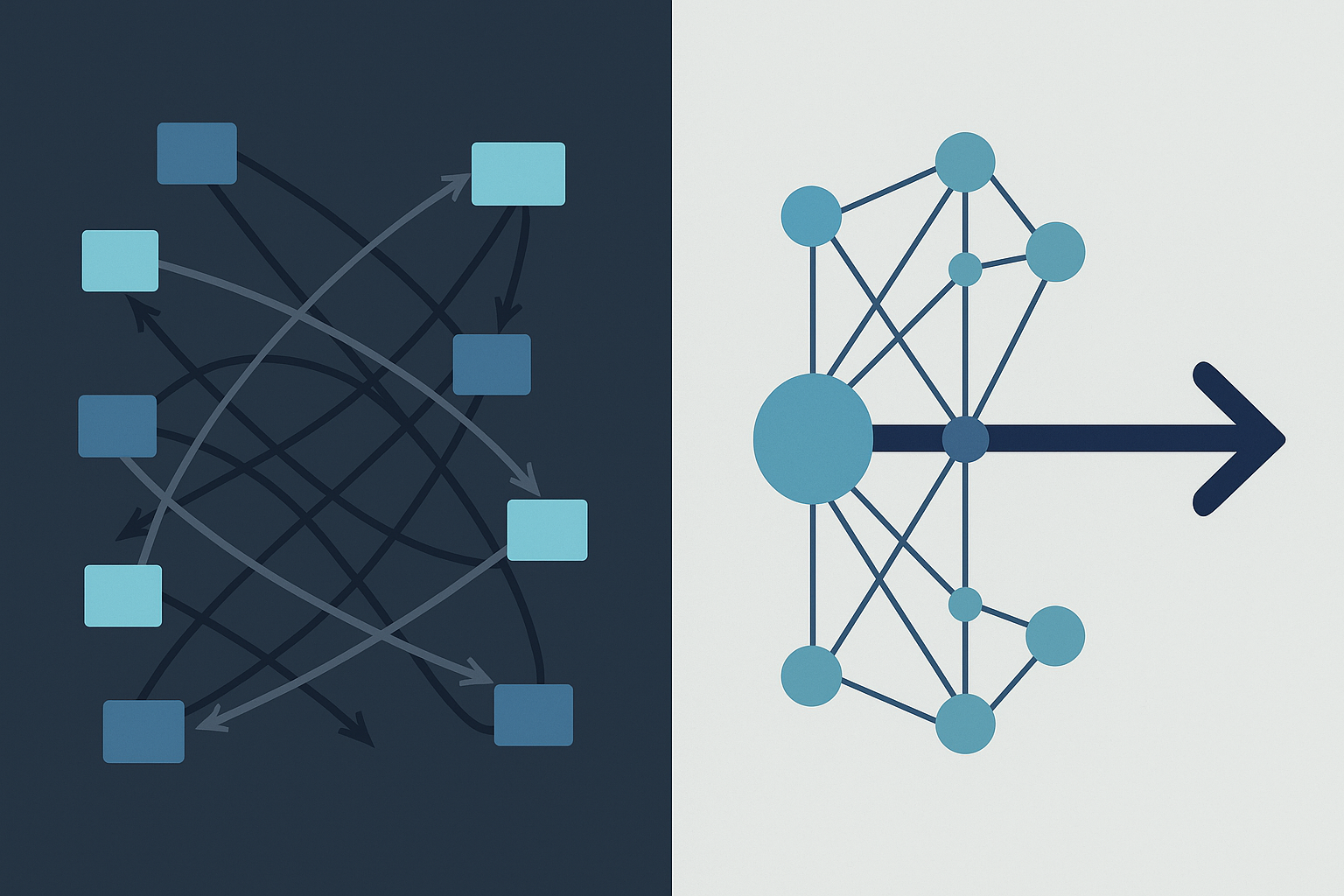
Why separate gateway setups leave money on the table
Batch systems apply identical retry logic to all failed payments, treating a temporary network glitch the same as an expired card. This one-size-fits-all approach creates systematic inefficiencies.
Pagos data reveals that the first retry succeeds 25-35% of the time, but success rates vary dramatically based on decline reasons and retry timing. Without gateway-specific optimization, companies miss these nuanced recovery opportunities.
Stripe's Smart Retries defaults to 8 tries within 2 weeks, but this fixed schedule doesn't account for processor-specific patterns or real-time network conditions. Each gateway has unique approval algorithms, peak performance times, and decline code interpretations that generic retry logic cannot leverage.
How a single-integration engine recovers more revenue
Modern recovery platforms evaluate each failed payment individually rather than applying batch rules. AI-powered routing evaluates transactions, schedules intelligent retries, and routes through the processor with the highest real-time success probability.
Machine learning models schedule retries at optimal times, leveraging industry expertise and analyzing dozens of parameters including issuer patterns, historical performance, and network conditions. This transaction-level optimization dramatically outperforms static retry schedules.
The technical implementation requires minimal effort. Drop-in SDKs connect to Stripe, Chargebee, Recurly, Zuora, Recharge, or custom gateways without engineering sprints. The system automatically ingests failed transactions, applies AI-driven recovery logic, and routes payments through the optimal gateway—all without code changes.
Case study: +7–13 pp approval lift with AI routing
Real-world deployments demonstrate the transformative impact of intelligent multi-gateway routing. Independent analyses show 7-13 percentage point approval lifts compared to single-processor setups.
One merchant using multi-gateway routing saw their payment success rate increase from 86% to 93%—a 7 percentage point improvement that translated directly to bottom-line revenue. For a business processing $10 million annually, this represents $700,000 in additional recovered revenue.
Stripe's Adaptive Acceptance platform provides similar validation at scale, recovering $6 billion in falsely declined transactions in 2024 alone, reflecting a 60% year-over-year increase in retry success rates. These results demonstrate that intelligent routing consistently outperforms traditional approaches across different scales and industries.

Slicker vs. Stripe, Chargebee & Pagos
Stripe's Smart Retries defaults to 8 tries within 2 weeks, but operates within Stripe's ecosystem only. Companies using multiple gateways cannot leverage Stripe's retry optimization across their entire payment infrastructure.
Chargebee allows businesses to configure smart retries coupled with reminder emails based on payment history, but requires separate configuration for each integrated gateway. This fragmented approach increases operational complexity without delivering unified optimization.
Over 50% of organizations manage five or more payment integrations, yet most recovery solutions treat each gateway independently. This creates blind spots where failed payments from one processor aren't rerouted to alternatives with higher approval probabilities.
Traditional recurring billing providers focus on billing management rather than cross-gateway recovery optimization. Slicker's approach differs fundamentally by sitting above existing billing and payment systems, orchestrating recovery across all connected processors through a single integration.
How does pay-for-success pricing drive ROI?
Slicker's pricing is based on payments successfully recovered. Since you only pay for extra revenue generated, the bottom line is always positive. This pay-for-success model aligns vendor incentives with customer outcomes.
Implementation requires minimal investment. The first month is free, allowing businesses to validate performance before committing. With 5-minute setup and no engineering resources required, the time-to-value dramatically exceeds traditional gateway-specific implementations.
Many providers only charge for successfully recovered payments, but Slicker's model goes further by guaranteeing positive ROI. Companies typically see 10-20 percentage point increases in recovered payments, translating to 2-4x improvement over existing systems.
The financial mathematics are compelling: zero upfront costs, no integration fees, and payment only on successful recovery means every dollar spent generates multiple dollars in recovered revenue.
Key takeaways
The shift from multiple gateway-specific setups to single-integration recovery platforms represents a fundamental evolution in payment operations. Companies no longer need to choose between comprehensive coverage and implementation complexity.
5 minutes is all it takes to implement a solution that automatically monitors, detects, and recovers failed subscription payments across all your payment processors. No code changes, no engineering sprints, just immediate revenue recovery.
AI-powered multi-gateway routing evaluates each transaction individually, ensuring every failed payment gets the optimal recovery strategy. This transaction-level intelligence, combined with pay-for-success pricing, makes implementation a zero-risk decision with guaranteed positive returns.
For high-volume subscription businesses losing millions to failed payments, the question isn't whether to implement intelligent recovery—it's how quickly you can capture the revenue that's already yours. With Slicker's proven track record of 7-13 percentage point approval lifts and immediate deployment capability, the path to recovered revenue has never been clearer.
Frequently Asked Questions
What is the main advantage of using a single integration for payment recovery?
A single integration simplifies the recovery process by evaluating each failed transaction individually and routing it through the processor with the highest success probability, eliminating the need for multiple custom gateway setups.
How does involuntary churn impact subscription businesses?
Involuntary churn, which accounts for 20-40% of total churn, results from failed transactions due to technical issues. This can lead to significant revenue loss, undermining business growth.
What are the limitations of traditional batch retry systems?
Traditional batch systems apply the same retry logic to all failed payments, missing nuanced recovery opportunities. They don't account for processor-specific patterns or real-time network conditions, leading to inefficiencies.
How does Slicker's AI-powered routing improve payment recovery?
Slicker's AI-powered routing evaluates each transaction, schedules intelligent retries, and routes payments through the optimal gateway, significantly improving recovery rates compared to static retry schedules.
What is the benefit of Slicker's pay-for-success pricing model?
Slicker's pay-for-success model ensures that businesses only pay for successfully recovered payments, aligning vendor incentives with customer outcomes and guaranteeing positive ROI.
Sources
- https://www.slickerhq.com/blog/machine-learning-multi-gateway-routing-slicker-approval-lift-vs-single-processor
- https://www.slickerhq.com/blog/dunning-emails-vs-intelligent-retry-logic-2025-subscription-revenue-recovery
- https://www.slickerhq.com/
- https://www.slickerhq.com/blog/one-size-fails-all-the-case-against-batch-payment-retries?via=bonoboai
- https://pagos.ai/use-cases/retry-strategy
- https://stripe.com/docs/billing/revenue-recovery/smart-retries
- https://stripe.com/blog/ai-enhancements-to-adaptive-acceptance
- https://chargebee.com/customer-retention/revenue-recovery
- https://www.slickerhq.com/pricing
Related Articles

Smart payment retries analytics: Track and optimize recovery rates
Smart payment retries analytics: Track and optimize recovery rates Smart payment retries analytics enables finance teams to track decline patterns, optimize...

What is AI payment error resolution? Complete guide for B2B SaaS
What is AI payment error resolution? Complete guide for B2B SaaS AI payment error resolution uses machine learning to analyze declined transactions, predict...

Smart payment retries aligned with paydays: How AI times recovery
Smart payment retries aligned with paydays: How AI times recovery AI-powered payment retry systems achieve recovery rates above 70% by analyzing customer...
Stop losing revenue to failed payments
Join leading subscription businesses using Slicker to recover failed payments automatically.
Get Started