Zuora payment retries broken? Smart payment retries integration

Zuora's native payment retry capabilities include Smart Retry with ML-based timing, Configurable Payment Retry, and Cascading Payment Method for alternate payment sources. However, these tools operate within single-gateway constraints and the Cascading feature remains in Early Adopter phase with limited compatibility. Purpose-built AI recovery solutions can deliver 2-4× better recovery rates by analyzing each transaction individually and orchestrating across multiple gateways.
Key Facts
• Zuora offers three retry mechanisms: Smart Retry (ML-optimized timing), Configurable Payment Retry, and Cascading Payment Method for automatic failover to alternate payment sources
• The Cascading Payment Method feature is still in Early Adopter phase and not supported in payment runs invoked by Advanced Payment Manager
• Industry benchmarks show 45-70% recovery rates achievable with AI-powered multi-gateway solutions versus 15-25% for basic fixed retries
• 10-15% of subscription revenue disappears annually due to payment failures like expired cards and insufficient funds
• Modern AI recovery systems can reduce fraud losses by up to 40% while increasing customer retention by 20%
• Slicker integrates with Zuora in 5 minutes via API, operating on pay-for-success pricing with no upfront costs
Failed payments represent a critical revenue leak that subscription businesses can't afford to ignore. Industry research shows that 10-15% of subscription revenue disappears annually due to payment failures like expired cards and insufficient funds. For enterprises running on Zuora, the question isn't whether you're losing revenue to involuntary churn, it's how much.
This guide examines what Zuora's native retry tools actually deliver, where enterprise recovery gaps persist, and how AI-driven solutions can plug into your existing stack in minutes to recover revenue you're currently leaving behind.
Why Zuora's native retries leave revenue on the table
Involuntary churn silently drains subscription revenue. Card declines, bank rejections, and soft errors collectively wipe out as much as 4% of MRR in high-growth subscription businesses.
The problem compounds quickly. Companies that switch from batch-based to intelligent, individualized retry strategies typically see a "20-50% increase in recovered revenue", which means the inverse is also true. Static retry schedules leave significant money on the table.
Zuora's native tools have improved over the years, but they were designed as billing-first features rather than purpose-built recovery engines. The gap between "good enough" and "best-in-class" recovery can translate to hundreds of thousands in annual lost revenue for high-volume merchants.

What does Zuora offer today: Smart Retry, Configurable Payment Retry & Cascading Payment Method?
Zuora provides three main retry mechanisms:
Smart Retry was first introduced in 2021. Rather than retrying payments on a fixed schedule, it uses machine learning to predict the optimal moment to retry a failed payment.
Configurable Payments Retry is a traditional machine learning model that analyzes customer and payment data to determine the optimal time to retry a failed payment, improving collection rates and reducing manual intervention.
Cascading Payment Method allows for dynamic retries using alternative payment methods based on a priority list. If the first payment transaction fails, the system automatically retries with the next available payment method.
These tools represent meaningful improvements over fixed schedules, but they still operate within Zuora's single-gateway, single-method framework for most configurations.
Where do enterprise recovery gaps still lurk?
Despite these capabilities, several limitations affect collection rates for high-volume merchants:
-
Early Adopter status: The Cascading Payment Method feature is still in the Early Adopter (EA) phase, meaning it's being tested and refined with limited availability.
-
Compatibility constraints: The Cascading Payment Method is not supported in payment runs invoked by Advanced Payment Manager, creating workflow limitations.
-
Historical limitations: Zuora's initial 2021 implementation was expensive to run, and while improvements came in late 2023, the architecture still reflects billing-first design priorities.
These gaps matter most for enterprises processing millions of transactions where even small percentage improvements translate to significant revenue.
What does best-in-class smart payment retry look like in 2025?
Modern technology has eliminated the constraints that made batch processing necessary. Today's advanced payment recovery systems can analyze each transaction individually using machine learning algorithms.
AI-driven recovery solutions now interpret decline reasons, dynamically adjust retries, and automate outreach, moving far beyond generic decline-code rules.
The measurable impact is significant. AI in payment systems can reduce fraud losses by up to 40% by detecting fraud in real time, while also providing a more personalized payment experience that results in a 20% increase in customer retention rate.
Key capabilities that define best-in-class recovery:
| Capability | Static Retries | AI-Powered Retries | |------------|----------------|--------------------|| | Timing optimization | Fixed schedule | Per-transaction analysis | | Decline code handling | Generic rules | Issuer-specific learning | | Gateway routing | Single gateway | Multi-gateway orchestration | | Success prediction | None | ML-based probability scoring |
Key takeaway: "The future of payment recovery isn't about retrying more - it's about retrying smarter."
How does Slicker plug into Zuora in five minutes?
Slicker supports popular billing platforms including Stripe, Chargebee, Recurly, Zuora, and Recharge, as well as in-house systems.
The integration process is remarkably straightforward:
- Connect your Zuora instance via API credentials
- Configure retry preferences in Slicker's dashboard
- Enable the AI engine to begin processing failed payments
Zuora's API is version-controlled, allowing Slicker to integrate cleanly without disrupting existing billing workflows. The Zuora-Version header system ensures backward compatibility as both platforms evolve.
Slicker operates on a pay-for-success pricing model, meaning you only pay for successfully recovered payments. A one-month free trial lets you see results before committing.
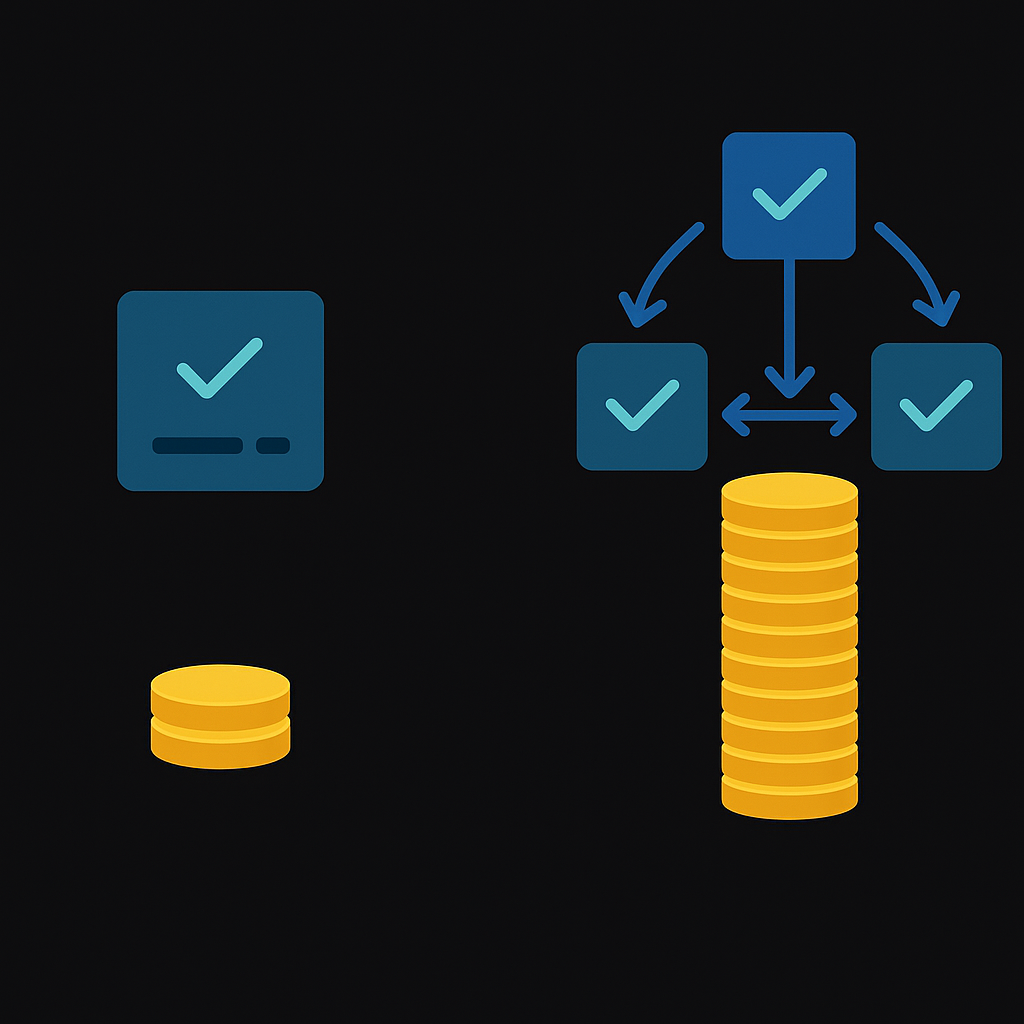
ROI math: Slicker smart retries vs. Zuora native logic
The financial case for layered recovery is straightforward. Customers typically see a 10-20 percentage point recovery increase and a 2-4× boost versus native billing logic.
To contextualize the value at stake: a Forrester study on retention solutions revealed customer ROI of up to 522% and total benefits over $24 million over three years.
For a concrete example, consider a subscription business with:
- $10M ARR
- 4% monthly payment failure rate
- 30% native recovery rate
Native recovery: $400K failures × 30% = $120K recovered annually
With Slicker (50% recovery): $400K × 50% = $200K recovered annually
Incremental value: $80K additional revenue with pay-for-success pricing
Benchmarks: how much revenue is recoverable?
Industry benchmarks show that best-in-class recovery rates hover between 45-60%. Churnkey's research indicates that overall recoverability can reach 70% with sophisticated retry strategies.
Recovery rate ranges by approach:
- Basic fixed retries: 15-25%
- Configurable rules: 25-35%
- ML-optimized timing: 35-50%
- AI + multi-gateway: 45-70%
The gap between basic and best-in-class represents significant unrealized revenue for most subscription businesses.
Implementation checklist, API versioning & compliance
A smooth rollout requires attention to technical guardrails:
API versioning: By specifying a Zuora-Version header in requests, you can set version-controlled parameters and get corresponding responses regardless of future changes to the API.
Default version: Requests default to version 186.0 unless you've used the Zuora-Version header to override.
Breaking changes: Zuora client library updates occasionally include breaking changes in field names and data types for certain classes. Developers need to update library code to reference new field names when upgrading.
Implementation checklist:
- Document current API version in use
- Review Slicker integration requirements
- Configure test environment
- Set up monitoring for recovery metrics
- Define success criteria before go-live
- Plan rollback procedure if needed
Smarter, not louder: your next step to reclaim hidden revenue
"The future of payment recovery isn't about retrying more, it's about retrying smarter."
Zuora provides solid billing infrastructure, but purpose-built recovery engines deliver meaningfully better results. Slicker supports Zuora integration alongside other major billing platforms, offering a path to improved recovery without replacing your existing stack.
With 2-4× better recoveries than static retry systems, the incremental value compounds quickly for high-volume subscription businesses. The five-minute setup and pay-for-success model mean there's minimal risk in testing whether smarter retries can move the needle for your business.
The revenue is already yours, you just need the right tools to collect it.
Frequently Asked Questions
What are the main limitations of Zuora's native retry tools?
Zuora's native retry tools, while improved, are primarily billing-first features and not purpose-built recovery engines. They operate within a single-gateway framework and have limitations like compatibility constraints and early adopter status for some features, which can affect collection rates for high-volume merchants.
How does Slicker integrate with Zuora to improve payment recovery?
Slicker integrates with Zuora by connecting via API credentials, allowing users to configure retry preferences in Slicker's dashboard. The AI engine then processes failed payments, offering a seamless integration that enhances recovery without disrupting existing billing workflows.
What is the financial impact of using AI-driven payment recovery solutions?
AI-driven payment recovery solutions can significantly increase recovered revenue, with customers typically seeing a 10-20 percentage point recovery increase. This translates to a 2-4× boost compared to native billing logic, providing substantial incremental value for subscription businesses.
What are the benefits of using AI-powered retries over static retries?
AI-powered retries offer per-transaction analysis, issuer-specific learning, multi-gateway orchestration, and ML-based probability scoring, which are not available with static retries. These capabilities lead to higher recovery rates and reduced fraud losses.
How does Slicker's pricing model work?
Slicker operates on a pay-for-success pricing model, meaning businesses only pay for successfully recovered payments. This model, combined with a one-month free trial, allows companies to see results before committing financially.
Sources
- https://www.slickerhq.com/blog/one-size-fails-all-the-case-against-batch-payment-retries
- https://www.slickerhq.com/blog/top-7-ai-retry-engines-2025-yc-backed-slicker-flexpay-gocardless
- https://knowledgecenter.zuora.com/Zuora_Payments/Configure_payment_orchestration/Zuora_Configurable_Payment_Retry_App_Standalone/Configure_the_Configurable_Payment_Retry_feature
- https://www.slickerhq.com/blog/soft-decline-retry-strategies-saas-cfos-q3-2025-guide
- https://developer.zuora.com/blogs/2025-3-18-turningfailureintogold
- https://knowledgecenter.zuora.com/Use_of_AI_in_Zuora
- https://www.slickerhq.com/
- https://developer.zuora.com/v1-api-reference/api-upgrade-guide
- https://www.vindicia.com/resources/total-economic-impact-of-vindicia
- https://developer.zuora.com/sdk-changelogs/changelog-overview
- https://www.slickerhq.com/blog/involuntary-churn-hidden-revenue-leak-slicker-fix
Related Articles

Dunning Letter: Definition, Best Practices & Examples (May 2026)
At high-volume subscription companies, payment failures translate directly to revenue leakage. A dunning letter formalizes your recovery request in writing,...

Dunning Management: How to Build a Recovery Process That Actually Works (May 2026)
Your retry schedule is probably wrong. Most dunning management systems retry failed payments on a fixed cadence without checking why the card declined, which...
What Are Merchant Advice Codes and How Do They Affect Payment Recovery? (May 2026)
Your payment gateway receives visa response codes and merchant advice codes with every declined authorization. One identifies why the transaction failed. The...
Stop losing revenue to failed payments
Join leading subscription businesses using Slicker to recover failed payments automatically.
Get Started