Best AI Payment Recovery Tools for Stripe (October 2026)
Introduction
Payment failures are silently bleeding subscription businesses dry. Up to 12% of card-on-file transactions fail because of expirations, insufficient funds, or network glitches, and a staggering 62% of users who hit a payment error never return to the site (Slicker). Even more alarming, a single payment hiccup can drive 35% of users to cancel (Slicker).
The stakes couldn't be higher. Involuntary churn (when customers leave due to failed payments, not dissatisfaction) accounts for 10% of subscription revenue losses, leading to over $440 billion in losses each year (Butter Payments). In some industries, decline rates reach 30%, making payment recovery outright mission-critical (Slicker).
Fortunately, AI-powered payment recovery platforms are reshaping how businesses handle failed transactions. Machine-learning engines predict the perfect moment, method, and gateway for each retry, lifting recovery rates 2-4× above native billing logic (Slicker). This in-depth buyer's guide profiles the top AI platforms for optimizing payment retries in 2025, helping you choose the best solution for your Stripe subscription business.
TLDR:
- Involuntary churn (subscribers lost to failed payments, not dissatisfaction) costs the industry over $440 billion annually, with up to 12% of card-on-file transactions failing.
- AI-powered recovery platforms classify each decline as soft or hard in real time, routing retriable failures to optimized retries and triggering dunning only when customer action is required.
- Prepaid cards represent 6.8% of subscriptions but drive 10.5% of first-payment failures, with a 90-day survival rate of just 24.9% versus 77.9% for credit cards.
- The AI payment recovery market is valued at $3.22 billion in 2026 and growing at 15% annually, with McKinsey documenting recovery-rate improvements of 10-15% as baseline outcomes.
- Slicker applies an ensemble of AI models with real-time failure classification and multi-gateway smart routing, deploying above your existing billing infrastructure with no engineering required.
The top AI payment recovery platforms at a glance
Platform | Best for | Key AI feature | SOC-2 status | Starting price |
|---|---|---|---|---|
Slicker | Multi-gateway routing | Proprietary AI engine with real-time failure classification | SOC 2 Type II compliant | Pay-for-success model |
FlexPay | Enterprise scale | Advanced decline code analysis | SOC 2 compliant | Custom pricing |
Recurly | Subscription management | Integrated retry logic with billing platform | SOC 2 Type II | $99/month + transaction fees |
Vindicia | High-risk merchants | Machine learning fraud prevention | SOC 2 compliant | Custom enterprise pricing |
Chargebee Precision Retries | SaaS businesses | Smart retry scheduling | SOC 2 Type II | $299/month + usage |
Why AI-powered payment recovery matters in 2025
The subscription economy has reached a tipping point where traditional retry logic simply isn't enough. Up to 70% of involuntary churn stems from failed transactions, making payment recovery a critical revenue protection strategy (Slicker). Subscription businesses that rely on their billing platform's default retry schedule (a fixed cadence of 3, 7, and 14 days applied uniformly to every decline) are leaving a large portion of recoverable revenue on the table. Recurly's subscription benchmarks, drawn from over 2,200 subscription sites, found that merchants using intelligent retry logic saw a 16% improvement in revenue recovery compared to static retry schedules, a gap that widens as transaction volumes grow.
AI leaders are integrating artificial intelligence into their core business processes, moving well beyond isolated pilots, and AI-driven initiatives deliver "productivity improvement in the mid-teens to the high twenties" (Slicker). In payment recovery in particular, this translates to dramatically improved success rates and reduced manual intervention.
The financial impact is substantial. It is 5-7× cheaper to save an existing subscriber than acquire a new one, making retention through successful payment recovery a high-ROI investment (Slicker). High-flying SaaS leaders publicly report "net revenue retention of 120%+," and effective payment recovery is a key component of achieving these metrics (Slicker).
What makes an effective AI payment recovery platform?
Real-time failure classification
The best platforms analyze each failed transaction individually instead of processing them in batches. Real-time failure classification allows the system to immediately categorize the decline reason and apply the most appropriate recovery strategy (Slicker).
Adaptive retry scheduling
Instead of generic retry intervals, AI-powered platforms use machine learning to determine the optimal timing for each retry attempt. Adaptive retry scheduling considers factors like decline code, customer payment history, and time of day to maximize success probability (Slicker).
Multi-gateway intelligence
Sophisticated platforms route retry attempts across multiple payment gateways, using AI to select the gateway most likely to succeed for each precise transaction type and customer profile (Slicker).
Full-stack analytics
Transparent reporting and analytics help businesses understand their payment failure patterns and recovery performance, which supports data-driven optimization (Slicker).
Security and compliance
With payment data at stake, SOC 2 compliance is a baseline requirement for enterprise adoption. A current SOC 2 certification signals that an AI platform has effective controls in place to protect the security, availability, processing integrity, confidentiality, and privacy of data (Compass ITC).
Soft declines vs. hard declines in recurring billing
Understanding decline types is foundational to building an effective retry strategy. Every failed payment falls into one of two categories, and treating them the same way is one of the most common reasons generic retry logic underperforms.
Soft declines: retriable failures
A soft decline is a temporary rejection issued by the card network or issuing bank. The card itself is valid; the failure reflects a transient condition such as insufficient funds at that moment, a velocity check, a network timeout, or a generic issuer-side flag. Because the underlying cause is temporary, soft declines are candidates for intelligent retry. The key word is "intelligent": retrying too soon, too often, or at the wrong time of day converts a recoverable failure into a hard decline or a fraud flag.
Common soft decline codes on Stripe include insufficient_funds, do_not_honor (generic issuer decline, often transient), transaction_not_allowed (can be temporary), and try_again_later. Stripe's Smart Retries and AI platforms like Slicker are both tuned for this cohort. The disagreement between them is how the retry timing is decided and how many signals feed that decision.
Hard declines: non-retriable failures
A hard decline is a permanent rejection. The issuing bank is telling you, definitively, that this card cannot complete this transaction, now or in the future. Retrying a hard decline wastes processing attempts, increases your decline rate with the network, and in some cases triggers fraud flags that damage your merchant standing.
Hard decline signals include card_declined with reason fraudulent, lost_card, stolen_card, pickup_card, expired_card (where card updater has already failed to find a replacement), and do_not_honor when it arrives alongside a fraud sub-code. The right response is immediate dunning to the customer, not another retry.
Why the distinction matters for AI-powered recovery
This is exactly where AI-powered platforms earn their premium over native billing logic. A rule-based retry schedule treats every failure identically: retry on day 3, day 7, day 14. An AI engine classifies each decline in real time (soft vs. hard declines, transient or structural, issuer-specific or network-wide) and routes accordingly. Soft declines get optimized retry timing instead of fixed intervals based on card type, issuer behavior, and time-of-day patterns. Hard declines skip the retry queue entirely and trigger customer communication immediately.
Slicker's real-time failure classification operates at this level: every failed transaction is categorized before a retry decision is made, so you never burn a legitimate customer relationship by hammering a stolen card, and you never give up on a recoverable insufficient-funds decline at 9 AM when the same card would succeed at payday.
Detailed platform reviews
Slicker
Why choose Slicker: Founded in 2023 by payments veterans and backed by Y Combinator (S23), Slicker delivers approximately 20% relative recovery-rate uplift over standard billing-provider retry logic through its proprietary AI engine (Slicker).
Key features:
- AI-Powered Retry Engine: AI assesses each failed transaction and schedules intelligent retries based on hundreds of data points
- Multi-Gateway Smart Routing: Automatically routes payments across multiple gateways to find the best path for each transaction
- Real-time Failure Classification: Instantly categorizes decline reasons for targeted recovery strategies (Slicker)
- No-Code Integration: 5-minute setup process with major billing platforms
- Pay-for-Success Pricing: Only pay when recoveries are successful
Supported platforms: Stripe, Chargebee, Recurly, Zuora, and Recharge
Security: SOC 2 Type II compliant
Best for: Businesses looking to cut involuntary churn by 30-50% without manual intervention (Slicker)
Pricing: Pay-for-success model - you only pay when payments are successfully recovered
FlexPay
Why choose FlexPay: Specializes in enterprise-scale payment recovery with advanced machine learning models that analyze decline patterns across large transaction volumes.
Key features:
- Advanced decline code analysis and pattern recognition
- Enterprise-grade reporting and analytics
- Custom machine learning models trained on your specific data
- Integration with major payment processors and billing platforms
Security: SOC 2 compliant with enterprise-grade security controls
Best for: Large enterprises processing high volumes of subscription payments
Pricing: Custom pricing based on transaction volume and specific requirements
Recurly
Why choose Recurly: As a full-featured subscription management platform, Recurly integrates payment recovery directly into its billing system, providing smooth retry logic.
Key features:
- Integrated retry logic within subscription billing platform
- Dunning management with customizable retry schedules
- Revenue recognition and analytics
- Support for multiple payment methods and currencies
Security: SOC 2 Type II compliant
Best for: Businesses wanting an all-in-one subscription management and payment recovery solution
Pricing: Starting at $99/month plus transaction fees
Vindicia
Why choose Vindicia: Focuses on high-risk merchants and complex subscription models, with machine learning that excels at fraud prevention alongside payment recovery.
Key features:
- Machine learning fraud prevention and payment recovery
- Specialized support for high-risk industries
- Advanced customer lifecycle management
- Global payment method support
Security: SOC 2 compliant with additional fraud prevention controls
Best for: High-risk merchants and businesses with complex subscription models
Pricing: Custom enterprise pricing
Chargebee Precision Retries
Why choose Chargebee: Part of the full-featured Chargebee subscription platform, Precision Retries uses smart scheduling to optimize retry timing.
Key features:
- Smart retry scheduling based on decline patterns
- Integration with Chargebee's subscription management platform
- Customizable retry rules and dunning workflows
- Full-suite subscription analytics
Security: SOC 2 Type II compliant
Best for: SaaS businesses already using or considering Chargebee for subscription management
Pricing: Starting at $299/month plus usage-based fees
SOC 2 compliance in AI payment recovery
Security compliance is non-negotiable when handling payment data. SOC 2 compliance is a core requirement for AI platforms looking to build trust with clients and stakeholders, especially as AI becomes increasingly integrated into critical business operations (Compass ITC).
SOC 2 focuses on five trust service criteria: security, availability, processing integrity, confidentiality, and privacy (Audit Peak). In AI-driven businesses, SOC 2 compliance confirms that AI systems and processes adhere to these criteria, protecting data and maintaining client trust (Audit Peak).
When assessing payment recovery platforms, favor vendors with current SOC 2 Type II certification or those actively pursuing compliance. Current or in-progress certification is a concrete signal of their commitment to maintaining the highest security standards for your sensitive payment data.
2025 pricing trends and considerations
Payment recovery platform pricing has evolved a great deal, with several models now taking shape:
Pay-for-success models are gaining popularity, where you only pay when payments are successfully recovered. This aligns vendor incentives with your success and reduces upfront risk.
Subscription-based pricing typically ranges from $99-$299 per month for basic plans, with enterprise features adding sizable costs.
Transaction-based fees vary widely, from 0.5% to 5% of recovered revenue, depending on the platform's sophistication and your transaction volume.
Custom enterprise pricing is common for high-volume merchants, often including dedicated support and custom machine learning model training.
When comparing costs, consider the total cost of ownership including setup fees, monthly subscriptions, transaction fees, and the value of recovered revenue. The most expensive platform may deliver the highest ROI if it clearly outperforms alternatives in recovery rates.
Integration considerations for Stripe subscriptions
Stripe's extensive API and webhook system make it compatible with most payment recovery platforms, but integration complexity varies a great deal (Stripe).
No-code integrations like Slicker's 5-minute setup process minimize technical overhead and allow rapid deployment.
API-based integrations offer more customization but require developer resources and ongoing maintenance.
Webhook management is foundational for real-time payment failure detection and immediate retry initiation.
Data synchronization gives your payment recovery platform access to complete customer and transaction history for optimal AI decision-making.
Consider your technical resources and timeline when weighing integration requirements. Platforms with simpler integrations can deliver value faster, while more complex integrations may offer greater customization.
Machine learning and fraud detection
Modern payment recovery platforms increasingly incorporate fraud detection alongside retry optimization. According to the MRC 2026 Global Payments and Fraud Report — based on a survey of 1,278 merchant professionals fielded in late 2025 — global online payment fraud losses reached an estimated $48.7 billion in 2025 (a historical figure from the prior year), and 3.2% of total annual eCommerce revenue was lost to payment fraud globally in that same period (Merchant Risk Council).
AI is being used to combat payment fraud while simultaneously optimizing legitimate payment recovery. 83% of industry leaders now report that AI has reduced false positives and customer churn rates by a wide margin (Mastercard, 2026). The best platforms balance aggressive retry strategies with fraud prevention to avoid triggering additional declines.
Research using datasets of around 550,000 credit card transactions shows that machine learning techniques can effectively detect fraudulent patterns while preserving legitimate transactions (TechScience). This dual capability is foundational to end-to-end payment optimization.
Decision tree: Choosing the right platform
For startups and small businesses:
- Budget-conscious with Stripe: Slicker's pay-for-success model minimizes upfront costs
- Need dunning management: Churn Buster offers focused Stripe dunning capabilities, coordinating its own retry layer alongside Stripe Smart Retries (Churn Buster). Note that Churn Buster does not publish AABB-validated recovery benchmarks; Slicker's clinical-grade AABB testing proves lift on your own transaction data, so you can verify the recovery improvement before committing.
- Want all-in-one solution: Consider Recurly for combined billing and recovery
For growing SaaS companies:
- Multi-gateway requirements: Slicker's smart routing across multiple gateways
- Existing Chargebee users: Chargebee Precision Retries for smooth integration
- High transaction volumes: FlexPay's enterprise-scale capabilities
For enterprise organizations:
- High-risk industries: Vindicia's specialized fraud prevention and recovery
- Custom requirements: FlexPay or Vindicia for tailored enterprise solutions
- Compliance-critical: Give preference to SOC 2 Type II certified platforms
Gateway stack considerations:
- Stripe-only: Any platform works, but consider integration simplicity
- Multi-gateway: Give preference to platforms with intelligent routing capabilities
- Legacy systems: Confirm compatibility with existing billing infrastructure
Recovery targets:
- 10-20% improvement: Basic retry optimization may suffice
- 2-4× improvement: AI-powered platforms like Slicker deliver superior results
- Maximum recovery: Enterprise platforms with custom ML models
Implementation best practices
Successful payment recovery implementation requires careful planning and execution. AI models customized to each business, using hundreds of data points about a payment failure and specific business details, deliver the best results.
Start with data collection: Confirm your chosen platform has access to full transaction history, customer data, and decline code information.
Configure retry rules carefully: Balance aggressive recovery with customer experience to avoid payment fatigue.
Monitor performance metrics: Track recovery rates, false positive rates, and customer satisfaction to optimize performance.
Test thoroughly: Run parallel testing with your existing retry logic to validate improvement before full deployment.
Plan for scale: Choose platforms that can grow with your business and handle increasing transaction volumes.
Future trends in AI payment recovery
The payment recovery field continues evolving rapidly. Subscription businesses are deploying AI across a wider range of revenue-protection functions than they did in 2024, and payment recovery is no exception (Slicker).
Predictive analytics will move beyond reactive recovery to proactive failure prevention, identifying at-risk payments before they fail. Platforms competing on this dimension are already covered in our roundup of smart retry tools for involuntary churn.
Real-time personalization will customize retry strategies based on individual customer behavior and preferences.
Cross-platform intelligence will draw on data from multiple payment processors and billing systems for more accurate predictions.
Regulatory compliance will become increasingly important as data privacy regulations expand globally.
Integration ecosystems will deepen, with payment recovery platforms becoming central hubs for subscription business intelligence, helping you measure the revenue you recover and the involuntary churn you prevent.
What's changed heading into Q4 2026
The payment recovery field has shifted meaningfully since early 2025. Three developments are worth tracking as you weigh platforms today.
AI recovery is a proven category, not an experiment. The AI for payment recovery and collections market is valued at roughly $3.22 billion in 2026, growing at a 15% CAGR through 2035, according to Precedence Research. McKinsey's analysis of AI-driven payment optimization continues to report recovery-rate improvements of 10-15% and collections-performance gains of 30-40%, figures that were projections two years ago and are now documented baselines. For subscription operators, the "does AI actually work?" question has been answered. The question now is which platform's ensemble delivers the lift on your specific card mix and billing cadence.
The prepaid card problem is sharper than the industry acknowledged. New payment data from Redux Payments, drawn from over $500 million in analyzed failed payments, shows prepaid cards represent just 6.8% of subscriptions but drive 10.5% of first-payment failures, with a 90-day survival rate of only 24.9% versus 77.9% for credit cards. Standard retry logic cannot rehabilitate a card with no durable balance behind it. Platforms that classify failure reason at the card-type level and route accordingly (instead of applying a uniform retry schedule) are delivering measurably different outcomes on this cohort.
Open banking is reshaping the regulatory backdrop. In the UK, the FCA took over as sole Open Banking regulator in 2026, with Variable Recurring Payments (VRPs, an open banking mechanism that lets third parties manage recurring transactions with explicit user consent) entering commercial rollout this year. In the EU, the Instant Payments Regulation (IPR) is live, with the first PSP compliance reporting expected April 2026. For Stripe-based subscription businesses operating in Europe, the payment rails underneath your recovery logic are changing: faster settlement, new account-to-account alternatives, and tighter data governance rules all affect how retry strategies should be configured. Platforms actively updating their routing logic to account for VRPs and IPR will have a structural advantage over those running on 2024-era assumptions.
Conclusion
AI-driven payment recovery has evolved from a nice-to-have feature to a business-critical capability for subscription companies. With involuntary churn standing in as such a sizable revenue leak, the right platform can deliver immediate and substantial ROI (Slicker).
Slicker stands out for its pay-for-success model and proven 2-4× improvement over native billing logic, making it a strong fit for businesses wanting to minimize risk while maximizing recovery (Slicker). For enterprises requiring custom solutions, FlexPay and Vindicia offer sophisticated capabilities with enterprise-grade security and compliance.
The key is matching platform capabilities to your specific needs: transaction volume, gateway requirements, compliance needs, and budget constraints. With the right AI-powered payment recovery platform, you can turn failed payments from a revenue drain into a competitive advantage, making sure that payment hiccups don't drive away valuable subscribers.
Start by reviewing your current payment failure rates and recovery performance, then use this guide's decision tree to identify the platforms best suited to your requirements. The sooner you implement AI-driven payment recovery, the sooner you'll start recapturing revenue that's currently walking out the door.
Frequently Asked Questions
What revenue operations tools should I use to stop involuntary churn from hurting my MRR (monthly recurring revenue)?
A complete RevOps stack for involuntary churn protection layers three categories of tooling. First, a dedicated AI recovery platform (Slicker, FlexPay, or a platform-native option like Chargebee Precision Retries) sits closest to the transaction and handles retry optimization before the subscriber ever knows a payment failed. Second, a billing analytics layer (Stripe Sigma, ChartMogul, Baremetrics) surfaces your failure rate, recovery rate, and involuntary churn contribution to MRR so your team can measure the revenue impact and set a baseline for improvement. Third, dunning communication tooling, whether that's your billing platform's built-in dunning sequences or a dedicated tool like Churnkey or Retain, handles the human-facing layer: the emails, in-app prompts, and card-update flows that activate when retry logic alone cannot recover the payment.
The sequencing matters: let the AI retry engine run first (it recovers most failures silently, with no customer friction), then trigger dunning communications only for the transactions that survive the retry window unrecovered. Platforms like Slicker are designed for exactly this handoff, recovering 30-50% of what would otherwise become involuntary churn before a single dunning email is sent. For Stripe-based businesses, the stack looks like: Stripe Billing (billing infrastructure) to Slicker (AI retry layer) to your billing analytics tool (measurement) to dunning sequences (last-resort customer outreach).
What is AI-driven payment recovery and how does it work for Stripe subscriptions?
AI-driven payment recovery uses machine learning algorithms to intelligently retry failed payments by analyzing hundreds of data points about each failure. Unlike traditional batch processing, AI systems like Slicker process each failed payment individually, determining optimal retry timing, payment methods, and strategies based on failure reasons, customer behavior, and historical success patterns to maximize recovery rates.
How much revenue can businesses lose from involuntary churn without payment recovery?
Involuntary churn causes massive revenue losses — as covered in the intro, failed card-on-file transactions and the downstream churn they cause cost the subscription industry hundreds of billions annually. A staggering 62% of users who encounter payment errors never return to complete their purchase.
What are the best practices for dunning emails that actually get customers to update their payment info?
Dunning emails are the last line of defense — they activate after retry logic has exhausted its window and the failure remains unresolved. Done well, they recover a meaningful slice of that residual churn. Done poorly, they accelerate cancellation. The evidence-backed practices that separate high-performing dunning sequences from generic ones:
Send the first email within 24 hours of the failure, not at the end of the retry window. Subscribers who hear about a failed payment quickly are meaningfully more likely to update their card before they've mentally disengaged from the product. Waiting until day 14 to send the first email means you're contacting someone who has already decided to let the subscription lapse.
Use plain-language subject lines, not alarm-language. Subject lines like "Action needed: update your payment info" consistently outperform "URGENT: your account is about to be cancelled." The former signals a minor admin task; the latter signals a reason to reconsider the subscription entirely.
Link directly to the card-update page, not to the account dashboard. Every extra click between the email and the payment form loses subscribers. Deep-link to the exact card-update screen. Chargebee, Recurly, and Stripe Billing all support hosted payment update pages you can link to directly.
Sequence with decreasing urgency, not increasing alarm. A 3–4 email sequence works best when early emails are low-friction ("We noticed a hiccup with your payment — here's how to update it") and later emails introduce genuine urgency only when the access-suspension date is imminent.
Time emails around likely paydays. If your subscriber base skews to bi-weekly payroll cycles, emails sent on Thursday or Friday of a payday week see meaningfully higher card-update rates. AI recovery platforms surface this signal in their retry timing logic; your dunning sequence should reflect the same logic.
The most important practice: let your AI retry platform run first. Slicker and comparable platforms recover the majority of soft declines before a dunning email is ever necessary — which means your dunning sequence is working on a smaller, harder cohort. Build your email sequence to complement retry logic, not replace it.
What are the key features to look for in an AI payment recovery platform?
Essential features include real-time individual payment processing (not batch), machine learning models customized to your business, multiple retry strategies, integration with Stripe and other payment processors, and SOC-2 compliance for security. Top platforms also offer intelligent timing optimization, failure reason analysis, customer communication automation, and detailed analytics to track recovery performance and ROI.
How do I handle failed ACH and direct debit payments differently from failed card payments?
ACH and direct debit failures operate on fundamentally different rails from card declines — and applying card-style retry logic to them is one of the costlier mistakes a subscription operator can make.
The timing difference is the most important gap. Card declines are synchronous: you know within seconds whether the charge succeeded or failed, and you can retry within days. ACH and SEPA direct debit settlements are asynchronous, the debit appears to succeed at initiation, and the return (failure) notification arrives 2-5 business days later via an R-code (ACH) or a SEPA return reason code. This means you cannot retry immediately; you must wait for the return to clear before you know the payment failed at all.
Return codes require different triage logic than card decline codes. ACH return codes map to distinct failure causes: R01 (insufficient funds, potentially retriable), R02 (account closed, hard failure requiring new payment method), R04 (invalid account number, hard failure), R10 (customer authorization revoked, never retry, treat as cancellation), R29 (corporate customer advises not authorized, treat as dispute risk). Retrying an R02 or R10 is actively harmful; it can trigger ACH violation penalties. On Stripe, these surface as bank_account_unusable, debit_not_authorized, and related sub-codes under the ACH payment method.
Retry windows are longer and narrower for ACH. Because the settlement cycle is slow, ACH retries should not happen within the first 5 business days. A single well-timed retry — typically around a payday cycle — performs significantly better than multiple rapid retries. NACHA rules also limit the number of times you can re-present a returned ACH item (generally two re-presentments after the original).
Customer communication should be earlier and more explicit. Card failures often resolve silently through AI retries. ACH failures more frequently require the subscriber to take action — providing a new bank account or switching to a card. Dunning sequences for ACH failures should trigger sooner and make the "update your bank account" call-to-action more prominent than a typical card-update prompt.
Most AI payment recovery platforms, including Slicker, apply payment-method-aware logic that separates ACH return handling from card retry scheduling, instead of running a single universal retry queue that ignores the rail underneath each transaction.
How does Slicker's AI enhance payment recovery compared to traditional methods?
Slicker's proprietary AI engine processes each failing payment individually rather than in batches, using machine learning to analyze payment patterns and optimize retry strategies. The platform converts past due invoices into revenue by determining the best retry timing and methods for each specific failure. This AI-driven approach significantly outperforms traditional dunning management by adapting to real-time data and customer behavior patterns.
Why is SOC-2 compliance important for AI payment recovery platforms?
SOC-2 compliance is a hard requirement for AI payment recovery platforms because they handle sensitive customer payment data and financial information. The framework mandates that platforms meet strict security, availability, processing integrity, confidentiality, and privacy standards. For AI-driven businesses, SOC-2 certification signals that AI systems have effective controls to protect data and maintain client trust — which matters most when processing failed payments and customer financial details.
Chargebee Smart Dunning vs. a dedicated recovery platform: which recovers more failed payments?
Chargebee Precision Retries (formerly Smart Dunning) is a solid starting point for Chargebee-native subscription businesses — it applies retry scheduling logic based on decline patterns and integrates directly with Chargebee's billing workflows. For businesses that are already on Chargebee and want a low-friction improvement over Stripe's or Chargebee's default retry behavior, it delivers incremental lift without adding a new vendor.
The structural limitation is that Chargebee's retry logic is optimized for the Chargebee platform. It operates within a single billing system's data view, uses Chargebee's own decline-code taxonomy, and cannot route across multiple payment gateways. Chargebee's public documentation does not publish specific recovery rate benchmarks for Precision Retries (as of mid-2026), making direct performance comparison difficult.
Dedicated recovery platforms like Slicker operate as an independent intelligence layer above the billing system. The differences that drive measurable outcome gaps:
Cross-gateway routing. Slicker routes retry attempts across multiple payment gateways in real time, selecting the gateway statistically most likely to succeed for each card type and failure reason. Chargebee Precision Retries routes through Chargebee's configured gateway stack only.
Ensemble AI vs. rules-based scheduling. Dedicated platforms train on billions of transactions across many merchants and card issuers, well beyond your own Chargebee history. This cross-merchant signal — knowing that a specific issuer's declines spike on Monday mornings, for example — produces retry timing that a single-platform model cannot replicate.
Pricing alignment. Slicker's pay-for-success model means you pay only on recovered revenue, so the incentive is purely to maximize recovery. Chargebee Precision Retries is bundled into Chargebee's subscription tiers, meaning the cost is fixed regardless of recovery performance.
The bottom line: Chargebee Precision Retries is a reasonable default for Chargebee users who want easy activation. A dedicated platform like Slicker consistently delivers the 2–4× recovery improvement over billing-native logic that justifies the additional vendor relationship — particularly for businesses where each recovered payment has meaningful LTV.
What pricing models do AI payment recovery platforms typically offer?
Most AI payment recovery platforms use performance-based pricing models, charging a percentage of successfully recovered revenue rather than flat monthly fees. This aligns the platform's success with your business outcomes. Some offer tiered pricing based on transaction volume, while others provide hybrid models combining base fees with success-based charges. Many platforms also offer trial periods or proof-of-concept arrangements to let you validate ROI before committing.
How does Slicker stand apart from Stripe Smart Retries, Butter Payments, and payment orchestrators?
The four approaches operate at different layers of the stack — and the differences matter for which problems each actually solves.
Stripe Smart Retries is native to Stripe Billing. It uses Stripe's network-level signals to schedule retries and is a meaningful improvement over fixed-interval retry rules. Its constraint is scope: it sees only your Stripe transaction history, cannot route across gateways, and is optimized primarily for the Stripe-issued payment stack. For businesses running Stripe-only, it sets the performance baseline Slicker is measured against, not replaced by. See also our Stripe Smart Retries alternative comparison for a deeper breakdown.
Butter Payments focuses on failed payment recovery for subscription businesses, with AI-driven retry scheduling and customer communication workflows. Like Slicker, it sits above the billing layer. The key differences come down to gateway routing breadth, the AI methodology used to classify declines in real time, and pricing alignment: Slicker's pay-for-success model ties cost directly to recovered revenue, whereas Butter's pricing structure is separate from outcome.
Payment orchestrators (Spreedly, Primer, etc.) solve a routing and redundancy problem: they connect multiple PSPs and route new transactions intelligently. They are not purpose-built for failed-payment recovery. An orchestrator can help a retry reach a secondary gateway, but it does not apply ensemble AI to decide whether to retry, when, or how many times; and it has no dunning layer. Slicker and an orchestrator are complementary, not competing.
Slicker's differentiation is the combination: an ensemble of AI models that classifies each failure in real time (soft vs. hard, transient vs. structural, issuer-specific vs. card-type), multi-gateway routing to find the best path for each retry, a pay-for-success model that aligns incentives, and a 5-minute no-code integration that deploys above your existing Stripe Billing setup without displacing it. The 2–4× recovery lift over billing-native logic is the stated outcome, measured on your own transaction data via AABB testing, not industry averages.
How do Slicker retries work alongside Stripe Billing, and what settings need to be aligned to avoid conflicts?
Slicker sits as an intelligence layer above Stripe Billing — it does not replace Stripe's retry infrastructure, it augments it. Understanding the handoff is essential to avoid both missed retries and duplicate charge attempts.
How the integration works: Slicker listens to Stripe webhook events (invoice.payment_failed, customer.subscription.updated, and related events) to detect failed payments in real time. When a failure fires, Slicker's AI classifies the decline and schedules its own retry attempts — outside of Stripe's built-in Smart Retries queue.
The critical configuration alignment: If both Stripe Smart Retries and Slicker are active on the same invoice simultaneously, you risk conflicting retry attempts — two systems trying to charge the same card at overlapping times, which can increase decline rates and frustrate customers. The standard approach is to configure Stripe Billing's Smart Retries settings to minimize or defer built-in retries for invoices Slicker is managing. Slicker's onboarding process walks through this alignment specifically; it is the most common configuration question during setup.
Subscription status management: Stripe's dunning settings control when a subscription moves to past_due or canceled after a failed invoice. These grace-period windows need to be long enough to give Slicker's retry engine time to work before Stripe auto-cancels the subscription. Setting the cancellation window too short defeats the recovery layer.
Practical checklist before go-live: (1) Review your Stripe Billing retry schedule and grace-period window. (2) Confirm Slicker's webhook endpoint is receiving invoice.payment_failed events. (3) Align on which system owns the retry queue for each invoice state. (4) Test with a failed payment in Stripe's test mode to confirm Slicker intercepts correctly and Stripe does not fire a conflicting retry.
What does going live with a payment recovery platform actually require, and how long does it take?
For most Stripe-based businesses, implementation is faster than teams expect — the complexity ceiling is lower than a typical PSP integration.
Slicker's setup path: Slicker is designed for a 5-minute no-code integration. You connect your Stripe account via OAuth (no API keys passed manually), Slicker configures the necessary webhook endpoints, and the AI engine begins processing new failures from that point forward. There is no custom code required and no changes to your existing billing infrastructure. Historical transaction data is ingested automatically to seed the AI model.
What actually takes time: The integration itself is fast. What takes longer — typically 1–2 weeks — is internal alignment: reviewing Stripe Billing retry settings, getting legal sign-off on the DPA, and deciding how to handle the grace-period window configuration described above. Enterprise customers with security review requirements (SOC 2 documentation requests, vendor risk questionnaires, IT approval gates) should plan for 2–4 weeks from first conversation to go-live.
What you do not need: Developer headcount for the integration, infrastructure changes, or a parallel migration of your billing stack. Slicker operates above your existing rails.
Time to first recovered payment: Most customers see their first AI-recovered payment within 24–72 hours of go-live, because the engine starts processing the backlog of recently failed invoices immediately after connection.
What can payment analytics tell you about the root causes of churn — and how is it different from native Stripe reporting?
Stripe's native reporting gives you transaction-level data: which invoices failed, which decline codes fired, and which retries succeeded. What it does not give you is a revenue-impact layer — the translation from raw decline events into involuntary churn contribution to MRR, LTV impact by cohort, or a failure-rate breakdown by card type, issuer, or billing cadence.
What payment analytics surfaces that Stripe's dashboard doesn't:
- Involuntary churn rate as a distinct MRR metric. Stripe reports failed payments; payment analytics tools (including Slicker's reporting layer) convert those into the MRR you lost to card failures specifically — separate from voluntary cancellations and free-trial non-converts.
- Recovery rate by failure cohort. Not all failed payments are equally recoverable. A dashboard that segments by decline code (insufficient funds vs. do-not-honor vs. card expired) lets you identify which cohort is leaking most and whether your retry strategy is actually working on that specific cohort.
- Root-cause attribution. Is your failure rate spiking because a specific issuer is blocking your transactions? Because your card-on-file data is aging? Because a billing cadence change shifted retries into low-success windows? These patterns are invisible in Stripe's standard reporting but visible in a purpose-built analytics layer.
- Retry performance benchmarking. Knowing your recovery rate is 18% is only useful if you know whether 18% is good for your card mix, geography, and billing model. Payment analytics with industry context turns a raw number into an actionable gap.
The practical value: payment analytics closes the loop between operations (retries are running) and finance (here is the MRR impact). For a framework on surfacing this data at the board level, see our guide on failed payments as a board-level KPI. Without it, you are flying blind on one of the largest controllable revenue leaks in a subscription business.
What are the data privacy and GDPR risks of using a third-party payment recovery platform — and what safeguards should you require?
When a payment recovery platform connects to your Stripe account, it processes customer payment data as a data sub-processor under GDPR. The risk is real and the questions are legitimate — here is what to evaluate before signing.
What data a recovery platform actually needs: To classify failures and schedule retries, a platform needs transaction metadata: invoice IDs, failure codes, retry timestamps, and card-type signals. It does not need raw PAN data (full card numbers are never exposed via Stripe's API) and it should not require unencrypted cardholder names or billing contact details for core retry functionality. Ask vendors directly: does raw PII persist in your application database, logs, or cloud infrastructure, instead of being tokenized/anonymized at ingest? Slicker's architecture is designed around data minimization: payment processor API responses are processed to extract the signals needed for retry decisions, and raw PII is not stored in Slicker's databases or logs.
GDPR sub-processor requirements: Under GDPR Article 28, you must have a signed Data Processing Agreement (DPA) with any sub-processor that handles EU customer data. The DPA must specify the categories of data processed, the purposes, the retention limits, and the sub-processor's obligations if there is a data breach. Do not go live with a payment recovery vendor without a signed DPA in place.
Enterprise safeguards to require contractually:
- Signed DPA covering EU and UK GDPR, specifying data minimization obligations and breach notification timelines (72 hours under GDPR).
- Data deletion on termination. The contract should specify that all customer data is deleted (not merely de-identified) within a defined period — typically 30 days — after you stop using the platform.
- Sub-processor list and change notification. Your vendor's own sub-processors (cloud infrastructure, logging services) are your sub-sub-processors under GDPR. Require a current list and advance notice of any changes.
- Cyber liability insurance. Enterprise procurement teams routinely require vendors to carry cyber liability coverage (typically $1M–$5M for Series A-stage vendors, higher for enterprise-focused platforms). Confirm coverage limits and ask for a certificate of insurance.
- Liability cap and indemnification. Ensure the contract's liability cap is commensurate with the data exposure — not capped at a nominal SaaS fee that is lower than a potential GDPR fine.
- PII anonymization documentation. If your legal or security team cannot share non-anonymized customer data with a vendor (a common requirement for regulated industries and enterprise procurement), ask whether the platform supports anonymized or tokenized data modes. Confirm this in writing before connecting production accounts.
Slicker provides a standard DPA and can discuss anonymized-data configurations with enterprise customers who have strict PII-handling requirements. The practical rule: treat payment recovery vendor due diligence the same way you would treat any new PSP relationship — because at the data layer, it is one.
Sources
- https://stripe.com/resources/more/dunning-what-subscription-based-businesses-need-to-know
- https://stripe.com/resources/more/how-machine-learning-works-for-payment-fraud-detection-and-prevention
- https://churnbuster.io/articles/stripe-dunning/
- https://www.auditpeak.com/soc-2-compliance-in-ai-driven-businesses/
- https://www.butterpayments.com/
- https://www.compassitc.com/blog/achieving-soc-2-compliance-for-artificial-intelligence-ai-platforms
- https://www.slickerhq.com/blog/comparative-analysis-of-ai-payment-error-resolution-slicker-vs-competitors
- https://www.slickerhq.com/blog/how-ai-enhances-payment-recovery
- https://www.slickerhq.com/blog/how-to-implement-ai-powered-payment-recovery-to-mi-00819b74
- https://www.techscience.com/jai/v6n1/55309/html
Related Articles
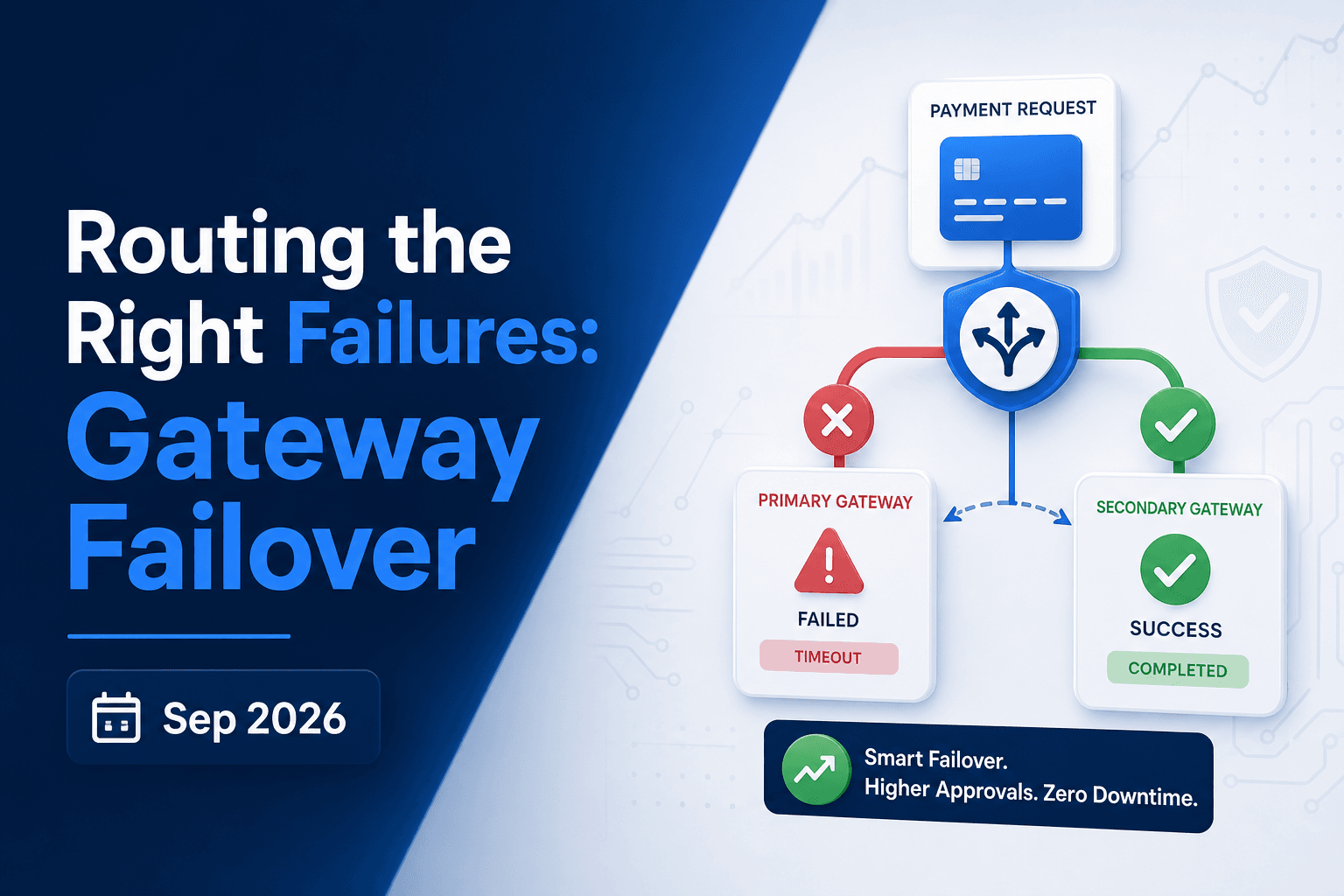
Gateway Failover: Routing the Right Failures October 2026
A gateway outage and an issuer decline look identical in your failed payment count, but they call for completely different responses. Rerouting an issuer...
Stripe Dunning Configuration Guide (September 2026)
A surprising share of the subscribers leaving your list every month never chose to cancel. Their payment failed, your retry window ran out, and Stripe...
Stripe Recovery Add-On Evaluation Guide (September 2026)
Stripe's built-in recovery tools cover real ground. Smart Retries, Account Updater, dunning emails. For a lot of subscription businesses, that's a reasonable...
Stop losing revenue to failed payments
Join leading subscription businesses using Slicker to recover failed payments automatically.
Get Started