Authorization Rate in Subscription Billing: October 2026
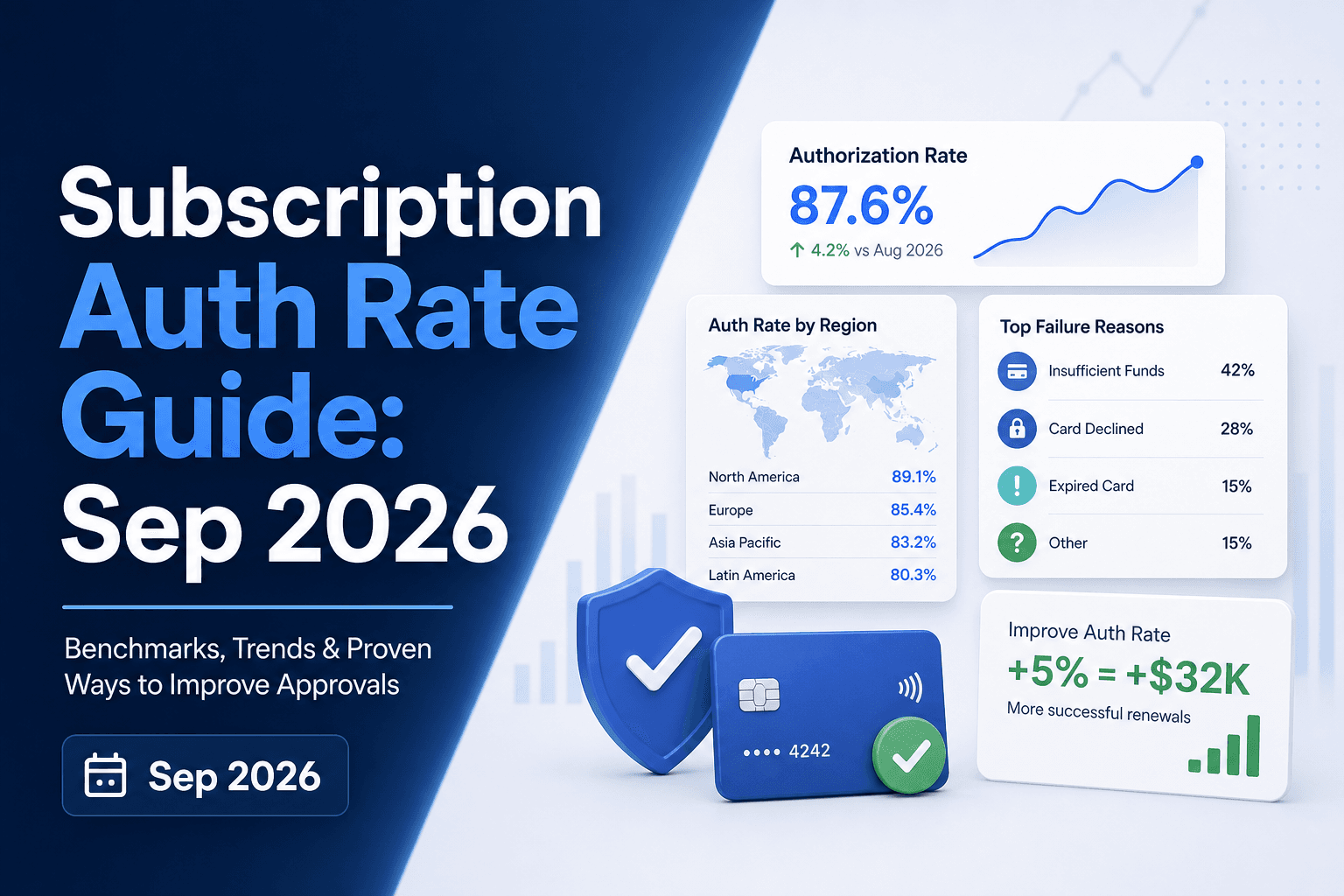
There's a number sitting in your payments data that most finance and retention teams never report on separately: the share of renewal charges your issuing banks are actually approving. Authorization rate sounds like a technical payments metric, and it is, but a two-point drop on a few million dollars in monthly volume is a six-figure revenue problem. Here's what drives it, what a healthy rate looks like in 2026, and where most teams are quietly losing ground.
TLDR:
- Subscription auth rates run roughly 10 points below in-person rates; below 94% signals a diagnosable problem by issuer, card type, or geography.
- Two percentage points on $5M monthly volume costs $100,000 per month, before factoring in lost subscriber lifetime value.
- Retrying hard declines burns network standing and incurs fees; soft declines need timing precision, not volume.
- Network tokenization lifts card-not-present auth rates by 2.1% to 4.6% by auto-updating stale credentials before the next renewal attempt.
- Slicker's Artificial Payments Intelligence reads 40+ variables per transaction to separate recoverable soft declines from hard stops, with AABB-tested results measured on your own traffic.
What Authorization Rate Actually Measures
Authorization rate is the percentage of payment requests that an issuing bank approves out of all attempts submitted. Send 1,000 payment requests and get 920 approved, and your auth rate is 92%.
Where it gets messy is conflation with two related but distinct metrics. Conversion rate measures how many customers who started a checkout actually completed it, folding in abandonment and UX friction before the payment request ever leaves your system. Payment success rate often includes post-authorization failures like network timeouts or settlement errors. Authorization rate is narrower: it starts the moment your processor submits a request to the issuing bank, and it ends with approved or declined.
For subscription teams, this distinction matters. A renewal billing run has no checkout, so conversion rate is irrelevant. What you're tracking is whether the bank approved a charge your customer already agreed to. That is the number your payments and finance teams should be reporting on separately.
Why Subscription Auth Rates Diverge from One-Time Payments
Recurring payments carry a structural disadvantage that one-time checkout payments don't. When a customer initiates a purchase, they're present, the card is active in their hands, and the issuer sees a strong authentication signal. With merchant-initiated transactions (MITs), the cardholder is absent and issuers apply tighter risk filters by default. Online businesses can see authorization rates roughly 10 percentage points lower than in-person transactions because issuers treat card-not-present (CNP) requests with more caution.
Renewals compound this in ways one-time payments don't face. Card credentials go stale between billing cycles: expired cards, reissues after fraud, accounts with changed status. The issuer knows this; your billing system often doesn't until the decline arrives.
Billing cycle timing adds another layer. Charging a debit card on the 28th, before most payroll deposits clear, produces different results than charging on the 2nd. These patterns are predictable, but fixed billing schedules ignore them entirely, making a meaningful share of renewal declines timing failures that the right retry logic can recover. Involuntary churn benchmarks by industry show how much of this is recoverable across different verticals.
What a Good Authorization Rate Looks Like in 2026
For SaaS businesses processing in a single, well-configured market, healthy authorization rates typically fall between 95% and 99%. Drop below 94% and you have a diagnosable problem worth investigating by issuer, card type, or geography.
Multi-market stacks look very different. multi-market auth rates vary by double digits. A top market at 97% sitting alongside a lagging market at 15+ points lower is not unusual, but aggregating those into a single company-wide number hides the gap entirely.
The revenue math is direct: two percentage points on $5 million in monthly volume is $100,000 in lost revenue per month, before factoring in the lifetime value of subscribers who churn because their payment failed. That is why auth rate deserves its own line in your payments review, not a footnote in churn reporting.
Hard Declines vs. Soft Declines: Why the Distinction Drives Your Strategy
Soft declines are conditionally retryable. Hard declines are not. Getting that wrong costs you in two directions at once.
Dimension | Soft Decline | Hard Decline |
|---|---|---|
Retryable? | Yes, conditionally | No |
Root cause | Situational: insufficient funds, issuer temporarily unavailable, processing error | Account-level: stolen card, closed account, fraud block, MAC 03 |
Common examples | Debit card before payroll clears; issuer timeout | Card reported stolen; account permanently closed |
Right action | Retry at the right time with smart timing logic | Send a card-update email; do not retry |
Cost of getting it wrong | Lost recoverable revenue; subscriber churns unnecessarily | Network fees per attempt; lower issuer standing suppresses future auth rates |
MAC signal | MAC 02: retry later; MAC 26: retry after two days | MAC 03: do not retry; MAC 21: cardholder cancelled recurring arrangement |
Soft declines cover insufficient funds, issuer unavailable, and processing errors. The card account is valid; something situational blocked the charge. Retry at the right time and many of these resolve on their own. Hard declines signal that the account itself is the problem: a stolen card, a closed account, a fraud block, or a Merchant Advice Code (MAC) 03 meaning "do not try again." Retrying a hard decline triggers network fees, and repeated violations lower your standing with issuers, suppressing authorization rates on future legitimate charges.
The harder problem is the ambiguous middle. Generic decline, do not honor, transaction not allowed: these codes appear in both soft and hard contexts depending on what accompanies them. A Checkout.com code 20005 with network code 05 is retryable when paired with Merchant Advice Code 26 (retry after two days) but not when paired with MAC 03. The gateway code alone tells you almost nothing. Without the full network response and advice code, you're classifying blind, and that's where most auth rate leakage actually hides.
Where Authorization Rate Actually Breaks Down
Most auth rate problems trace back to one of four root causes, each needing a different fix.
- Stale PANs (primary account numbers) on stored credentials. Cards get reissued after fraud or expiry, and your vault doesn't know until the next decline arrives. The fix is card account updater services or network tokenization.
- Retrying hard declines. Firing another attempt against a closed account or a MAC (Merchant Advice Code) 03 response wastes attempts, incurs fees, and suppresses your issuer standing over time. This is a classification problem.
- Poor 3DS (3D Secure) / SCA (Strong Customer Authentication) exemption handling. Applying SCA to MIT renewals that qualify for exemption adds unnecessary friction; skipping it where issuers expect it triggers soft declines.
- Misaligned MCCs (Merchant Category Codes). The wrong MCC changes how issuers risk-score your transactions. SaaS companies miscategorized as general retail see measurably different approval patterns.
Pull your decline breakdown by reason code, card type, and geography. If stale credential codes dominate, start with tokenization. If hard declines are being retried, fix classification first. Auth rate is rarely one problem, which is why a single aggregate number tells you nothing actionable.
How Network Tokenization Lifts Authorization Rates
Static card numbers age. A customer who signed up two years ago may have had their card reissued after a fraud event, a bank merger, or routine expiry, and your vault still holds the original primary account number (PAN). Every renewal attempt against that stale credential is a decline waiting to happen.
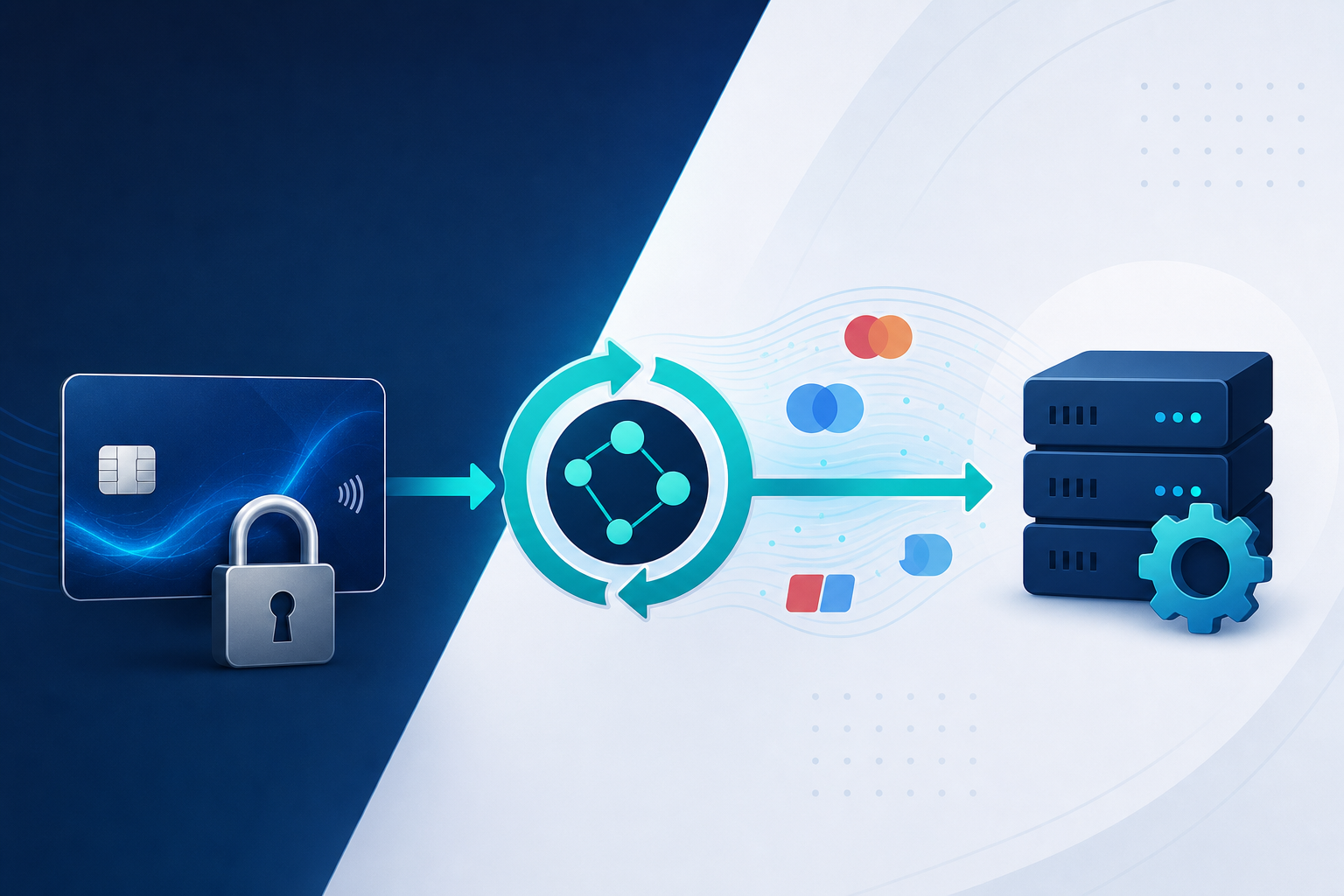
Network tokenization solves this at the infrastructure level. Visa Token Service (VTS) and Mastercard Digital Enablement Service (MDES) replace the static PAN with a rotating token bound to your specific merchant ID. When the underlying card changes, the network updates the token automatically, so your billing system never sees the stale credential.
The authorization lift comes from two directions. First, the card network pre-validates each token before the request reaches the issuer, a stronger trust signal than a raw PAN submitted through a card-not-present channel. Second, because the token is merchant-specific, issuers can apply more permissive risk logic to recurring charges they recognize. Visa reports a 4.6% authorization rate lift on card-not-present transactions; Mastercard puts the average at 2.1%.
For subscription businesses, the gain compounds. One-time checkout payments benefit too, but they don't suffer from credential aging between billing cycles the way stored renewals do. A vault full of two-year-old PANs is where tokenization earns back the most revenue.
Smart Retry Logic and Merchant Advice Codes
Retrying at the wrong time wastes an attempt and signals bad behavior to the issuing bank, suppressing approval odds on every legitimate charge that follows.
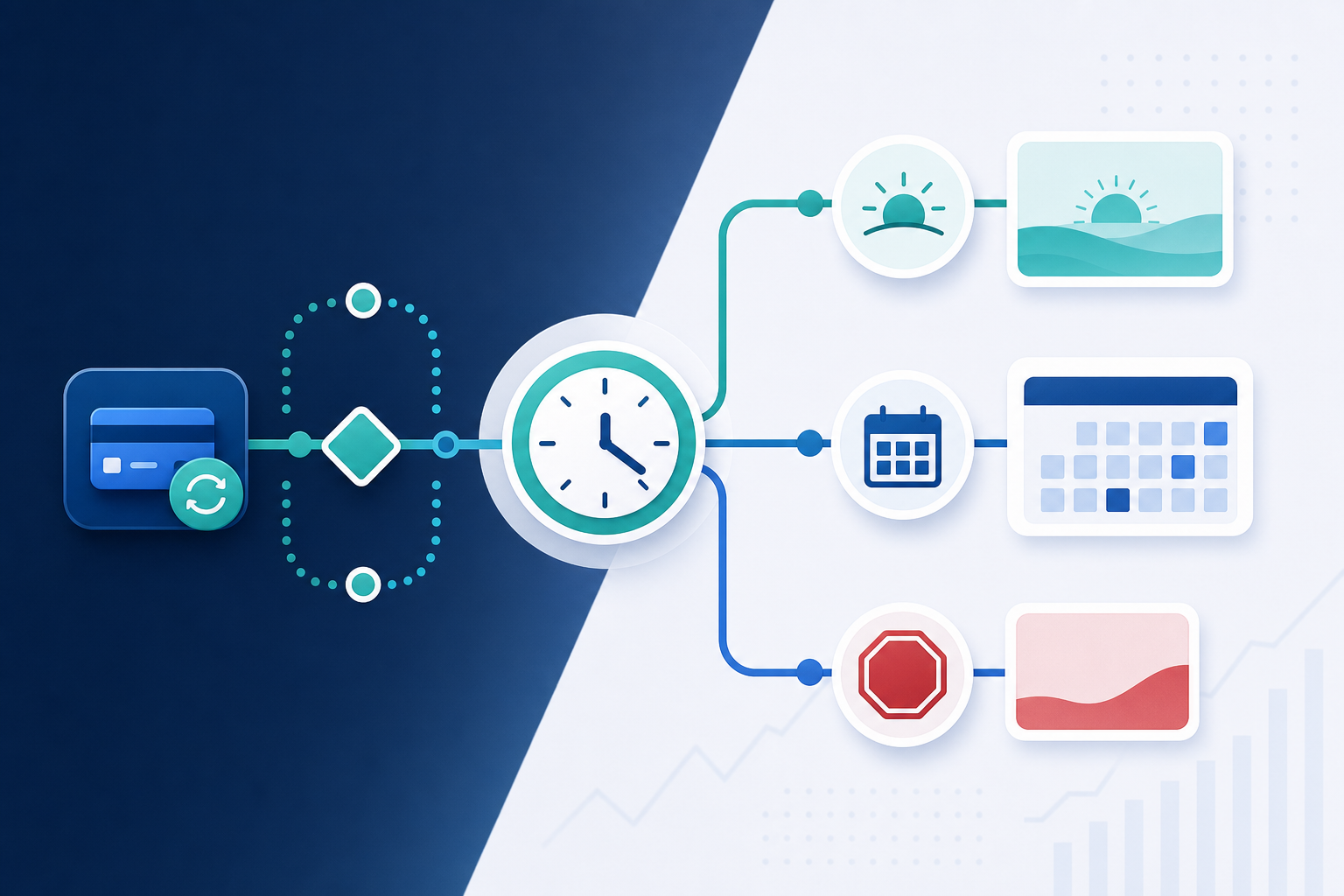
Mastercard communicates retry guidance directly through Merchant Advice Codes (MACs). MAC 02 means the issuer can't approve right now; try later. MAC 03 means stop entirely. MAC 21 means the cardholder cancelled the recurring arrangement, so all future retries should halt. Retrying after a MAC 03 costs $0.10 per attempt and, over time, damages your merchant standing with that issuer.
Visa and Mastercard payment retry rules differ by network. Visa caps attempts at 15 per card and amount within 30 days; exceeding that threshold incurs fees of $1 to $25 per excess attempt, depending on the violation category. Mastercard's rule is stricter on timing: no more than 10 retries within 24 hours on soft declines, and retrying after a MAC 03 costs $0.10 per attempt.
Smart retry logic reads these signals before deciding whether to attempt at all, then times each attempt to when approval is most likely. A US consumer debit card showing insufficient funds has a higher approval window just after midnight when payroll deposits clear, a pattern that intelligent payday retries are designed to exploit. A UK subscriber on a monthly plan is more likely to have funds available on the last working day of the month. A fixed daily retry schedule ignores all of this and burns attempts when the odds are worst.
The discipline is precision over volume: fewer attempts, better-timed, with hard stops when the network says no, all within the bounds of retry velocity limits issuers enforce.
Payment Routing and Gateway Selection
Your acquirer relationship shapes your auth rate before a single retry runs. Issuers apply different risk thresholds depending on where the acquiring bank sits: a transaction processed through a local acquirer in Germany looks different to a German issuer than the same charge routed through a US-based acquirer. That geography mismatch is a consistent source of avoidable declines in cross-border stacks.
There are three practical levers here:
- Acquirer routing selects the gateway most likely to approve a given card based on historical performance by card type, issuer, and region.
- Local acquiring brings the acquirer into the same market as the cardholder, removing the cross-border friction issuers flag.
- Cascading fallback retries a declined transaction through a second gateway before surfacing the decline to your retry logic, catching gateway-level failures unrelated to the cardholder's account.
For subscription businesses billing across markets, gateway selection is a revenue decision. A routing configuration that works in the US can quietly suppress auth rates in Southeast Asia or Latin America without triggering any obvious alert. The fix is performance data cut by gateway, network error codes, and geography together, not a single blended rate.
Authorization Rate and Involuntary Churn: The Connection Most Teams Miss
Industry data shows 20 to 40% of subscription churn is involuntary, driven by payment failure and not by intent. Every failed renewal that goes unrecovered becomes a cancellation sitting inside your churn figure, indistinguishable from a subscriber who chose to leave.
The retention response for each group is completely different. A subscriber who cancelled after weighing value needs a win-back campaign. A subscriber whose debit card declined due to a payday timing mismatch needs a well-timed retry. Treating both the same wastes budget on the wrong problem.
Auth rate is where this breaks down earliest. An aggregate rate of 94% looks acceptable until you cut it by failure type: soft declines that resolve with better timing, hard declines requiring card updates, and ambiguous codes needing classification before any action. Each category maps to a different decline recovery layer, and watching only the top-line number means you're reacting to churn after it has already happened.
How to Measure and Monitor Authorization Rate Correctly
Auth rate is only useful if you're measuring it correctly. The denominator matters: use attempted authorizations submitted to the issuing bank, not checkout attempts or billing events. Abandoned carts and pre-submission failures happen before the authorization request leaves your system and will distort the number if included.
From there, segment before you act:
- By issuer: a drop concentrated in one bank points to a relationship or routing problem worth isolating before it spreads.
- By BIN range: corporate cards, prepaid, and consumer debit follow different approval patterns and should never be averaged together.
- By card network and geography: cross-border gaps in authorization tend to surface here before they appear anywhere else.
- By payment method: PayPal and direct debit operate on separate approval logic and need their own baselines.
Silent drops are the hardest to catch. A 3D Secure (3DS) authentication success rate that dips after a provider-side configuration change can suppress new signups for days before the top-line auth rate moves visibly. Monitor authentication success and exemption usage separately from authorization outcomes, and set alert thresholds at the segment level as well as the aggregate, alongside the failed-payment analytics KPIs your finance team should be tracking. A problem invisible in your overall number can already be costing real MRR (monthly recurring revenue) at the segment level.
How Slicker Surfaces Authorization Rate Gaps and Recovers What Slips Through
After a renewal fails authorization, the gap between the declined amount and what you end up collecting depends entirely on what happens next.
Slicker's Artificial Payments Intelligence reads more than 40 variables per transaction, including network response codes, MACs, BIN, issuer behavior, and payday calendars by country, to decide whether to retry, when, and how many times. That classification step separates recoverable soft declines from hard stops that need a card-update email instead. Retrying the wrong ones burns network standing; skipping the right ones leaves revenue on the table.
The Economist and Freepik each saw approximately 20% recovery-rate improvement in Slicker-run AABB tests on their own traffic (see slickerhq.com/resources/blog/subscription-recovery-rate-measurement). The subscription recovery rate that matters most, though, is yours, measured on your own traffic. Slicker's AABB test design, borrowed from clinical trial methodology, splits failed payments into matched groups, runs your existing recovery logic against Slicker's, and reports recovered dollars with p-values and confidence intervals. If Slicker doesn't outperform with statistical significance, you don't pay.
Slicker Analytics gives finance and payments teams a segmented view of auth rate by issuer, BIN range, gateway, and geography. The AI assistant answers questions like "which issuers have the lowest auth rate this quarter?" without a single SQL query, and turns the answer into a shareable leadership report. The recovery layer and the visibility layer work together, moving teams from reacting to churn to closing the authorization gap before it compounds.
Final Thoughts on Closing the Authorization Rate Gap in Subscription Billing
Auth rate problems rarely come from one place, which is why a single aggregate number gives you almost nothing to act on. Segment by issuer, card type, and geography and the actual causes tend to show up quickly. From there, the fixes, whether that's tokenization, smarter retry logic, or better routing, become straightforward to rank and act on. If you want to see how your current setup measures up, talk to the Slicker team.
FAQs
What's the best way to reduce involuntary churn for a SaaS subscription business in 2026?
The highest-impact moves are fixing decline classification, adding network tokenization for stored credentials, and timing retries to issuer behavior instead of a fixed schedule. Soft declines from stale PANs and payday timing mismatches are largely recoverable with the right retry logic, while hard declines need a card-update email instead of another retry attempt. Industry data puts involuntary churn at 20 to 40% of total subscription churn, so even a few percentage points of recovery improvement translates directly to MRR retention.
What are best practices for retrying failed subscription payments without hurting your merchant reputation?
Stop before you retry: classify the decline first. Retrying a hard decline or a Merchant Advice Code (MAC) 03 response incurs network fees and lowers your issuer standing, which suppresses authorization rates on future legitimate charges. Visa caps retries at 15 attempts per card and amount within 30 days, with fees of $1 to $25 per excess attempt; Mastercard charges $0.10 per attempt after a MAC 03. The discipline is fewer retries, better timed, with hard stops when the network says no.
How do I prove that a payment recovery vendor is actually improving my authorization and recovery rate?
Require a controlled test on your own traffic, not the vendor's aggregate case studies. Slicker uses AABB test design (see the Lift Evaluation Protocol at slickerhq.com/resources/lift-evaluation-protocol). If it doesn't outperform, you don't pay.
What is the difference between authorization rate and payment success rate for subscription businesses?
See "What Authorization Rate Actually Measures" above for the full breakdown; the short answer is that auth rate isolates the bank-approval moment, nothing else. For subscription teams running merchant-initiated renewal billing with no checkout, authorization rate is the number that belongs in your payments review, measured against attempted authorizations submitted to the issuing bank, not billing events or checkout starts.
What payment performance analytics does Slicker provide for diagnosing authorization rate gaps?
Slicker Analytics segments authorization rate by issuer, BIN range, card network, gateway, and geography, and its AI assistant answers questions like "which issuers have the lowest auth rate this quarter?" in plain English without SQL. It also tracks 3DS (3D Secure) challenge rates and authentication success separately from authorization outcomes, so a silent authentication drop after a provider-side configuration change surfaces before it hits your top-line MRR. Every recovery customer also gets a real-time recovery dashboard that separates Slicker-recovered revenue from the merchant's own recoveries.
Related Articles
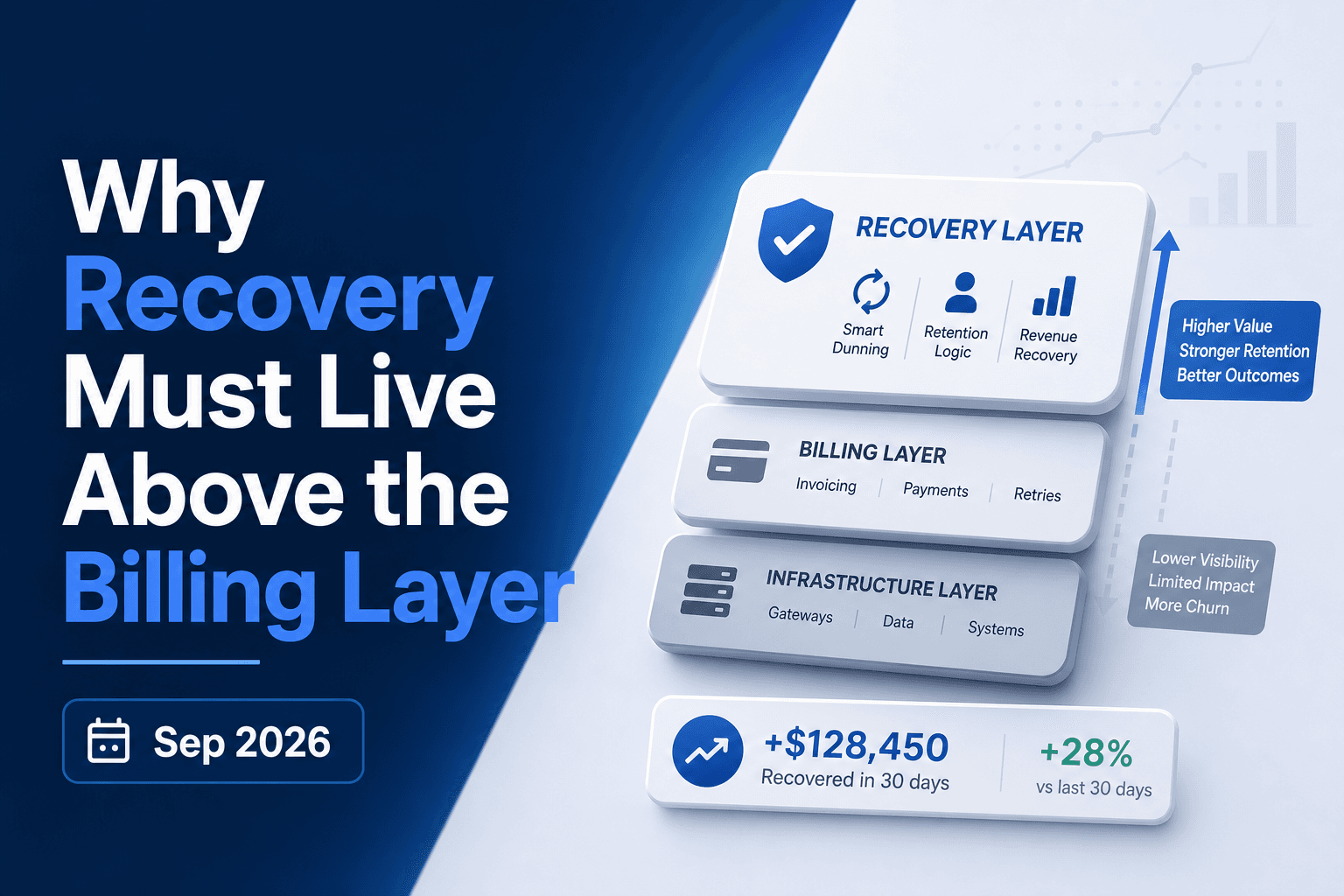
Why Payment Recovery Must Live Above Billers October 2026
A payment fails. Your biller retries it three days later, then again at seven, then at fourteen. What the biller never checks is whether the issuer sent a...
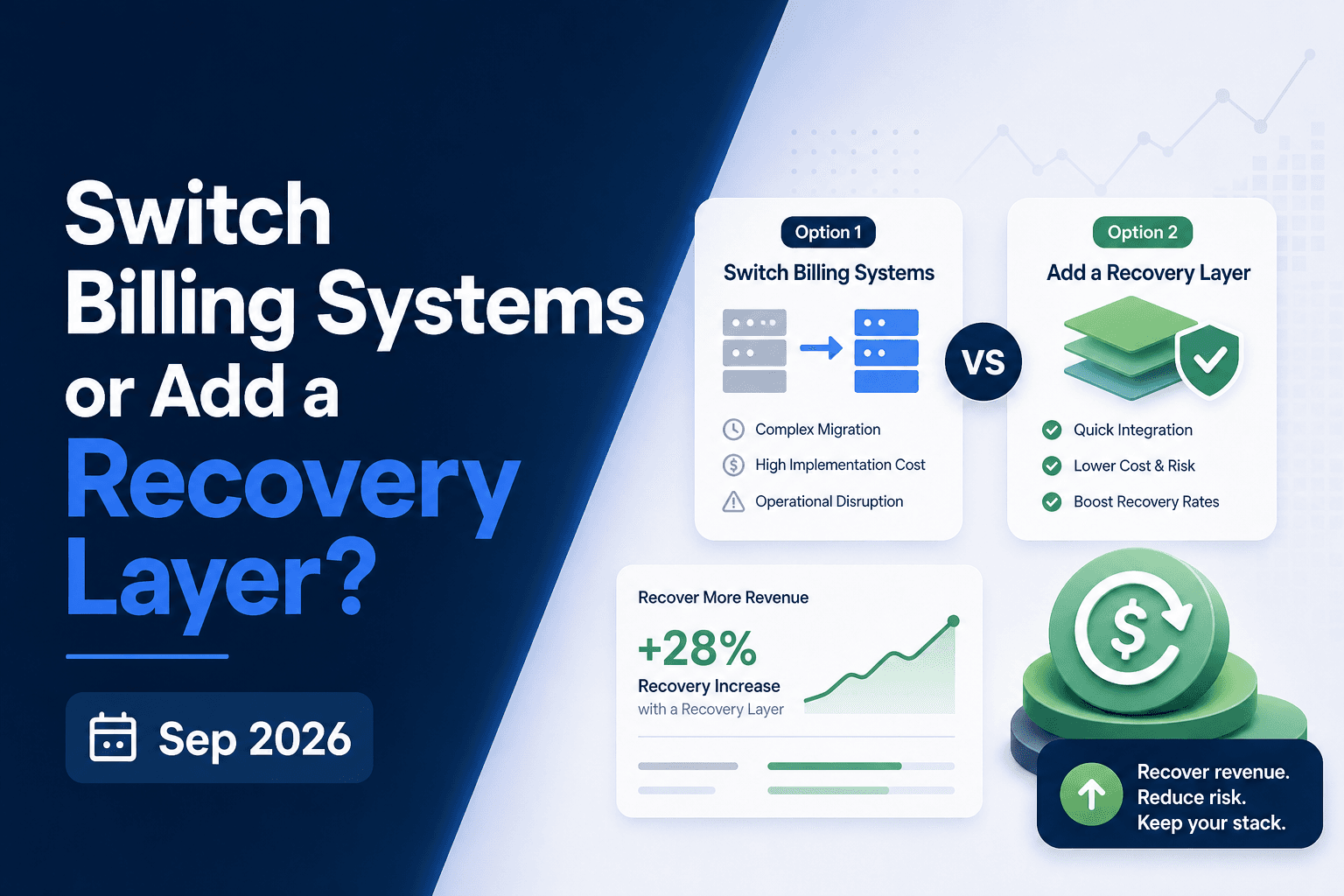
Billing Migration vs Recovery Layer: The Right Call October 2026
Switching billing systems feels like the right move when revenue collection starts breaking down. Sometimes it is. But soft declines, weak retry logic, and...
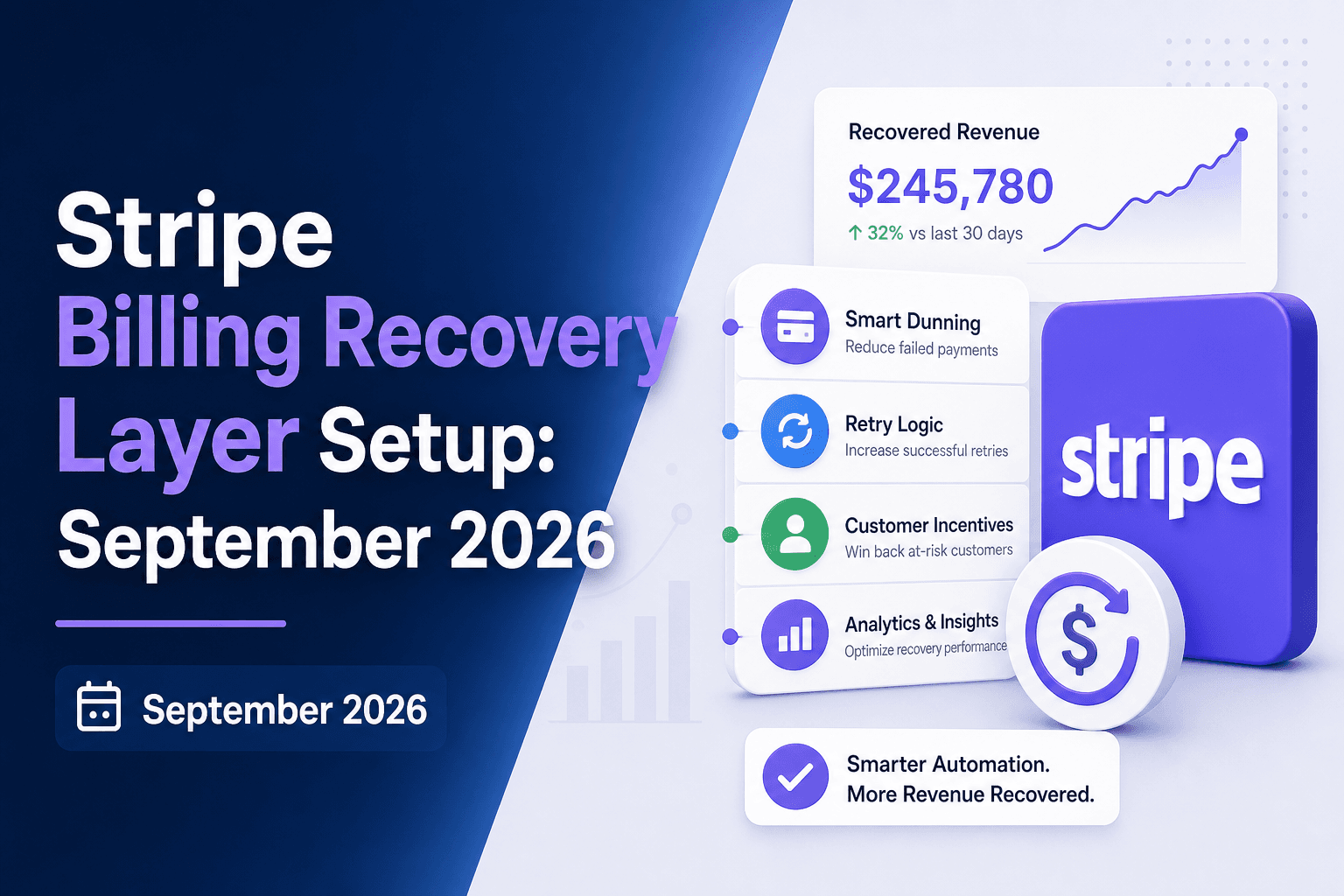
Stripe Billing Recovery Layer Setup Time: October 2026
Adding a recovery layer on top of Stripe Billing sounds like the kind of thing that goes on a quarterly roadmap and gets delayed twice. For most teams, it's...
Stop losing revenue to failed payments
Join leading subscription businesses using Slicker to recover failed payments automatically.
Get Started