Soft Decline Retry Playbook: When to Retry, When to Stop, and What to Change (June 2026)
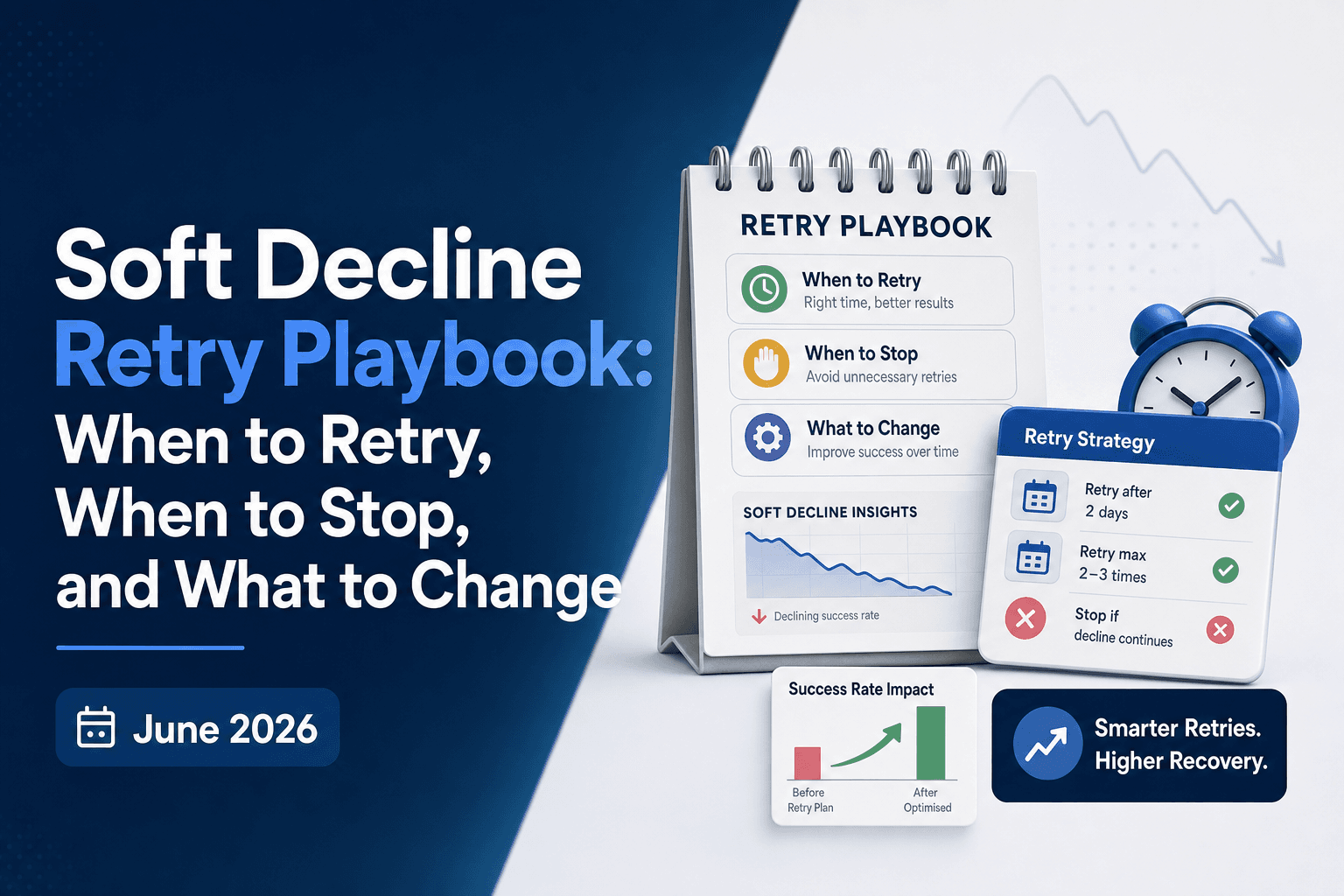
You retry soft declines because you know they're recoverable, but if your retry timing is the same for every decline reason, you're burning through attempts without fixing what actually caused the failure. An authentication error needs the customer to re-authenticate. A temporary hold resolves in hours. Insufficient funds clears when the next paycheck lands. Retrying all three on the same 24-hour loop is why your recovery rate stays stuck. This guide walks through the exact timing windows that work for each soft decline type, how many retry attempts make sense before you stop, and which variables beyond the decline code actually lift authorization rates.
TLDR:
- Soft declines are temporary payment rejections. 15% of recurring payments are declined monthly, with 47% caused by insufficient funds.
- Retry 4 to 6 times maximum. Attempts beyond six trigger fraud flags and risk escalating a soft decline into a hard one.
- Align retries to payday cycles by geography. In the US, target the 1st and 15th; Western Europe sees monthly deposits end-of-month.
- Merchant Advice Codes guide retry timing but don't account for subscriber history or regional pay patterns.
- Slicker analyzes issuer behavior, card type, and geography to decide whether to retry a soft decline, when to retry, and how to sequence attempts, with AABB testing confirming statistical significance on your data before you commit.
What Is a Soft Decline (And Why It Matters for Revenue)
A soft decline is a temporary payment rejection, meaning the card issuer is signaling "not right now" instead of a permanent "no." Common causes include insufficient funds, exceeded credit limits, suspected fraud flags, or issuer-side processing issues. Unlike hard declines, which indicate a card is stolen or invalid, soft declines leave the door open for a successful retry. Soft declines account for 80-90% of all payment failures, making intelligent retry strategies critical for revenue recovery.
For subscription businesses, this distinction carries real revenue weight. Industry data shows roughly 15% of recurring payments are declined, and the majority of those are soft declines, meaning recoverable with the right retry approach.
Common Causes of Soft Declines (Insufficient Funds to Authentication Failures)
According to 2025 card decline data, insufficient funds accounts for 47% of card declines globally. But even within that category, a cardholder who overspent yesterday and one waiting on Friday's paycheck need completely different retry approaches. Lumping them together is where recovery rates suffer.
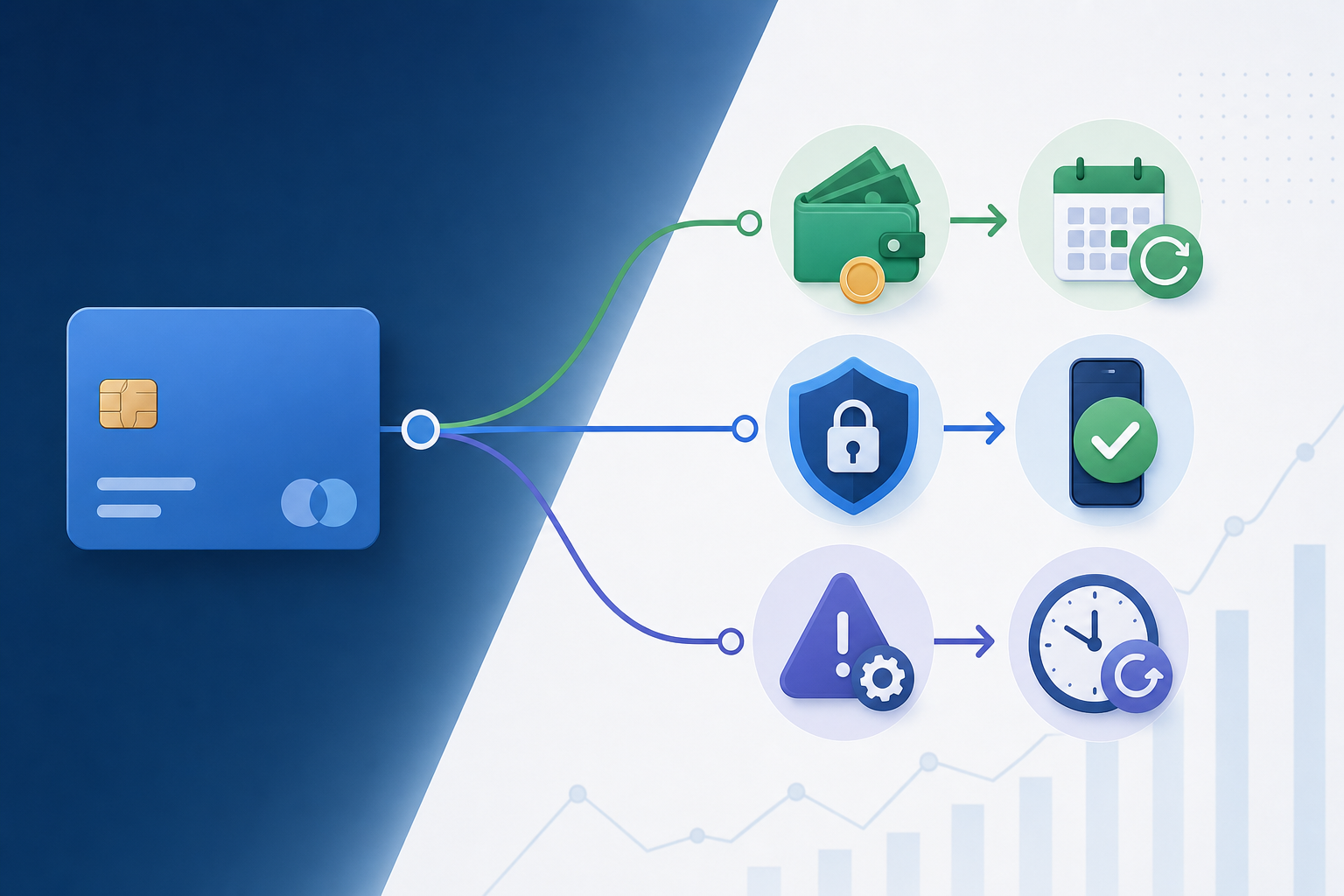
- Insufficient funds: target the cardholder's next payday, as immediate retries rarely succeed and burn your available attempt quota.
- Do not honor codes: ambiguous by design, with recovery potential depending heavily on accompanying Merchant Advice Codes and how the error changes across successive attempts.
- Authentication failures (3DS): usually require the customer to re-authenticate, so retrying without that action won't resolve the underlying block.
- Issuer-side technical errors: typically short-lived, meaning a retry within a few hours often succeeds because the failure was a processor hiccup, not a cardholder problem.
Diagnosing which category you're dealing with before scheduling a retry is what separates a recovered payment from a permanently lost one.
The Revenue Impact: What Failed Payments Actually Cost Your Business
Industry data shows roughly 15% of recurring payments are declined each month. For a subscription business doing $10M ARR, that's $1.5M in revenue at risk before a single customer decides to cancel.
Most of that risk is recoverable. Soft declines, unlike hard declines, aren't permanent rejections. They're temporary issuer-side blocks where a retry at the right time, with the right approach, succeeds. The gap between businesses that recover that revenue and those that don't comes down to whether their soft decline retry logic is built on rules or evidence.
When to Retry a Soft Decline (Timing Windows by Failure Type)
Timing your retries well depends on understanding why the payment failed. A generic 24-hour wait treats every soft decline the same, but a temporary hold from a fraud flag clears on a completely different timeline than an insufficient funds failure tied to a subscriber's pay cycle.
By Failure Type
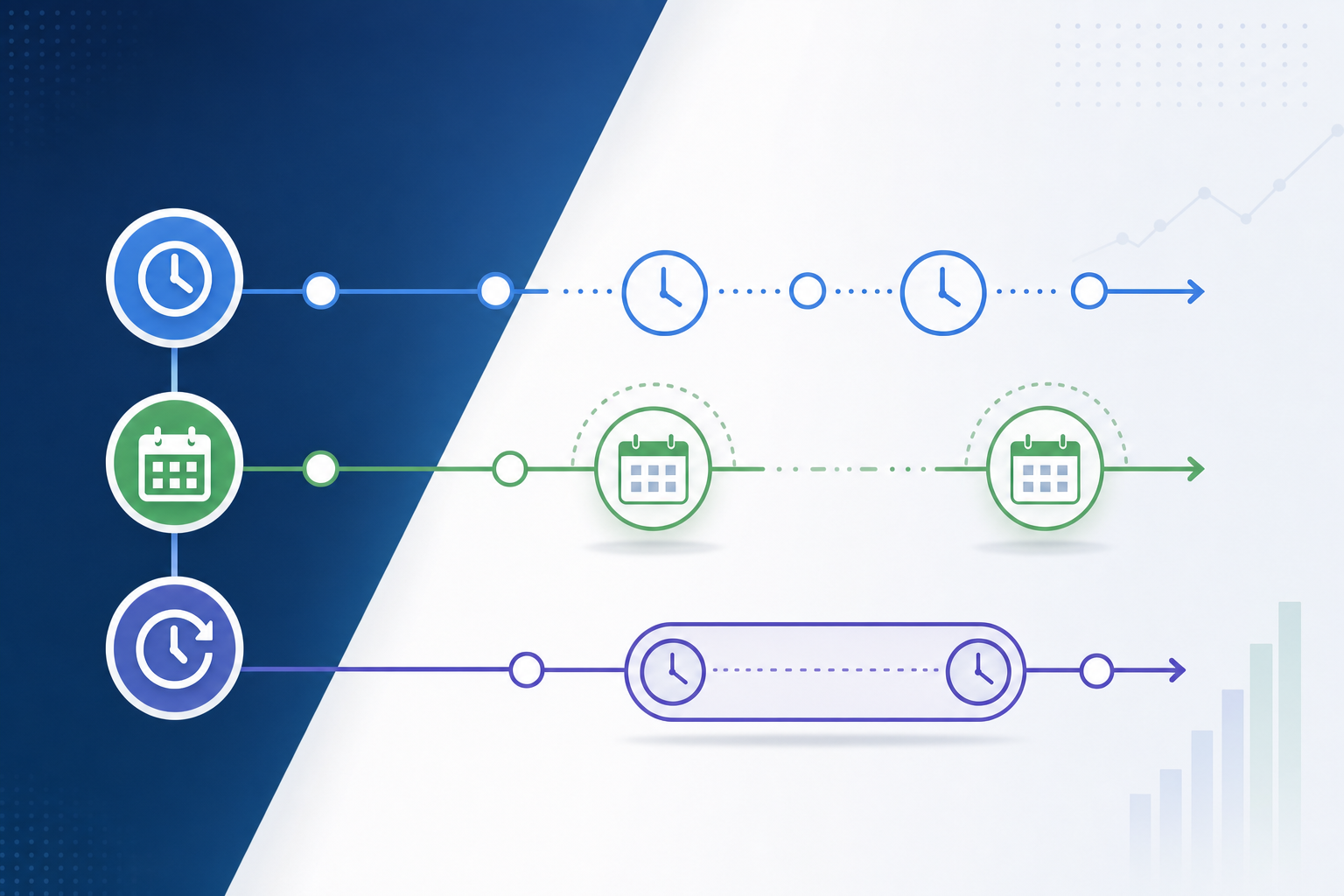
- Insufficient funds: retry on or just after the subscriber's likely payday. In the US, that means targeting the 1st and 15th of the month, or the Friday after a weekly payroll cycle.
- Temporary holds or system unavailability: wait 2 to 4 hours, then retry. These resolve quickly once the issuer's systems recover.
- Do not retry (hard decline territory): stolen cards, closed accounts, and explicit "do not honor" codes are not soft declines and should never enter a retry queue.
How Many Times Should You Retry (Finding the Optimal Attempt Number)
Most subscription billing teams default to 3 to 4 retry attempts. Industry data suggests the sweet spot sits between 4 and 6 attempts, with recovery rates dropping sharply after the sixth try.
Why More Retries Aren't Always Better
After attempt six, you're largely hitting the same wall repeatedly. Continued retries risk triggering issuer fraud flags, which can escalate a soft decline into a hard one and permanently close the door on recovery.
A practical ceiling to follow:
- Attempts 1 to 2 cover immediate retries within the first 48 hours, catching temporary holds and short liquidity gaps.
- Attempts 3 to 4 space out across days 3 to 10, aligned to typical payday cycles.
- Attempts 5 to 6 serve as final recovery windows before escalating to customer outreach.
Stopping at six preserves your merchant reputation with issuers and keeps the customer relationship intact for dunning if needed.
What Merchant Advice Codes Tell You (And When to Ignore Them)
Merchant Advice Codes (MACs) are issuer-sent signals that tell you exactly why a card was declined and what action to take next. When a card network returns a MAC alongside a soft decline, you get more than a status code; you get a recommended path forward.
Here is a full reference table of current MACs:
MAC | Meaning | Recommended Action |
|---|---|---|
01 | New account information available | Request updated card details from customer |
02 | Try again later | Retry after 72 hours |
03 | Do not retry | Stop retries; contact customer |
21 | Do not retry | Stop all retry attempts |
24 | Retry after 1 hour | Short-window retry |
25 | Retry after 24 hours | Daily retry window |
26 | Retry after 2 days | Extended retry window |
27 | Retry after 4 days | Extended retry window |
28 | Retry after 6 days | Extended retry window |
29 | Retry after 8 days | Extended retry window |
30 | Retry after 10 days | Extended retry window |
40 | Consumer non-reloadable prepaid card | Adjust retry cadence for card type |
MACs are genuinely useful signals, but two caveats apply. First, not every issuer sends them consistently, so absence of a MAC does not mean absence of recoverability. Second, MAC guidance is generic by design; it does not account for your subscriber's individual payment history, the time of month, or issuer-specific behavior patterns. A smart retry strategy treats MACs as one input among many, not as the final word on whether a payment can be recovered.
Building Intelligent Retry Logic (Variables Beyond the Decline Code)
Retry timing and frequency get most of the attention, but the variables that actually move recovery rates go much deeper. Issuers judge retries in context, and a well-timed attempt on the wrong day or with the wrong amount can trigger velocity flags just as easily as it can recover revenue.
The variables worth building into your logic include:
- Card type and issuer behavior, since prepaid, debit, and credit cards fail and recover at different rates
- Payday cadence and regional pay cycles, which shift the optimal retry window by days
- Transaction amount, because smaller amounts clear more often on accounts with limited funds
- Time of day, as processor routing and issuer availability vary meaningfully across hours
- Customer tenure and lifetime value, which can support more aggressive retry sequences
When to Stop Retrying (Hard Decline Recognition and Network Penalties)
Knowing when to stop is just as important as knowing when to retry. Hard declines signal that the card or account has a fundamental issue that no retry will fix. Continuing to retry after a hard decline wastes attempts, risks card network penalties, and can trigger merchant ID (MID) suspension.
Hard decline codes to stop retrying on immediately:
- Stolen card (41) or pickup card (43): retrying is a compliance violation.
- Invalid account (62) or closed account (46): the card no longer exists.
Visa and Mastercard both enforce retry limits on hard declines. Exceeding them can result in fines or MID suspension, which costs far more than any recovered payment.
Payday-Aligned Retry Strategies (Geographic Timing Patterns)
Retry timing varies sharply by country because income patterns vary. Retrying on the wrong day means hitting accounts before funds have arrived.
- US and Canada: most payroll lands on the 1st, 15th, or the nearest business day. Retry within 24 to 48 hours of those dates for the best authorization lift.
- Western Europe: monthly salary deposits typically arrive on the last working day of the month. Target retries in the first two days of the new month.
- Australia: fortnightly pay cycles are common, so retry windows recur every two weeks instead of monthly.
- Eastern Europe: mid-month and end-of-month paydays are both common, giving you two viable retry windows per cycle.
Aligning retries to local pay cycles can meaningfully reduce failed authorization rates without any change to your underlying retry logic.
The Role of Dunning Emails (When Customer Action Is Required)
Automated retries handle the majority of soft declines without any customer involvement. But some failure reasons genuinely require action from the cardholder, and that's where dunning emails earn their place.
Expired cards, stolen card flags, and certain authentication failures can't be resolved by retrying alone. When the decline code points to one of these scenarios, a well-timed, brand-owned email is the right next move.
A few principles that separate effective dunning from noise:
- Send from your own domain, not a third-party sender, so the email lands with the trust your brand has already built.
- Anchor the message to what the customer stands to lose, not the payment failure itself. "Your subscription pauses Friday" outperforms "Your payment didn't go through."
- Match the ask to the actual problem. A stolen card needs a new payment method; insufficient funds may only need a retry window.
Dunning is the fallback, not the default. Silent recovery should run first, and customer outreach should trigger only when the error code tells you human action is genuinely required.
Measuring Retry Performance (Recovery Rate by Decline Type)
Aggregate recovery rate is a starting point, not a diagnostic. A single percentage tells you nothing about where the breakdown is happening or which failure type is dragging the number down.
Segment your tracking by decline reason instead:
- Soft declines (insufficient funds, temporary holds): recovery above 80% is achievable with well-timed retry logic.
- Expired card failures: rates below 60% typically signal a messaging or timing gap in your dunning sequence, since these require customer action to resolve.
Track dollars recovered per failure category, not email opens or click rates. A high open rate means nothing if cardholders aren't completing the card update. Revenue recovered by failure type is the signal that tells you whether your soft decline retry strategy is working or just running.
How Slicker Turns Soft Declines Into Recovered Revenue
Slicker's retry engine skips the guesswork that makes generic retry schedules so leaky. It analyzes issuer behavior, card type, geography, and account history to decide whether to retry a soft decline, when to do it, and how to sequence follow-up attempts.
When automated retries fall short, Slicker's dunning layer sends payment recovery emails from your own domain, personalized to the specific failure reason, so customers see a brand-consistent message tied to what they'd actually lose.
Every decision is measured via clinical-grade AABB testing, with statistical significance confirmed on your own data before you commit. That's not a vendor promise; it's a proof structure you can verify yourself.
Final Thoughts on Recovering Soft Declines
The revenue is already yours. Whether you keep it depends on how well your retry logic matches the actual failure reason. Generic schedules treat a fraud flag the same as a missed payday, which is why subscription businesses on flat retry schedules recover less than half of what's sitting in soft declines. If you want to measure the gap between what you're recovering now and what's actually possible, let's run the test.
FAQ
Can I build a soft decline retry strategy without engineering resources?
Yes. Modern payment recovery platforms offer no-code integrations that connect to your billing system in minutes and begin optimizing retry timing immediately, requiring zero engineering lift from your team.
Soft decline retry vs hard decline retry?
Soft declines are temporary issuer-side blocks (insufficient funds, temporary holds) where retrying at the right time succeeds, while hard declines are permanent rejections (stolen card, closed account) that should never enter a retry queue. Retrying hard declines wastes attempts, triggers network penalties, and risks merchant ID suspension.
How many retry attempts should you make before giving up on a soft decline?
Industry data shows the optimal range is 4 to 6 attempts, with recovery rates dropping sharply after the sixth try. Beyond that threshold, you're hitting the same wall repeatedly while risking issuer fraud flags that can escalate a soft decline into a permanent hard decline.
Should I retry immediately after a soft decline or wait for payday?
It depends entirely on the failure reason. Insufficient funds tied to a subscriber's pay cycle should target payday (1st and 15th in the US, last working day in Western Europe), while temporary holds or system errors resolve within 2 to 4 hours and should be retried quickly.
What's the revenue impact of ignoring Merchant Advice Codes on retries?
Mastercard charges a $0.10 penalty per retry attempt when merchants ignore advice codes instructing them to wait, and Visa enforces similar retry limits on hard declines. Exceeding these thresholds triggers fines and can lead to merchant ID suspension, costing far more than any recovered payment.
Related Articles

Build vs Buy: Payment Retry Logic Deep Dive (September 2026)
Your engineering team can build retry logic. The harder question is whether they should. The gap between a basic retry schedule and something that actually...

Where 20% More Payment Recovery Comes From (Sep 2026)
A 20% recovery uplift sounds like a headline until you try to figure out what it actually means for your baseline. Relative improvement, absolute percentage...

2026 Revenue Recovery Playbook for Subscription Businesses
Failed payments are responsible for somewhere between 20 and 40% of subscription churn across the industry. Those subscribers never chose to leave. A good...
Stop losing revenue to failed payments
Join leading subscription businesses using Slicker to recover failed payments automatically.
Get Started