Dunning Letter: Definition, Best Practices & Examples (October 2026)
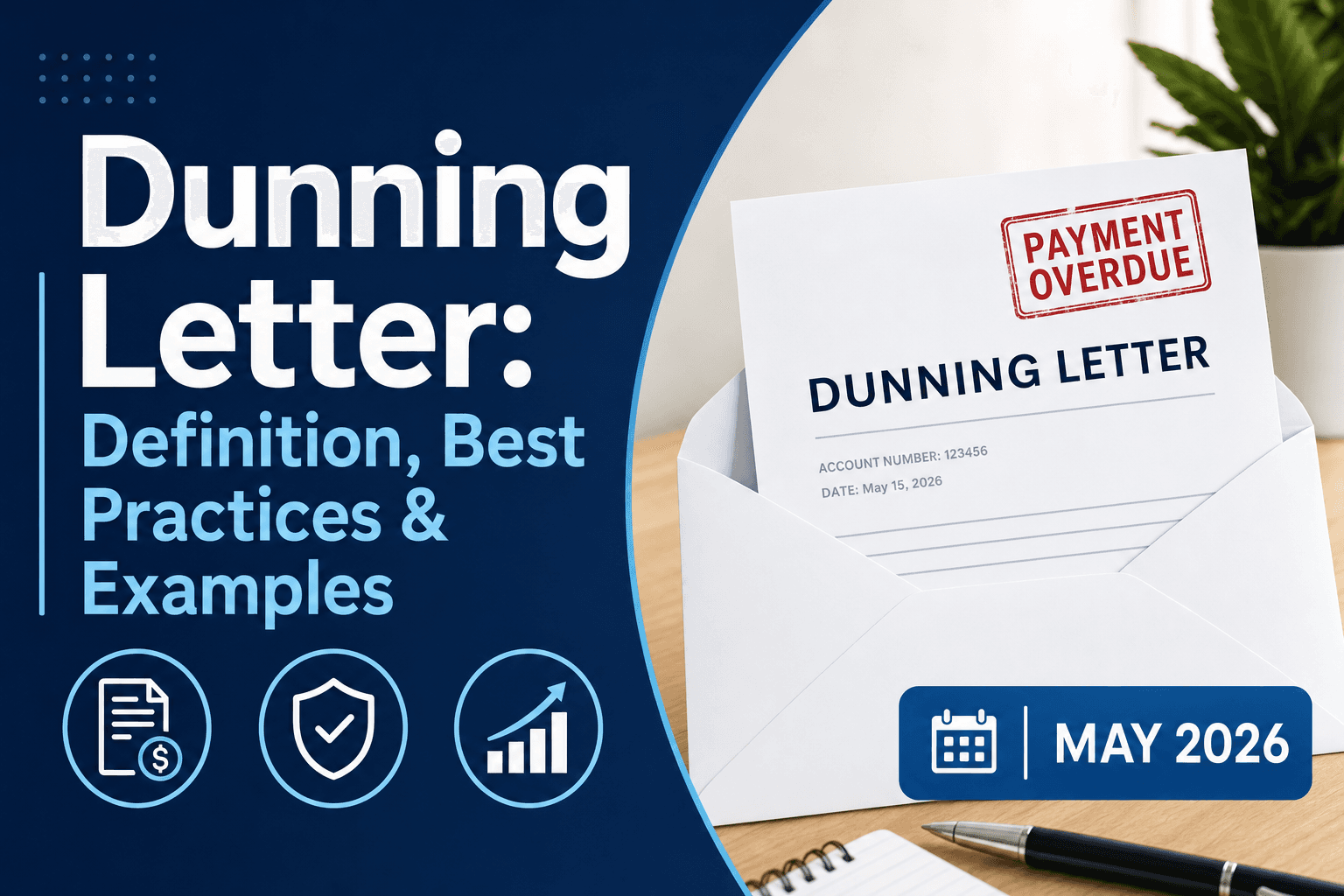
At high-volume subscription companies, payment failures translate directly to revenue leakage. A dunning letter formalizes your recovery request in writing, escalating through four stages that match the age of the debt and the urgency of the situation. Stage 1 assumes good faith. Stage 4 signals collections. Get the sequencing wrong and your finance team either burns goodwill on accounts that would self-resolve or lets recoverable revenue drift past the point where polite requests still work. The framework looks straightforward until your AR team is managing thousands of overdue balances across different aging buckets and trying to match tone, timing, and legal compliance without manual intervention at every turn.
TLDR:
- A dunning letter requests payment on overdue balances and follows a 4-stage sequence: friendly reminder, firm follow-up, formal warning, and final notice before collections.
- Send your first dunning letter within 24 hours of payment failure and include invoice number, days past due, amount owed, and payment instructions to avoid disputes.
- FDCPA violations expose your organization to $1,000 per lawsuit in statutory damages, so review your dunning sequence with legal counsel if you work with third-party collectors.
- Automated dunning systems trigger the right message by AR aging bucket without manual intervention, maintaining consistency across all overdue accounts at scale.
- Slicker uses AI to determine if smart retry logic can recover payment automatically before sending dunning emails, delivering 20% higher recovery rates across 1M+ payment failures.
What Is a Dunning Letter?
A dunning letter is a written notice sent to a customer or client with an overdue balance, formally requesting payment. The term traces back to 17th-century English slang: "dun" meant to persistently press someone for a debt. Four centuries later, both the word and the practice remain.
You'll see these letters called dunning notices, collection letters, or past-due notices depending on industry and context. Different names, same function.
What separates a dunning letter from a standard payment reminder is intent. A statement informs. A dunning letter responds to a missed payment with a direct, time-sensitive request to resolve it. That distinction matters because as the sequence escalates, so does the tone, the urgency, and the legal weight behind each communication.
The 4 Stages of Dunning Letter
Most businesses don't send one dunning letter. They send a sequence, escalating in tone and urgency as the payment remains unresolved. The standard framework has four distinct stages, each serving a different purpose in the recovery process.

Stage 1: Friendly Reminder
Sent within a few days of the missed payment, this letter assumes good faith. The tone is courteous, the message brief, and the ask simple: please pay the outstanding balance.
Stage 2: Firm Follow-Up
If Stage 1 goes unanswered, the second letter introduces mild urgency. It restates the amount owed, references the prior reminder, and sets a clear deadline.
Stage 3: Formal Warning
Tone escalates here. This letter signals real consequences, including late fees, service suspension, or referral to collections, if payment is not received promptly.
Stage 4: Final Notice
The last letter before escalation. It gives a hard deadline and typically informs the customer that non-payment will trigger collections or legal action.
Core Elements of an Effective Dunning Letter
Every dunning letter, regardless of stage, needs the same core information. Miss any of it and you risk disputes, delays, or a legally non-compliant notice.
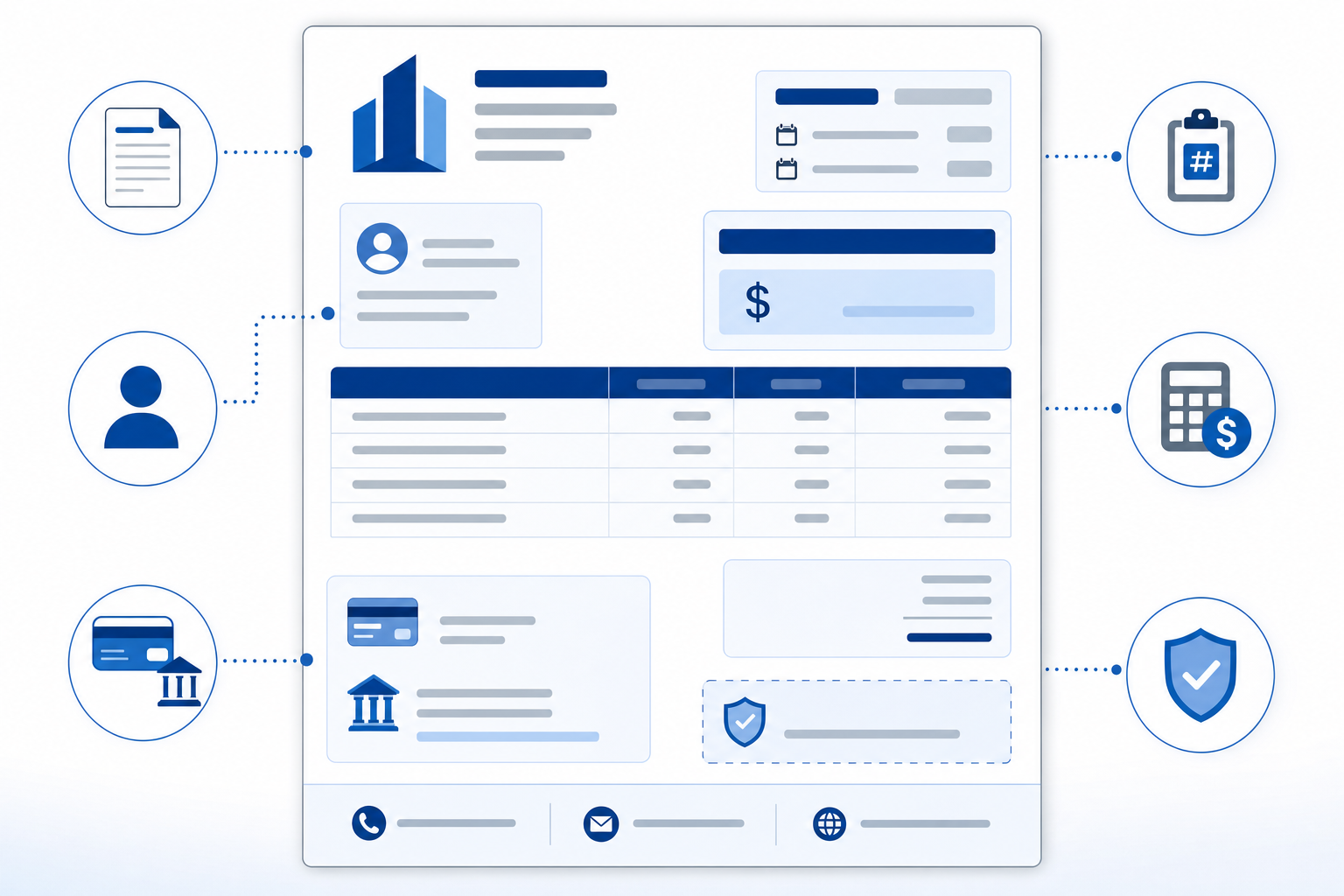
Here's what belongs in every letter:
- Invoice number and date, so the customer can locate the exact record without back-and-forth
- The original due date, stated plainly instead of vague references to a missed payment
- Total amount owed, with any accrued late fees broken out as a separate line item
- Days past due, written as a specific number
- Clear payment instructions covering every available method: online portal, check, wire, and ACH
- A direct contact name, phone number, or email for billing questions
- Stated consequences of continued non-payment, appropriate to the stage of escalation
Tone and consequences must match the stage. A Stage 1 letter has no business mentioning collections. A Stage 4 letter should not read like a gentle nudge. Consistency between stage and content signals professionalism and holds up far better if the matter ever escalates legally.
Best Practices for Writing Dunning Letters
Timing matters as much as tone. Send your first dunning letter within 24 hours of a failed payment, while the account is still top of mind. Each subsequent notice should escalate in urgency without becoming hostile. A respectful, professional tone in early stages preserves the customer relationship; blunt language is reserved only for final notices.
Keep every letter concise and action-focused. State the amount owed, the due date, and a single clear call to action. Burying the payment link or making the next step ambiguous is one of the fastest ways to lose a recoverable account.
A few practices consistently improve recovery rates:
- Personalize beyond the customer name. Reference the specific invoice number, amount, and original due date so the letter feels precise, not generic.
- Offer multiple payment options. Friction in the payment process kills follow-through, so give customers more than one path to resolve the balance.
- Stay FDCPA-compliant. If you are collecting on behalf of another creditor, federal law governs what you can and cannot say, and violations carry real legal exposure.
- Track response rates by stage. If your second-stage letter outperforms your third, that is data worth acting on.
Dunning Letter vs. Demand Letter
Both request payment. That is roughly where the similarities end.
Dunning letters come first. Written by your finance or billing team, they follow a structured sequence designed to recover payment while keeping the customer relationship intact. A demand letter arrives only after those efforts have failed. Usually drafted by an attorney, it cites specific legal grounds and signals that litigation follows if the balance is not cleared.
Dunning Letter | Demand Letter | |
|---|---|---|
Written by | Finance or billing team | Attorney |
Tone | Escalating, professional | Formal, legal |
Legal weight | Low to moderate | High |
Relationship goal | Preserve it | No longer a factor |
When sent | After missed payment | After dunning fails |
Think of dunning as the commercial track and a demand letter as the legal track. Once you send the latter, the relationship is effectively over.
Legal Compliance and FDCPA Considerations
Dunning letters sent by third-party debt collectors fall under the Fair Debt Collection Practices Act (FDCPA), which sets strict rules on timing, content, and conduct. First-party creditors collecting their own receivables are generally exempt, but the line blurs when agencies are involved.
Key FDCPA requirements every finance team should know:
- Any initial collection communication must include a 30-day validation notice, informing the debtor of their right to dispute the debt in writing.
- Collectors cannot contact debtors before 8 a.m. or after 9 p.m. local time, or use harassment, false statements, or unfair practices.
- If a debtor disputes the debt in writing within 30 days, collection activity must pause until the debt is verified and mailed to the debtor.
- Violating the FDCPA exposes your organization to statutory damages of up to $1,000 per lawsuit, plus attorney fees.
When in doubt, have legal counsel review your dunning sequence before deployment, especially if you work with collection agencies at later stages.
Automating Your Dunning Process
Manual dunning sequences break down fast. When your AR team is chasing dozens of overdue accounts across multiple aging buckets, the consistency that makes dunning work disappears under workload pressure.
Automated systems fix this with rule-based triggers tied directly to your AR aging schedule. A payment that hits 1 day past due fires Stage 1 automatically. No decision required, no delay, no accounts slipping through.
Here is what well-built automation handles:
- Trigger rules by aging bucket (1-7 days, 8-30 days, 31-60 days, 60+ days)
- Template assignment by stage and customer segment
- Delivery channel selection across email, postal, and SMS
- Response tracking with escalation holds when a customer engages
- DSO reporting tied to dunning activity
The real gain is consistency at scale: the right message at the right time, regardless of how many open balances your team is managing simultaneously.
How Slicker Automates Dunning for Subscription Businesses
Most dunning tools send emails on a fixed schedule, regardless of whether customer action is actually needed. Slicker's AI decides that question first. If a smart retry can recover the payment automatically, no email goes out. Only when customer action is the only path do we reach out.
When we do, the message is built around the specific failure reason: an expired card in the US, a cancelled PayPal in Germany, a failed direct debit in the UK. Every email comes from your domain, so the customer experience stays consistent with your brand and never signals a third-party collector.
Across over 1M recovered payment failures, we've delivered a 20% recovery rate uplift compared to standard retry logic. Fewer unnecessary emails, more precise outreach, and a customer relationship that holds through the recovery process instead of fraying under it.
Final Thoughts on Managing Payment Recovery
A functioning dunning letter framework starts with clarity: the right amount, the right deadline, and the right next step in every message. Your team can send hundreds of notices, but without stage-appropriate tone and FDCPA compliance, you risk both recovery rates and legal exposure. Automation keeps the sequence consistent, but you still own the strategy behind it. Get your templates right, then let the system handle execution so your AR team can focus on exceptions instead of chasing every overdue invoice.
FAQ
What is a dunning letter?
A dunning letter is a written notice sent to a customer with an overdue balance, formally requesting payment. Unlike a standard payment reminder that simply informs, a dunning letter responds to a missed payment with a direct, time-sensitive request to resolve it, often following a structured sequence that escalates in tone and urgency.
How do I write a dunning letter that actually recovers payment?
Send your first letter within 24 hours of the failed payment, include the invoice number, exact amount owed, days past due, and clear payment instructions across multiple channels (online portal, check, wire, ACH). Match tone to stage: Stage 1 stays courteous, Stage 4 references collections, and every letter should have one clear call to action without burying the payment link.
Dunning letter vs demand letter: when do I use each?
Dunning letters come first and are written by your finance team to recover payment while preserving the customer relationship. Demand letters arrive only after dunning fails, are drafted by an attorney, cite legal grounds, and signal litigation follows if the balance isn't cleared. At that point, the relationship is over.
Can I automate dunning letters without losing compliance?
Yes, with rule-based triggers tied to your AR aging schedule. Automated systems fire the right stage at the right time (1-7 days, 8-30 days, 31-60 days, 60+ days), track responses, and hold escalation when customers engage. For third-party collectors, automation must include FDCPA-compliant 30-day validation notices and timing restrictions (no contact before 8 a.m. or after 9 p.m. local time).
What are the 4 stages of dunning letter and when should I send each?
Stage 1 (friendly reminder) sends within 24 hours assuming good faith, Stage 2 (firm follow-up) adds urgency and a deadline, Stage 3 (formal warning) introduces consequences like late fees or service suspension, and Stage 4 (final notice) gives a hard deadline before collections or legal action. Each stage matches tone to severity. Never threaten collections in Stage 1 or sound gentle in Stage 4.
Related Articles
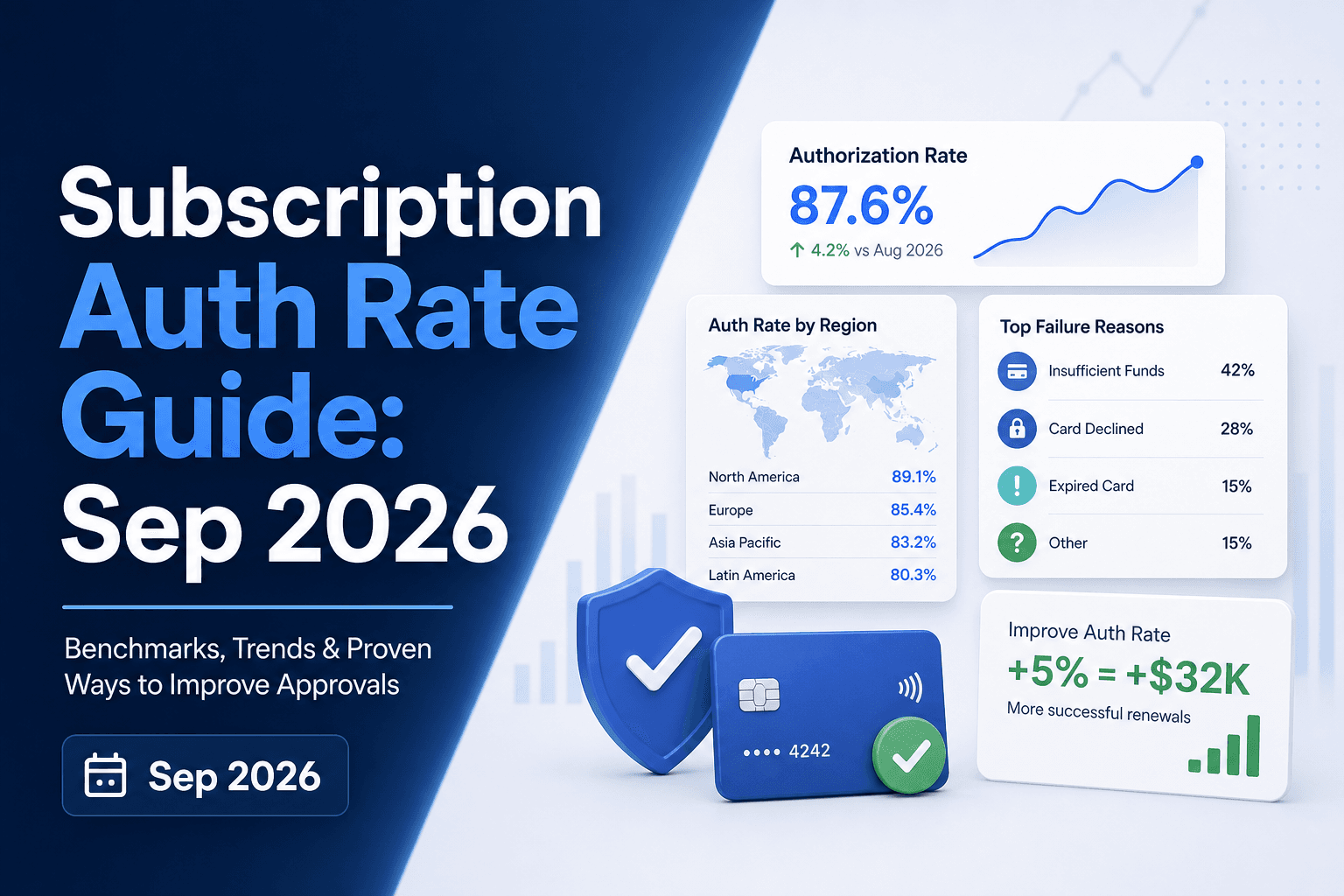
Authorization Rate in Subscription Billing: October 2026
There's a number sitting in your payments data that most finance and retention teams never report on separately: the share of renewal charges your issuing...
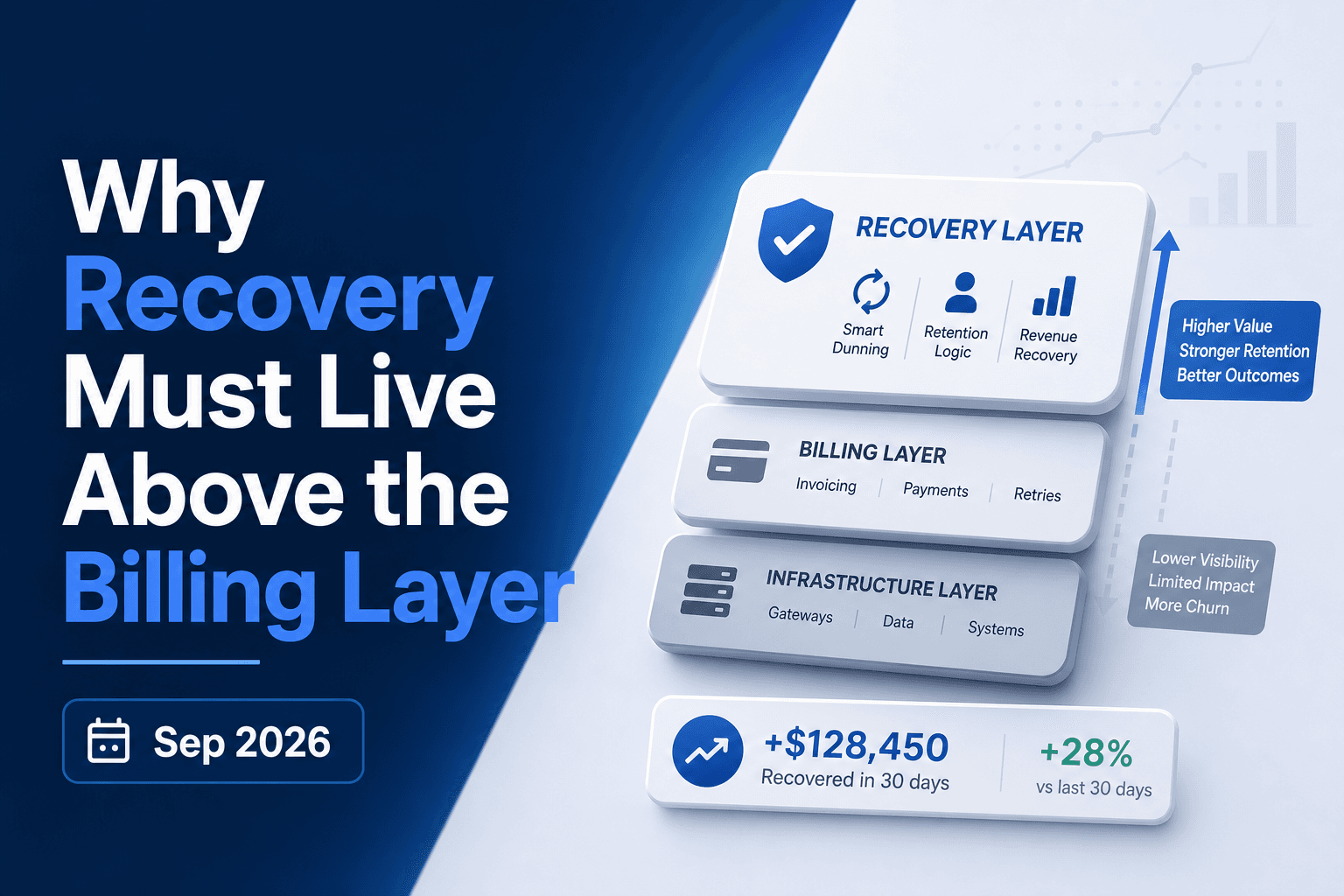
Why Payment Recovery Must Live Above Billers October 2026
A payment fails. Your biller retries it three days later, then again at seven, then at fourteen. What the biller never checks is whether the issuer sent a...
Billing Migration vs Recovery Layer: The Right Call October 2026
Switching billing systems feels like the right move when revenue collection starts breaking down. Sometimes it is. But soft declines, weak retry logic, and...
Stop losing revenue to failed payments
Join leading subscription businesses using Slicker to recover failed payments automatically.
Get Started