Why Your Dunning Emails Need Your Domain, Not the Vendor's (July 2026)
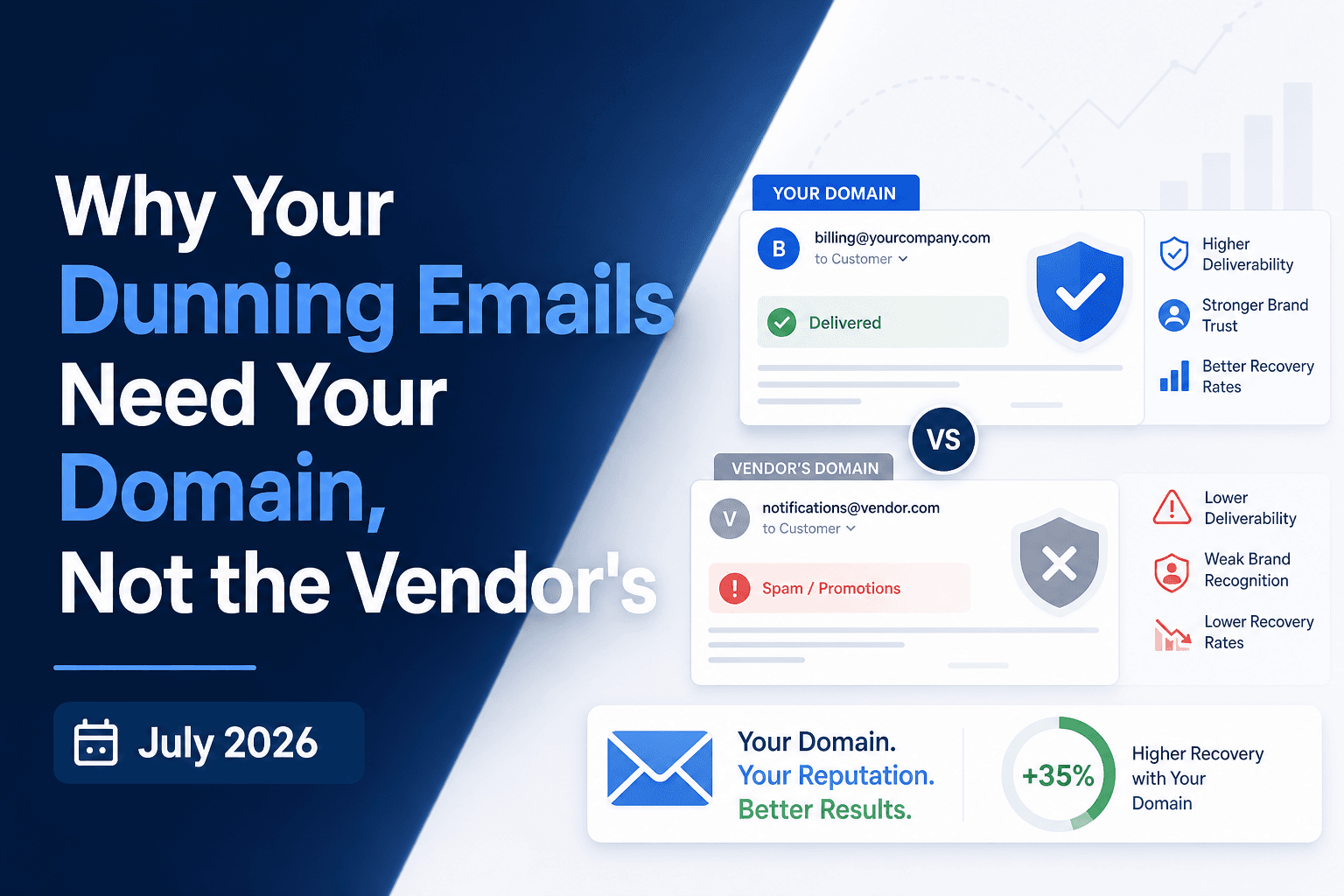
Most failed payments recover silently. Automated retries handle the majority of soft declines without any customer contact. But when a payment failure genuinely requires customer action, such as an expired card or a stolen one, your dunning emails are the fallback, and whether those emails reach the inbox depends entirely on the domain they come from.
TLDR:
- Vendor-sent dunning emails share IP reputation with every other company on that domain, so one bad actor can send your recovery emails to spam.
- Inbox providers score sender reputation by domain; your own domain inherits years of engagement history that a vendor subdomain starts without.
- Research from Litmus shows 51% of recipients decide whether to open an email based on sender name alone, making your domain a direct open-rate lever.
- Configure SPF (Sender Policy Framework), DKIM (DomainKeys Identified Mail), and DMARC on your sending domain before scaling dunning volume.
- Slicker sends recovery emails through your existing email infrastructure, so subscribers see your domain in the "From" field, with no engineering required.
The Deliverability Case Against Vendor-Sent Dunning Emails
Emails sent from a vendor's shared domain carry real deliverability risk. Shared sending infrastructure means your recovery messages compete with every other customer on that vendor's IP pool, and a single bad actor can tank the sender reputation for everyone. Internet service providers (ISPs) and spam filters score domain age, domain reputation, and engagement history together, and none of those signals favor a vendor's generic subdomain that has built no history with your subscriber base.
The result: your dunning emails land in spam folders instead of inboxes, and subscribers never see the recovery request.
What Inbox Providers Actually Look At
When Gmail, Outlook, or Apple Mail decide where to route your email, they weigh several signals:
- Sender domain reputation built over time, based on open rates, click rates, and spam complaints from that specific domain
- DKIM and SPF alignment, which confirm the sending domain matches the "From" field your subscriber recognizes
- Engagement history between your domain and that recipient's inbox, which improves deliverability over time as your subscribers interact with your emails
A vendor subdomain like billing.acmepayments.com starts at zero on all three. Your own domain, by contrast, carries years of engagement data. Every legitimate marketing email, transactional receipt, and support reply you have ever sent has built sender credit that your dunning letters and emails can inherit.
The revenue implication is direct: a recovery email that never reaches the inbox cannot recover a payment. For high-volume subscription businesses, even a modest improvement in deliverability on dunning messages translates to measurable MRR (monthly recurring revenue) recovery that would otherwise be written off.
How Sender Domain Reputation Affects Dunning Email Delivery
Inbox providers like Gmail and Outlook score the sending domain on every inbound message. When your dunning emails go out from a vendor's shared domain, your recovery email deliverability is tied to the behavior of every other company on that domain, not yours alone. One bad actor on the same shared infrastructure can depress inbox placement across the board.
The mechanics behind this involve three authentication layers that work together:
- SPF (Sender Policy Framework) confirms the sending server is authorized to send mail on behalf of the domain listed in the message.
- DKIM (DomainKeys Identified Mail) attaches a cryptographic signature tied to that domain, so receiving servers can verify the message hasn't been altered in transit.
- DMARC ties SPF and DKIM together, telling inbox providers what to do when either check fails and giving domain owners reporting visibility into who is sending on their behalf.
When all three pass on your own domain, inbox providers build a reputation score tied to you alone. Branded dunning emails that pass authentication on your own domain accumulate that positive history directly, not by pooling it with strangers on a vendor subdomain. For high-volume subscription businesses, this separation is the difference between a recovery email landing in the primary inbox and quietly disappearing into spam. That trade-off is covered in depth when comparing dunning emails vs. automatic AI retries.
Email Authentication for Dunning Emails: SPF, DKIM, and DMARC
SPF (Sender Policy Framework), DKIM (DomainKeys Identified Mail), and DMARC (Domain-based Message Authentication, Reporting, and Conformance) are the three authentication layers that inbox providers check before deciding where your email lands. Without all three configured on your sending domain, recovery emails are far more likely to be filtered or rejected outright, which makes this a critical factor when comparing dunning email tools for subscription businesses.
Here is what each layer does in practice:
Protocol | Full Name | What It Does | What Happens Without It |
|---|---|---|---|
SPF | Sender Policy Framework | Tells receiving mail servers which IP ranges are authorized to send email on behalf of your domain | Spoofed senders can impersonate your domain; receiving servers have no way to verify the send is legitimate |
DKIM | DomainKeys Identified Mail | Attaches a cryptographic signature to each outgoing message so receiving servers can verify it was not tampered with in transit | No cryptographic proof the message is authentic; easier for filters to treat it as suspicious |
DMARC | Domain-based Message Authentication, Reporting, and Conformance | Ties SPF and DKIM together with a policy instructing inbox providers what to do when either check fails; routes aggregate reports back to you | No enforcement policy when checks fail; no visibility into who is sending on your behalf |
When dunning emails go out from a vendor's shared domain, your SPF and DKIM records play no role. The vendor's authentication covers the send, not yours. If their domain reputation drops or their IP hits a blocklist, your recovery emails suffer with no recourse on your end. Sending from your own domain keeps authentication entirely within your control, and that control is what separates consistent inbox placement from unpredictable filtering on the emails your revenue depends on most.
Subscriber Recognition and Its Effect on Dunning Open Rates
Subscribers are far more likely to open an email from a sender they recognize. When a recovery email arrives from a generic third-party domain, the sender name means nothing to them, a friction point central to invisible vs. engaged payment recovery decisions.
Research from Litmus shows that 51% of recipients decide whether to open an email based on the sender name alone. If your subscriber sees "billing@recover-notifications.io" instead of "billing@yourapp.com," that moment of friction can quietly kill the conversion before the message is even read.
Branded dunning emails benefit from the trust subscribers already have with your product:
- Familiar sender names reduce the cognitive barrier to opening, especially for emails arriving at unexpected times or asking for action.
- Subscribers who recognize the brand are more likely to act quickly, which matters because recovery rates drop the longer a payment goes unresolved.
- A trusted sender also reduces the chance a subscriber marks the email as spam, protecting your domain reputation over time.
That last point compounds. Each spam report from an unrecognized sender degrades your deliverability, meaning future recovery emails reach fewer inboxes. Sending from your own domain keeps your sender reputation intact and your recovery emails in front of the subscribers who need to see them.
The Risk of Shared Vendor Domains for High-Stakes Billing Emails
When recovery emails land in spam, you lose the customer twice: once to the failed payment, and again to the missed communication. Shared vendor domains are a real liability here. Inbox providers track sender reputation at the domain level, and a domain blasting dunning emails for hundreds of SaaS companies is a high-volume, low-trust signal that filters pick up fast.
Why Shared Domains Hurt Deliverability
The problem compounds over time:
- If another company on that shared domain sends poorly-received emails, your recovery messages inherit the reputational damage without you doing anything wrong.
- Inbox providers weight engagement signals by domain, so low open rates across a shared pool drag down everyone's placement.
- Your branded dunning email arrives looking like it came from a third-party billing vendor, which drops open rates before deliverability is even a factor.
Recovery emails are too high-stakes to gamble on shared infrastructure, which is why smart dunning approaches favor owned sending domains over shared vendor pools. A message that never reaches the inbox recovers nothing.
Root Domain vs. Subdomain for Dunning Emails
When configuring your sending infrastructure, you face a choice that quietly shapes inbox placement: send dunning emails from your root domain (yourbrand.com) or a subdomain (mail.yourbrand.com or billing.yourbrand.com).
Most deliverability guides recommend a dedicated subdomain for transactional email. The logic is sound: a subdomain carries its own sender reputation, so a spike in bounces from your recovery emails won't drag down the root domain reputation that powers your marketing campaigns.
That said, subdomains don't inherit root domain authority automatically. A fresh subdomain starts with zero history, which means you'll need a deliberate warmup period before sending at volume.
What Actually Matters for Dunning
The subdomain vs. root debate is secondary to three non-negotiables:
- SPF, DKIM, and DMARC must be fully configured and aligned on whichever domain you choose. Without alignment, inbox providers have no cryptographic proof the message is legitimate.
- Your sending domain should match the "From" name your subscriber recognizes, so the email reads as coming from your brand, not a vendor's generic sending pool.
- Reputation history on that domain needs to be clean. A subdomain with consistent, low-complaint sending history will outperform a root domain with mixed traffic every time.
The deliverability win isn't which level of domain you pick. It's that the domain belongs to you, carries your brand's authentication records, and has a reputation you control.
How to Configure Your Domain for Dunning Emails
Setting up your domain for dunning emails requires three technical steps: SPF, DKIM, and DMARC records in your DNS.
Here is what each one does:
- SPF (Sender Policy Framework) tells receiving mail servers which IP ranges are authorized to send email on behalf of your domain, preventing spoofing.
- DKIM (DomainKeys Identified Mail) adds a cryptographic signature to each outgoing message, giving recipient servers a way to verify the email genuinely originated from your infrastructure.
- DMARC (Domain-based Message Authentication, Reporting, and Conformance) ties SPF and DKIM together with a policy that instructs receiving servers on what to do when a message fails authentication checks, and sends you aggregate reports so you can monitor for misconfigurations or abuse.
Choosing the Right Email Sending Setup
Once DNS records are in place, you need to decide how your emails actually get sent. The two common paths are a dedicated sending domain (a subdomain like mail.yourbrand.com) or a shared sending infrastructure managed by your ESP. A dedicated subdomain keeps your main domain's sender reputation insulated from deliverability issues, and it gives you clean data in DMARC reports. Shared infrastructure is faster to set up but means your reputation is partially tied to other senders on the same IP pool.
Getting this right directly affects whether your recovery emails land in the inbox or disappear into spam, which means it directly affects how much involuntary churn you recover. That trade-off is laid out in detail in dunning emails vs. intelligent retry logic.
What Should Dunning Emails Actually Say? Failure-Specific Messaging by Domain Type
Each failed payment has a different root cause, and your dunning email should reflect that. A subscriber whose card was reported stolen needs to add a new payment method. One who hit a temporary insufficient funds decline just needs to know a retry is coming, and in many cases recovering failed subscription payments without email dunning is the right approach entirely. Sending the same "please update your billing info" email to both trains customers to ignore your messages.
Here's how failure type should shape your message:
- Expired or stolen card: direct the customer to update their payment method, framing it around the service they'd lose access to, not the payment itself.
- Soft decline (insufficient funds, temporary hold): reassure the customer that you're retrying, and no action is needed unless the retry fails.
- Bank-flagged transaction: briefly explain that their bank flagged the charge and they may need to contact their issuer or whitelist your billing descriptor.
Sending these from your own domain reinforces that this is a trusted communication from a brand they recognize, which directly improves open rates and the likelihood they act on it.
How Slicker Sends Dunning Emails From Your Domain, Not Theirs
Slicker connects to your existing email infrastructure and sends recovery messages directly from your domain. Your subscribers see an email from billing@yourcompany.com, not from a third-party AI dunning tool they've never heard of.
Setup takes about five minutes with no engineering required. You authenticate your sending domain through standard DNS records, and Slicker handles the rest through your existing email rails.
How this shapes deliverability and trust
When recovery emails come from a recognized sender domain, inbox providers treat them differently:
- Inbox providers weight sender reputation heavily in spam filtering. An email from your own domain inherits your sending history, while a vendor domain starts cold with no prior relationship with your subscribers' mail servers.
- Subscribers are measurably more likely to open an email from a brand they recognize. A cold third-party domain triggers the same hesitation as any unfamiliar sender.
- Your domain's authentication records (SPF, DKIM, DMARC) travel with every message, signaling legitimacy to receiving mail servers before the email even reaches the inbox.
The result is better deliverability and higher open rates on the emails that directly determine whether a subscriber saves their account or churns.
Final Thoughts on Using Your Own Domain for Dunning Emails
Dunning email deliverability comes down to one thing: who owns the sending domain. A vendor subdomain starts cold, pools reputation with strangers, and gives you no recourse when their infrastructure takes a hit. Your domain, by contrast, carries years of engagement history that your recovery emails can inherit directly. Reach out here if you want to see how Slicker connects to your existing email setup and sends recovery messages from your own domain.
FAQ
Can I send dunning emails from my own domain using Slicker, or do they go out from a Slicker sender domain?
Slicker sends recovery emails directly from your domain, such as billing@yourcompany.com, not from a Slicker subdomain or shared vendor infrastructure. You authenticate your sending domain through standard DNS records, setup takes about five minutes with no engineering required, and your subscribers see a recognized sender every time.
What authentication records do I need to configure before sending dunning emails from my own domain?
You need SPF (Sender Policy Framework), DKIM (DomainKeys Identified Mail), and DMARC (Domain-based Message Authentication, Reporting, and Conformance) records added to your DNS. SPF authorizes the sending servers, DKIM attaches a cryptographic signature to each message so receiving servers can verify it was not altered in transit, and DMARC ties both together with a policy that tells inbox providers what to do when either check fails, while routing aggregate reports back to you so you can monitor authentication health over time.
Branded dunning vs. vendor domain: does it actually affect recovery email deliverability?
Yes, materially. Inbox providers like Gmail and Outlook build sender reputation at the domain level using open rates, click rates, and complaint history. A vendor's shared subdomain starts at zero with your subscribers and pools reputation across every other company on that infrastructure, so one bad actor can hurt your inbox placement. Your own domain carries years of engagement history from every marketing email, receipt, and support reply you have ever sent, and that history directly improves where your dunning messages land.
Should dunning emails sent from my domain use a root domain or a subdomain like mail.yourcompany.com?
Most deliverability guidance favors a dedicated subdomain such as mail.yourbrand.com for transactional email, because it insulates your root domain's sender reputation from any bounce spikes that recovery campaigns might generate. The more important requirement is that whichever domain you choose has SPF, DKIM, and DMARC fully configured and aligned, matches the "From" name your subscriber recognizes, and has a clean sending history you control. A well-warmed subdomain with consistent, low-complaint history will outperform a root domain with mixed traffic every time.
Should dunning emails say the same thing regardless of why a payment failed?
No. Each failure type requires a different message and call to action. A subscriber whose card was reported stolen needs to add a new payment method, a temporary insufficient funds decline may only need a reassurance that a retry is coming, and a bank-flagged transaction may require the subscriber to contact their issuer directly. Sending the same generic "please update your billing info" email to every failure type trains subscribers to ignore your messages and reduces the completion rates that determine how much involuntary churn you actually recover.
Related Articles
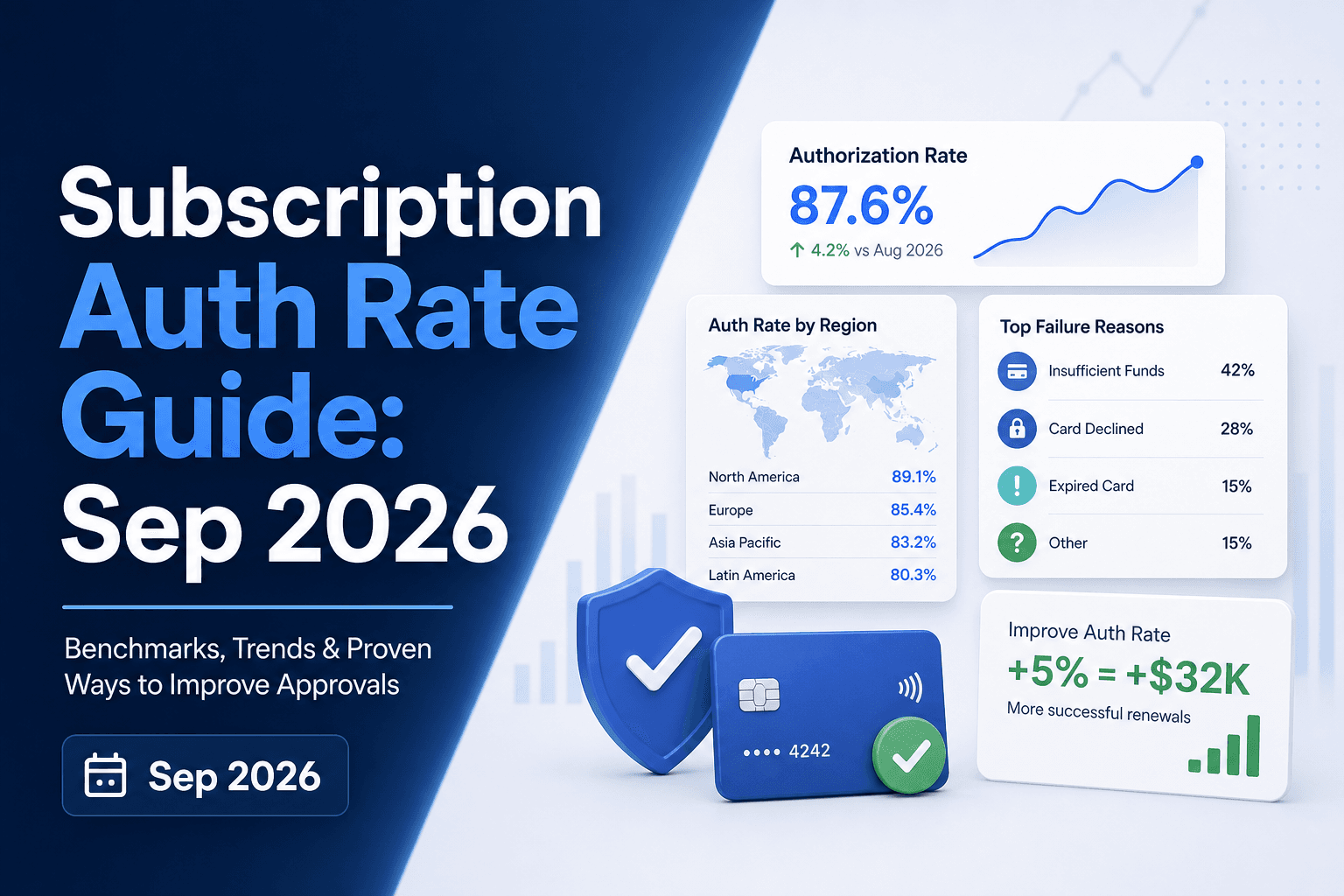
Authorization Rate in Subscription Billing: October 2026
There's a number sitting in your payments data that most finance and retention teams never report on separately: the share of renewal charges your issuing...
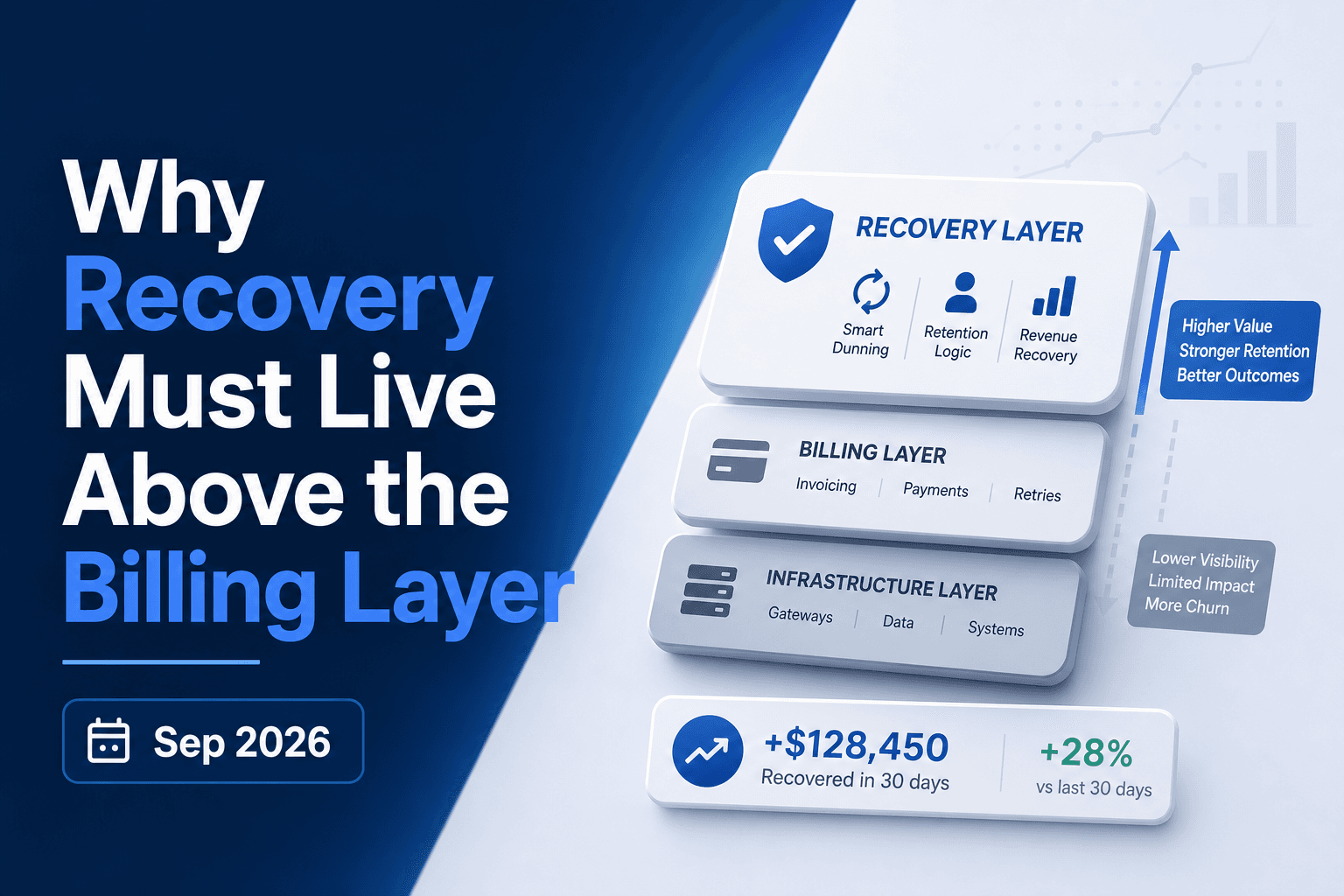
Why Payment Recovery Must Live Above Billers October 2026
A payment fails. Your biller retries it three days later, then again at seven, then at fourteen. What the biller never checks is whether the issuer sent a...
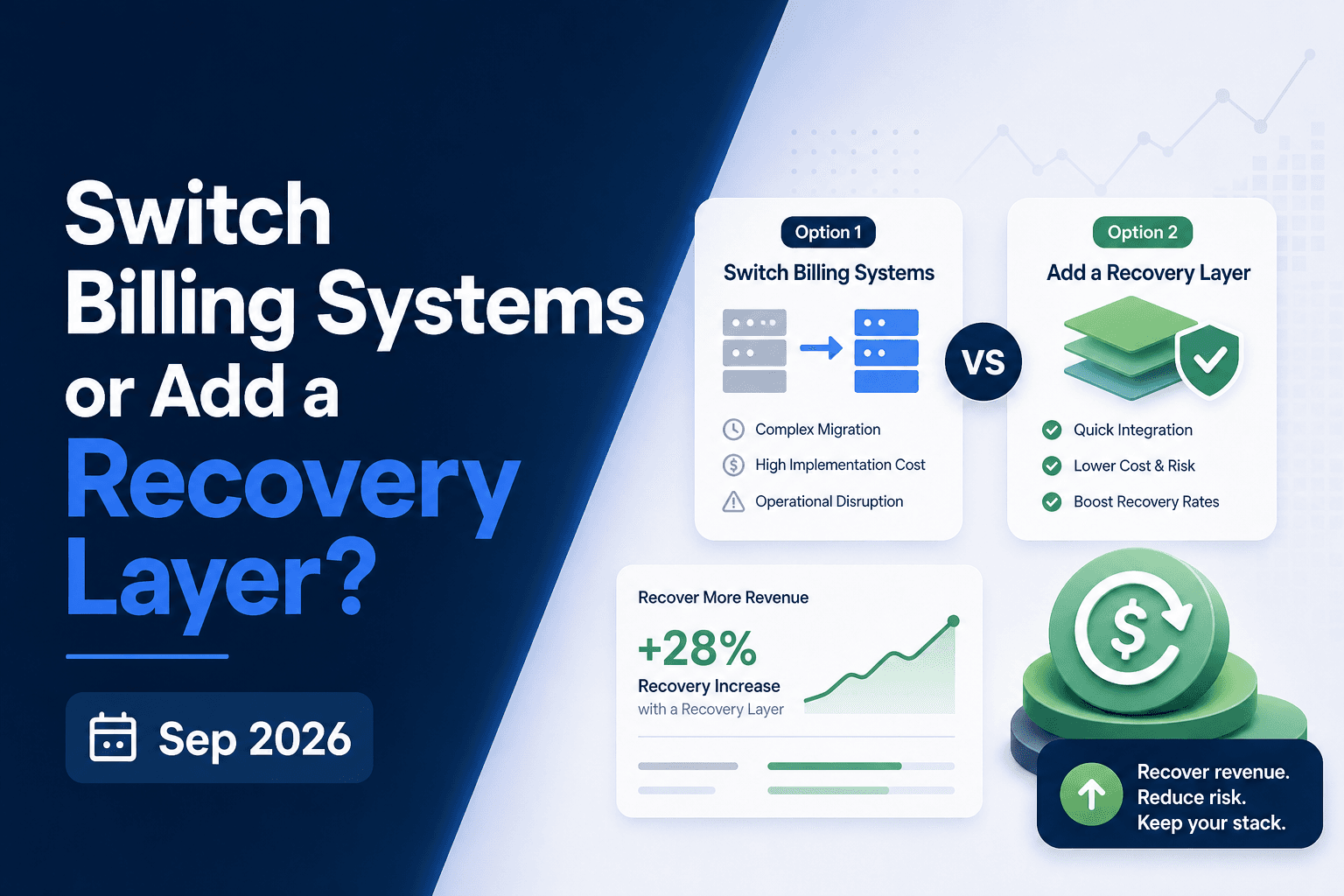
Billing Migration vs Recovery Layer: The Right Call October 2026
Switching billing systems feels like the right move when revenue collection starts breaking down. Sometimes it is. But soft declines, weak retry logic, and...
Stop losing revenue to failed payments
Join leading subscription businesses using Slicker to recover failed payments automatically.
Get Started