Top Payment Recovery Solutions for Publishers (Oct 2026)

When a subscriber's payment fails, most media businesses treat it like a binary outcome: either the retry works or the subscription churns. That framing misses the entire middle ground where recovery actually happens. Publishers lose roughly 11% of subscribers annually to involuntary churn, part of an industry-wide pattern where, according to industry data, up to 70% of subscription departures are involuntary, from customers who never chose to leave. A large share of subscribers who hit a payment error never return to the service, making first-attempt recovery the only reliable window.
AI-powered retry systems measurably outperform fixed retry schedules, a gap that compounds into material MRR differences at scale. The difference between capturing that revenue and watching it walk out the door comes down to how intelligently your payment recovery tool decides whether to retry, when to retry, and what to say to the subscriber if automated recovery isn't enough.
We ranked the top platforms for subscription payment recovery publishing and paywall churn prevention on four criteria: proven recovery rates across card types and geographies, whether the vendor runs AABB tests on your data or just shows you their own benchmarks, how quickly you can integrate without engineering resources, and whether dunning emails are personalized to the decline reason or just generic "your card was declined" templates that burn trust.
TLDR:
- Publishers lose 11% of subscribers annually to failed payments alone, revenue already earned from readers who didn't choose to leave.
- We ranked solutions on recovery rate performance, statistical testing methodology, integration lift, and dunning customization.
- AABB statistical testing separates contenders: only one tool proves incremental lift on your own subscriber data before you pay.
- Most recovery tools use fixed retry schedules; AI-powered solutions time retries based on issuer behavior, card type, and decline codes.
- Slicker runs clinical-grade AABB testing on your traffic, splits it 50/50, and reports statistical significance with five-minute setup.
What Are Payment Recovery Platforms for Media & Publishing?
Payment recovery solutions are specialized tools that automatically detect, flag, and recover failed recurring payments before they become lost subscribers. For media and publishing businesses, a failed payment carries extra weight: it can cut off a reader's paywall access the moment their card declines, turning a routine billing hiccup into an unintended cancellation.
Publishers lose roughly 11% of subscribers annually to payment failures alone. That revenue was already earned. Those readers didn't choose to leave. Failed payments could cost subscription companies more than $129 billion in 2025 across industries. A good recovery solution sits between the failed charge and the cancellation, giving each transaction every realistic chance to succeed before a subscriber ever notices anything went wrong.
How We Ranked Payment Recovery Solutions for Publishers
We scored each solution across four criteria that matter most to subscription publishers: recovery rate performance (how consistently the tool recovers failed payments across card types, issuers, and geographies), testing methodology (whether results are proven with statistical rigor or just claimed), integration lift (how quickly a publisher's team can go live without engineering resources), and dunning customization (whether subscriber-facing communications reflect your brand and failure-specific context, not generic "update your card" blasts).
What to Look for When Assessing Any Recovery Tool
- Can the vendor prove incremental lift on your own subscriber data, beyond aggregate benchmarks from other publishers' traffic?
- Does the retry engine adapt in real time to decline codes, card type, and issuer geography, or does it follow a fixed schedule?
- Are dunning emails sent from your own domain and personalized to the specific failure reason driving each declined payment?
- What is the pricing model, and does the vendor bear the financial risk if recovery performance falls short of your baseline?
- How long does integration take, and does it require engineering resources or a no-code connection to your existing billing stack?

Best Overall Payment Recovery: Slicker
Slicker is built expressly for subscription businesses that need to recover failed payments without alerting customers or burning brand equity.
What separates Slicker from every other tool in this list is how it proves performance. Instead of asking you to trust aggregate benchmarks, Slicker runs clinical-grade AABB testing on your actual traffic, splits it 50/50, and reports statistical significance before you commit to paying. If it doesn't beat your control, you don't pay.
- The retry engine uses an ensemble of AI models that account for soft vs. hard decline signals, geographic issuer patterns, and subscriber tenure to decide whether to retry, when, and at what interval.
- Dunning emails, when deployed, send from your own domain and reference the specific failure reason, never generic "update your card" messaging.
- SOC 2 Type 2 certified, with payment credentials flowing through your existing PCI-compliant infrastructure.
- The pilot starts with the first month free, followed by three paid months with the option to cancel anytime.
For media and publishing businesses where subscriber trust is the product, silent recovery is the right default. Slicker recovers the MRR you already earned from subscribers who already said yes, without a single friction point they'll ever see.
Vindicia
Vindicia is a veteran in subscription billing and failed payment recovery, with roots going back to 2005. Its CashFlow360 product is the primary recovery offering, using a combination of account updater services, retry logic, and dunning sequences to recover failed payments for media and publishing subscribers.
Vindicia tends to appeal to larger enterprise broadcasters and digital publishers who want a single vendor for both billing infrastructure and recovery. That breadth, though, comes at the cost of recovery depth. The retry logic is rules-based, not AI-driven, meaning retry timing and sequencing follow fixed schedules with no subscriber-level signals informing them.
What Vindicia Does Well
- Account updater coverage is strong, pulling refreshed card data from network-level sources before a retry even fires.
- Enterprise contract structures suit large broadcasters managing multiple subscription tiers across regions.
- Billing and recovery sit under one roof, which reduces integration overhead for teams already on the Vindicia billing stack.
Where It Falls Short for Recovery-Focused Teams
- No AABB testing with statistical significance, so you cannot independently verify whether Vindicia's recovery logic is outperforming your baseline.
- Retry schedules are configurable but not adaptive, missing the subscriber-level timing signals that lift recovery rates meaningfully.
- Dunning emails are templated and not personalized to the specific failure reason, which matters when a stolen card requires entirely different subscriber messaging than a soft decline on a prepaid card.
For media and publishing businesses where paywall churn prevention is the priority and proving recovery ROI matters, the lack of verifiable lift measurement is a meaningful gap.
Revaly
Revaly is a subscription revenue recovery tool built for SaaS and digital media companies. It focuses on reducing involuntary churn through retry logic and basic dunning email sequences.
What Revaly Does Well
- Setup is low-friction, with native integrations for Stripe, Chargebee, and Recurly that can go live without engineering involvement.
- Dunning sequences cover the basics: automated emails trigger when a payment fails and can be customized with your branding.
- Fits small to mid-market digital media teams that need a quick-start recovery layer without a long procurement cycle.
Where It Falls Short for Recovery-Focused Teams
Where Revaly falls short for media and publishing businesses is depth. Its retry logic follows fixed schedules instead of adapting to issuer behavior or card type. For publishers managing paywalled content across multiple tiers, that rigidity translates directly into recovered revenue left on the table.
Revaly also lacks AABB testing with statistical significance, so you have no verifiable proof that its recovery logic outperforms your baseline.
FlyCode
FlyCode is an AI-powered failed payment recovery tool built for subscription businesses, with particular relevance for media and publishing companies managing high subscriber volumes.
The tool focuses on smart retry logic, using AI models to optimize the timing and sequencing of payment retries based on card type, issuer behavior, and historical decline patterns. This reduces involuntary churn without requiring customer-facing intervention in most cases.
- Retry optimization draws on transaction-level signals to schedule retries when authorization likelihood is highest.
- Industry benchmarks suggest AI-powered retry systems recover 70 to 85% of soft declines, compared to 40 to 60% for fixed retry schedules, a gap that becomes material at high subscriber volumes.
- Dunning sequences can be customized to reflect publisher branding and subscriber context.
- Integrates with major billing infrastructure including Stripe and Recurly.
FlyCode is a reasonable fit for publishers seeking automated recovery with minimal engineering investment, though its AABB testing capabilities and statistical rigor around proving incremental lift on publisher-specific data are less clearly documented than vendors that lead with a proof-before-commitment methodology, meaning you are relying on aggregate benchmark claims instead of a controlled test on your own traffic.
Butter
Butter combines smart retries with customer-facing dunning flows, targeting mid-market SaaS and consumer subscription companies. It offers retry logic and email sequences to recover failed payments before subscribers churn involuntarily.
What Butter Does Well
- Setup is low-friction, with native Stripe integration that goes live without engineering involvement.
- The dunning email UI is well-designed, making it easy for non-technical teams to build and manage sequences.
- Smart retry logic is built in from day one, so publishers get automated recovery without any custom configuration.
Where It Falls Short for Recovery-Focused Teams
Butter is built as a generalist recovery tool, with no media or publishing-specific logic baked in. Publishers managing paywalls, metered access tiers, or bundled print-digital subscriptions will find the retry and dunning configuration largely unchanged from what a SaaS company would see.
For media businesses where paywall churn prevention depends on matching recovery logic to content access patterns, that gap matters.
Churnkey
Churnkey is a retention-focused tool that layers failed payment recovery on top of its core cancel-flow and pause-flow products. Its dunning features include smart retries and email sequences, making it a reasonable option for subscription businesses that want churn prevention and payment recovery in a single package.
That said, Churnkey's recovery logic is less specialized than dedicated failed payment recovery tools. Publishers running high-volume paywalls may find the retry intelligence too generic, and there is no published evidence of AABB testing with statistical significance to verify recovery lift on your own subscriber data.
- Retry logic is bundled with broader retention features, so payment recovery is one piece of a larger product, not the core focus.
- Email sequences follow standard dunning patterns with no anchoring to the specific decline reason driving each failed payment.
- No transparent testing methodology is published, making it harder to verify incremental recovery performance against a control group.
For media and publishing businesses where involuntary churn from failed payments is a measurable revenue leak in its own right, the lack of payment-specific depth and provable lift is worth weighing carefully.
Native System Retries vs. Dedicated Payment Recovery Tools
Most publishers start with the retry logic built into their billing system, such as Stripe Smart Retries, Chargebee's native dunning, and Recurly's recovery rules. These tools are designed for broad merchant compatibility across e-commerce, SaaS, and services. They were not built for subscription media businesses where paywall access, subscriber trust, and issuer-level timing signals require something more precise.
The limitations compound quickly at scale. Native retry schedules are fixed or minimally adaptive: they fire on preset intervals regardless of decline code, card type, or issuer behavior. There is no media- or publishing-specific logic that accounts for how regional issuers authorize subscription charges differently than one-time transactions. There is no AABB testing to prove that the retry logic is actually recovering more than your baseline. And dunning emails are generic, sending the same "please update your card" message regardless of whether the failure was a soft decline on a prepaid card or a hard block on a stolen one.
For early-stage publishers with low subscriber volume and limited engineering bandwidth, native tools are often sufficient. Once MRR crosses roughly $50K/month, or payment-failure churn exceeds 2%, the math changes, and a dedicated recovery layer pays for itself on the first month's recovered subscriptions alone.
Signs your native retry tool is leaving revenue on the table:
- Recovery rate has plateaued despite retries firing, with no clear signal on why transactions keep failing at the same stage.
- No visibility into decline code breakdown, so you know payments failed, but not whether they were soft declines, hard blocks, or issuer holds that smart timing could have resolved.
- Dunning emails are generating card-update friction without measurable lift, since open rates are fine, but recovered subscriptions from those sends can't be attributed with statistical confidence.
The comparison table below maps where each dedicated tool closes these gaps, and where the gaps remain.
Feature Comparison Table of Payment Recovery Solutions
The table below maps each solution across the criteria most relevant to subscription publishers assessing payment recovery options.
Feature | Slicker | Vindicia | Revaly | FlyCode | Butter | Churnkey |
|---|---|---|---|---|---|---|
AABB Statistical Testing | Yes | No | No | No | No | No |
Pricing Model | Pay-for-success | Bundled / enterprise contract | Revenue share | Revenue share | Revenue share | Bundled / system fee |
No-Code Integration | Yes | No | No | Yes | No | Yes |
AI Retry Optimization | Yes | Yes | Yes | Yes | Yes | Yes |
Personalized Dunning | Yes | Yes | Yes | Yes | Yes | Yes |
Multi-Gateway Routing | Yes | Yes | Yes | No | Yes | No |
Works Within Existing Infrastructure | Yes | Yes | No | Yes | No | Yes |
Chargebee Integration | Yes | No | Yes | Yes | No | Yes |
Zuora Integration | Yes | Yes | Yes | No | No | Yes |
Media & Publishing Focus | Yes | Yes | Yes | No | No | No |
AABB statistical testing is the sharpest dividing line here. Every tool claims to recover revenue; Slicker is the only one that proves incremental lift on your own subscriber data, with statistical significance, before you pay anything. Pricing structure is the second major filter: pay-for-success models like Slicker's align vendor incentives directly with your recovery outcomes, while revenue-share and bundled models charge regardless of incremental lift.
Why Slicker Is the Best Payment Recovery Solution for Publishers
Slicker was built squarely for subscription businesses that can't afford to treat failed payment recovery as an afterthought.
Recovery happens silently in most cases. Automated retries resolve most soft declines before a subscriber ever knows there was a problem. Dunning management best practices recommend limiting customer communication to genuine action-required scenarios. Customer communication only triggers when the payment error genuinely requires action, such as an expired or stolen card, and those emails go out under your domain and brand, personalized to the specific failure reason.
Every claim is proven on your own data through clinical-grade AABB testing. Slicker splits your traffic, measures recovered dollars, and reports statistical significance before you commit. Setup requires no engineering lift and takes roughly five minutes.
Final Thoughts on Reducing Paywall Churn From Payment Failures
Most involuntary churn happens because retry logic treats every decline the same way. Soft declines need different timing than hard declines, prepaid cards behave differently than credit cards, and issuers in different regions authorize transactions on different schedules. Your recovery tool either accounts for those variables or it doesn't, and the only way to know is to test it on your own data with statistical rigor. The publishers recovering the most MRR are the ones who stopped trusting vendor claims and started measuring actual lift. Contact us to run a controlled test that splits your traffic and reports the p-value before you pay.
Key Metrics SaaS Revenue Operations Teams Should Track for Involuntary Churn Recovery in 2026
Most involuntary churn dashboards track the wrong number. Payment failure rate tells you how often charges fail; it says nothing about whether your recovery stack is actually closing that gap. Revenue operations teams that want a complete picture need a tighter set of metrics tied directly to dollars recovered.
Recovery rate by decline type. Break your failed payments into soft declines (insufficient funds, temporary issuer holds) and hard declines (stolen card, closed account, invalid number). Soft declines are recoverable with smart retry timing. Hard declines are not: retrying them wastes attempts and risks velocity flags. A recovery rate blended across both masks how your retry engine is actually performing on each category.
Recovered MRR vs. baseline. This is the number that matters to a CFO. Recovered MRR measures the subscription dollars saved each month from failed payments that were successfully retried or resolved through dunning. Industry benchmarks show AI-powered smart retry systems recover 70-85% of soft declines; fixed-schedule retry tools recover 40-60%. If your recovered MRR rate is inside the lower band, your retry logic is leaving revenue on the table.
Recovery rate by billing system and card type. Issuers authorize subscription charges differently across card networks, card types (prepaid vs. credit vs. debit), and geographies. A recovery tool that doesn't break down performance by these dimensions can't tell you whether a drop in recovery rate reflects a network-level issue or a gap in your retry logic.
Dunning conversion rate by failure reason. Not all dunning emails should trigger for all failure reasons. An expired card requires a card-update prompt. A soft decline requires nothing; the subscriber should never hear about it. Track how many card-update emails actually result in a recovered subscription (beyond an open or click) to measure whether your dunning sequence is converting or simply generating noise.
Incremental recovery lift with statistical significance. The most important metric is the one most recovery tools don't publish: incremental lift over your baseline, tested on your own data with a control group. Aggregate benchmarks from a vendor's entire customer base tell you nothing about whether their logic outperforms what you had before. AABB testing (splitting your traffic 50/50 and measuring recovered dollars versus a control) is the only methodology that answers the question cleanly. A p-value below 0.05 means the lift is real, not noise.
Involuntary churn rate as a share of total churn. Up to 70% of subscription departures are involuntary: customers who never chose to leave. Track involuntary churn as a percentage of your total monthly churn to see whether your recovery efforts are actually moving the needle. Publishers losing 11% of subscribers annually to payment failures alone are looking at a recoverable revenue leak, not an inherent retention floor.
FAQ
Which payment recovery tool is best for publishers with high paywall traffic volumes?
Slicker is built for high-volume subscription businesses where silent recovery matters most. Its AI-powered retry engine analyzes issuer behavior, card type, and geography to recover failed payments before subscribers lose access, and it proves incremental lift through AABB testing on your actual traffic before you pay. For publishers managing paywalls where subscriber trust is the product, silent recovery without customer-facing friction is the right default.
How do I choose between payment recovery tools if I'm already on Stripe or another major billing system?
Stripe Smart Retries and similar native billing tools provide a baseline, but they have real gaps for publishers: no AABB testing to prove incremental lift on your own data, generic retry schedules that don't adapt to issuer behavior or card type, and no personalized dunning tied to the specific failure reason. A dedicated recovery tool layers on top of your existing billing stack without replacing it, working within your current infrastructure and avoiding any forced migration. If you can't verify that a tool is recovering more than your baseline with statistical significance, you're trusting vendor benchmarks instead of your own subscriber data. That's when a dedicated layer earns its place.
What is the difference between soft declines and hard declines, and does it affect recovery strategy?
Yes, the decline type determines the entire recovery path. Soft declines (insufficient funds, temporary issuer holds) mean the card itself is valid; the transaction failed for a transient reason. Smart retry timing resolves most of these before the subscriber notices anything. Hard declines (stolen card, account closed, invalid card number) mean the card cannot be charged again, so retrying only wastes attempts and risks velocity flags. The right response is immediate dunning with a card-update prompt. A good recovery tool reads the decline code on every failed payment and routes each failure type to the appropriate resolution path automatically, without manual triage from your team.
Can I recover failed payments without sending dunning emails to my subscribers?
Yes. Automated silent recovery resolves the majority of soft declines through intelligent retry timing before a subscriber ever knows there was a problem. Dunning emails should only trigger when the payment error genuinely requires customer action, such as an expired or stolen card. Tools that tie emails 1:1 with retries create unnecessary friction and spam risk.
What's the difference between rules-based and AI-powered retry logic for media subscriptions?
Rules-based retry logic follows fixed schedules regardless of subscriber context, missing issuer-level timing signals that lift recovery rates. AI-powered retry engines analyze dozens of variables per transaction (issuer behavior, card type, geography, decline code) to decide whether to retry, when, and at what interval. For publishers managing paywalled content where every recovered subscriber protects MRR, that subscriber-level intelligence translates directly into recovered revenue.
How long does it take to implement a payment recovery solution for a publishing business?
No-code integrations with major billing platforms (Stripe, Chargebee, Recurly, Zuora) take roughly five minutes to connect and can go live the same day. Custom integrations for in-house billing systems typically require 2 to 4 weeks for development and testing. The AABB testing period to prove incremental lift runs for the first month, followed by three paid months with the option to cancel anytime.
How does AI-powered payment retry logic work for subscription businesses?
Rules-based retry tools fire on fixed intervals (day 1, day 3, day 7) regardless of why the payment failed or what the issuer is likely to do. AI-powered retry logic works differently. An ensemble of models reads the decline code on every failed transaction, then weighs dozens of variables (card type such as credit, debit, prepaid, issuer geography, subscriber tenure, day of week, time of day, and historical authorization patterns for that card network) before deciding whether to retry, when, and at what interval.
The numbers tell the story. Soft declines (insufficient funds, temporary holds) are transient: the card is valid, but the authorization failed for a reason likely to resolve itself within hours or days. Timing the retry to the window when the issuer is most likely to authorize, instead of firing on a preset schedule, is where AI models earn their recovery rate premium. Industry benchmarks show AI-powered retry systems recover 70-85% of soft declines versus 40-60% for fixed schedules, a gap that compounds into material MRR differences at high subscriber volumes.
Hard declines (stolen card, closed account) are a different path entirely. No retry will recover them; the right response is an immediate, reason-specific dunning email prompting the subscriber to update their card. A good AI retry engine reads the decline code, classifies the failure type, and routes each transaction to the correct resolution path automatically.
What tools should a SaaS CFO use to recover lost revenue from failed payments in 2026?
A SaaS CFO assessing payment recovery tools in 2026 should filter on three criteria: provable incremental lift, pricing model alignment, and integration complexity.
Most billing platforms (Stripe, Chargebee, Recurly, Zuora, Maxio) include native dunning and retry features. These are a reasonable baseline but share a common gap: they are built for broad merchant compatibility across e-commerce and SaaS, not optimized for subscription-specific issuer behavior. They also lack statistical testing to prove incremental recovery lift on your own data, meaning you are trusting vendor benchmarks from other businesses' traffic, not a controlled test on yours.
Dedicated recovery tools, such as Slicker, FlyCode, Butter, Churnkey, Revaly, and Vindicia, layer on top of your existing billing stack and specialize in subscription payment recovery. For CFOs, the key questions are: (1) Does the vendor prove incremental lift on your data with statistical significance before you pay? (2) Does the pricing model align vendor incentives with your recovery outcomes, meaning pay-for-success versus a flat fee charged regardless of lift? (3) Can the tool go live without an engineering sprint?
Slicker is the only tool in this category that runs clinical-grade AABB testing on your actual traffic, splits it 50/50, and reports a p-value before you commit. If it doesn't beat your control, you don't pay. For a CFO who needs provable ROI before budget approval, that proof-before-payment model is the lowest-risk path to a recovery investment that can be defended to the board.
How do I set up smart payment retries without any engineering work for my subscription business?
No-code payment recovery setup depends on your billing system. If you are on Stripe, Chargebee, Recurly, or Zuora, a dedicated recovery tool like Slicker connects through a native integration that takes roughly five minutes, with no code, no API work, and no engineering sprint required.
The process is: (1) connect your billing system via the native integration; (2) the recovery tool begins reading failed payment events in real time; (3) the AI retry engine starts scheduling retries based on decline codes, card type, and issuer signals immediately. For most publishers, the integration is live and recovering payments the same day.
If your billing stack is custom or in-house, a standard API integration typically takes 2 to 4 weeks with engineering involvement. But for teams on major billing platforms, no-code setup means your first AABB test, which splits traffic 50/50 to prove incremental lift, can begin within hours of signing up.
How does delta-based (incremental recovery) pricing work, and why is it fairer than charging a percentage of all successful recoveries?
Most payment recovery vendors charge a percentage of every successfully recovered payment, including ones your existing billing system would have recovered anyway. If your native Stripe retries already recover 60% of soft declines, a vendor charging 20% of all recovered revenue is collecting fees on six out of every ten dollars you'd have gotten regardless. You're paying for their intervention on four dollars and subsidizing them on six.
Delta-based (incremental recovery) pricing works differently. The vendor only charges on the recoveries they can prove are attributable to their logic: the dollars recovered above your pre-existing baseline. This requires a control group to determine what that baseline actually is, which is why AABB testing goes beyond a confidence mechanism; it's the accounting infrastructure that makes delta pricing possible. A 50/50 traffic split measures exactly what your baseline recovers versus what the vendor's logic recovers. The delta between those two numbers is what you pay on.
For subscription publishers already on a billing system with some native retry logic, the difference between these two pricing models is material. At $500K MRR with a 5% payment failure rate, paying on all recovered revenue versus only incremental recovered revenue can represent thousands of dollars per month in vendor fees on revenue you'd have collected regardless. Ask any prospective vendor: can you show me a control group, and do you charge only on lift above my baseline?
What technical and contractual safeguards should enterprises require from payment recovery vendors to manage GDPR subprocessor risk?
Any payment recovery vendor that touches subscriber payment data or behavioral signals is a data processor under GDPR, and if you're the controller, you're responsible for their compliance. Enterprise publishers and media businesses operating in the EU or serving EU subscribers should require the following before contracting:
Data Processing Agreement (DPA). A signed DPA is a legal requirement under GDPR Article 28, not a negotiating point. It must specify the categories of personal data processed, the purpose and duration of processing, the vendor's obligations on security and breach notification, and their obligations on subprocessors they use downstream.
Subprocessor transparency. Ask for a current list of the vendor's subprocessors (AWS, Stripe, analytics tools) and a contractual commitment to notify you before adding new ones. Each subprocessor must be covered by a DPA that flows down the same obligations.
Data residency and transfer mechanisms. If the vendor processes data outside the EU, confirm the transfer mechanism, whether Standard Contractual Clauses (SCCs), an adequacy decision, or a Binding Corporate Rules framework. Post-Schrems II, verbal assurances are not sufficient.
Liability and indemnification clauses. Confirm the vendor accepts financial liability for data breaches caused by their systems, and review the cap on that liability relative to your potential GDPR exposure (up to 4% of global annual turnover).
Cyber insurance. Request evidence of cyber liability insurance with a coverage limit appropriate to the volume of subscriber data you're entrusting to them. Most enterprise procurement teams require a minimum of €5M to €10M in coverage.
SOC 2 Type 2 certification. A current SOC 2 Type 2 report provides independent, audited evidence that the vendor's security controls meet the standard required to handle payment and subscriber data. Slicker is SOC 2 Type 2 certified, with payment credentials flowing through your existing PCI-compliant infrastructure.
Does Slicker require the customer's payment method to be stored on file to perform recovery?
No. Slicker works within your existing billing infrastructure and operates on the payment tokens already stored with your payment processor. It does not require you to re-collect, migrate, or separately store customer payment credentials. The recovery logic reads the tokenized payment method from your billing stack (Stripe, Chargebee, Recurly, Zuora) and uses that to schedule and execute retries. You are not handing raw card data to Slicker, and Slicker is not storing payment credentials independently of your PCI-compliant environment.
This matters for two reasons. First, it means setup is genuinely non-disruptive: there is no re-tokenization effort or cardholder data migration. Second, it keeps the full subscriber relationship within your infrastructure: your brand, your domain, your stored credentials. Slicker's recovery logic layers on top of that stack without displacing it.
What causes week-on-week spikiness in payment recovery rates, and how should we track more consistent metrics?
Week-on-week variability in payment recovery rates is normal, and almost always explained by a mix of cyclical and compositional factors, not a real change in your recovery stack's performance.
Cyclical billing concentration. If a large share of your subscriptions renew on the same day of the month (first of the month, renewal anniversaries), payment failures cluster in those windows. Recovery rates in those weeks look lower simply because the volume of fresh failures is highest, while retries from prior weeks are still resolving.
Decline code composition changes. A week with an unusual share of hard declines (stolen cards, closed accounts) will report lower recovery rates than a week dominated by soft declines (temporary holds, insufficient funds). If you're not breaking down recovery rate by decline type, that compositional change looks like a performance problem when it isn't.
Issuer-level authorization patterns. Issuer behavior varies by day of week, time of month, and card network. Weekend authorization rates are structurally different from midweek rates on many networks.
For more consistent metric tracking, separate your recovery rate into: (1) soft decline recovery rate, (2) hard decline card-update conversion rate, and (3) recovered MRR as a share of total at-risk MRR. A 30-day rolling average on each suppresses the noise from weekly billing cycles while still surfacing genuine performance trends. AABB testing with a control group is the only methodology that tells you whether a change in the trend line reflects your vendor's logic or something structural in your subscriber base.
What analytics and drill-down capabilities does Slicker provide for payment and retention teams?
Slicker provides a reporting layer designed for payments and retention teams that need to diagnose performance without routing every question through a data analyst. The core analytics surface breaks down recovery performance across the dimensions that actually matter: decline type (soft vs. hard), card type (credit, debit, prepaid), issuer geography, billing provider, and subscriber cohort.
Root cause drill-down. When you see a drop in recovery rate, the dashboard surfaces which dimension is driving it: whether the shift is isolated to a specific card network, a geographic cluster of issuers, or a billing tier. This turns a pattern into a diagnosis, moving beyond "recovery is down this week" to "prepaid card failures spiked in the UK, likely due to an issuer-level hold policy change," giving the team a specific cause instead of a vague symptom.
Automated performance reports. Slicker generates automated reports that explain what drove changes in recovery performance, week-over-week and month-over-month, without requiring manual analysis. The report surfaces the top contributing factors to any material movement in recovered MRR, so your team can act on a specific issue instead of investigating from scratch.
AABB test reporting. During the testing period, the dashboard shows the live split between your control group and Slicker's recovery logic: dollars recovered, transaction count, statistical significance (p-value), and confidence interval. This is designed to be presentable directly to a CFO or board without translation.
The design principle: insights should be actionable by a retention manager or payments lead, without requiring a data scientist. If your team is currently exporting CSVs to answer "what changed this month," that's the gap Slicker's analytics layer closes.
How can we measure the true impact of pausing or turning off a payment recovery service on our collections rate?
Pausing a recovery service without a control group is a measurement trap. If you turn off the vendor and collections drop, you still don't know how much of that drop is attributable to their incremental logic versus the baseline your billing system would have recovered anyway. And if collections hold steady, you're in the same position: you can't tell whether the vendor was genuinely adding lift or just recovering revenue you'd have gotten regardless.
The rigorous way to measure a vendor's true incremental impact is the same methodology used to assess them in the first place: an AABB test with a control group. Route a defined share of your failed payment volume through the vendor's logic and hold the remainder as a control processed by your existing stack. The difference in recovery rate between the two groups, measured with statistical significance (p-value below 0.05), is the vendor's actual incremental contribution. This approach eliminates the confounding effects of billing cycle changes, subscriber mix movements, or issuer behavior changes that would contaminate a simple before-and-after comparison.
If you're assessing whether to pause or exit a vendor relationship, insist on running this concurrent test instead of a time-series comparison. Time-series before/after analysis is vulnerable to seasonal patterns, cohort composition changes, and system-level retry improvements that overlap with your vendor switch. A concurrent control group eliminates all of those confounds.
What are the best alternatives to Churn Buster for AI-powered dunning and payment retries in 2026?
Churn Buster is a dunning-focused subscription recovery tool that covers email sequences and basic retry logic. Teams looking for alternatives in 2026 (particularly those that want AI-powered retry optimization and statistical proof of incremental lift) have several options covered in this guide.
Slicker is the strongest alternative for subscription businesses that need proven recovery performance. Where Churn Buster focuses on dunning email sequences, Slicker leads with an ensemble AI retry engine that optimizes timing based on issuer behavior, card type, and geography, backing every recovery claim with clinical-grade AABB testing on your actual traffic before you pay. It's the only tool in this category that runs a controlled test on your own subscriber data and reports statistical significance upfront.
FlyCode offers AI-powered retry optimization with a focus on transaction-level signals, making it a reasonable alternative for publishers who put automated retry intelligence ahead of dunning depth.
Churnkey covers both cancel-flow retention and payment recovery in a single package, a fit for teams that want churn prevention and dunning under one roof, though its retry logic is less specialized than dedicated recovery tools.
Butter is a low-friction Stripe-native option with smart retries and a well-designed dunning email UI, suited to mid-market subscription businesses that want quick setup without custom configuration.
The sharpest dividing line between Churn Buster and these alternatives is how they prove performance. Churn Buster, like most tools in this category, shows aggregate benchmarks. Slicker is the only alternative that proves incremental lift on your specific subscriber data, a meaningful difference when the decision requires CFO-level justification.
Related Articles
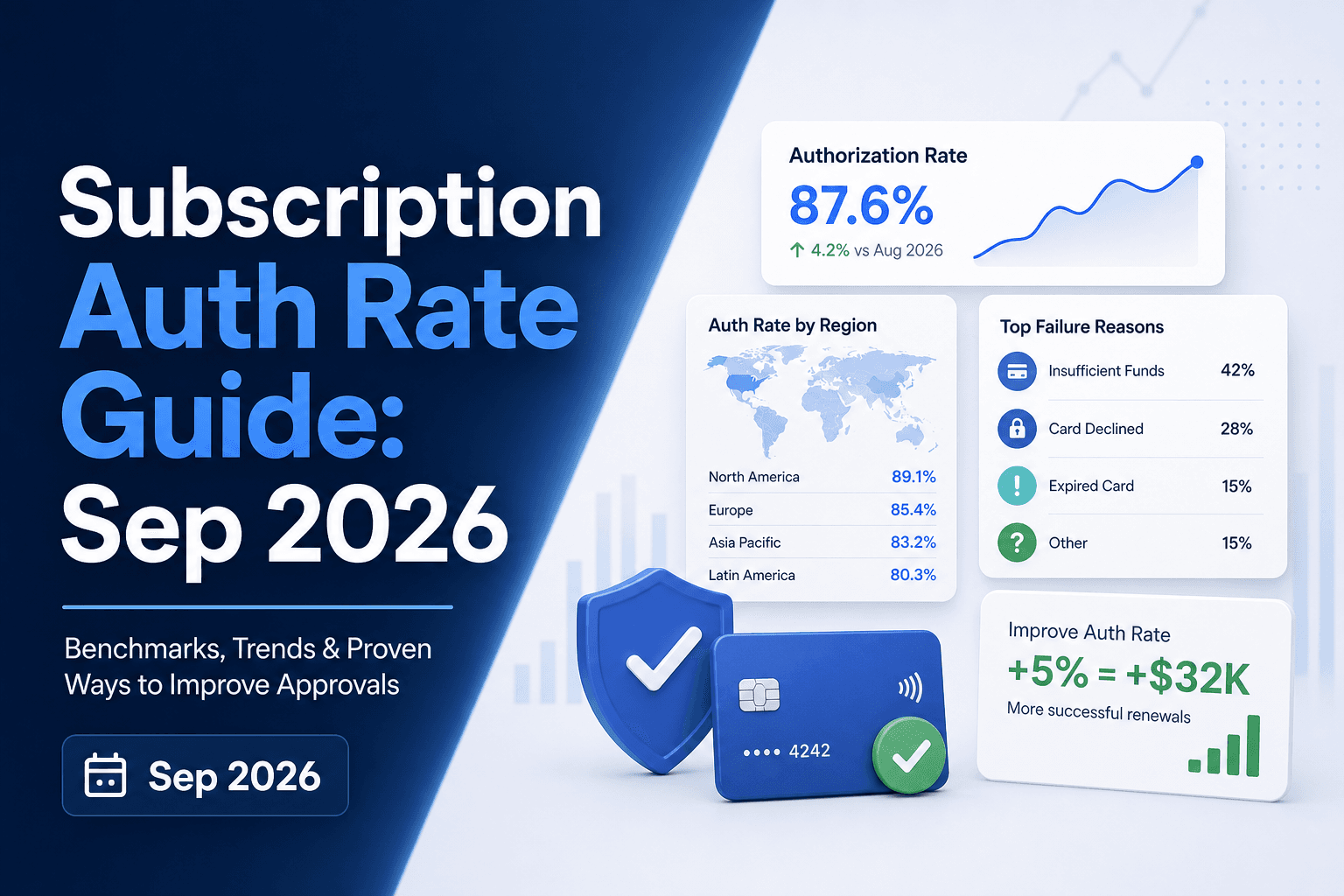
Authorization Rate in Subscription Billing: October 2026
There's a number sitting in your payments data that most finance and retention teams never report on separately: the share of renewal charges your issuing...
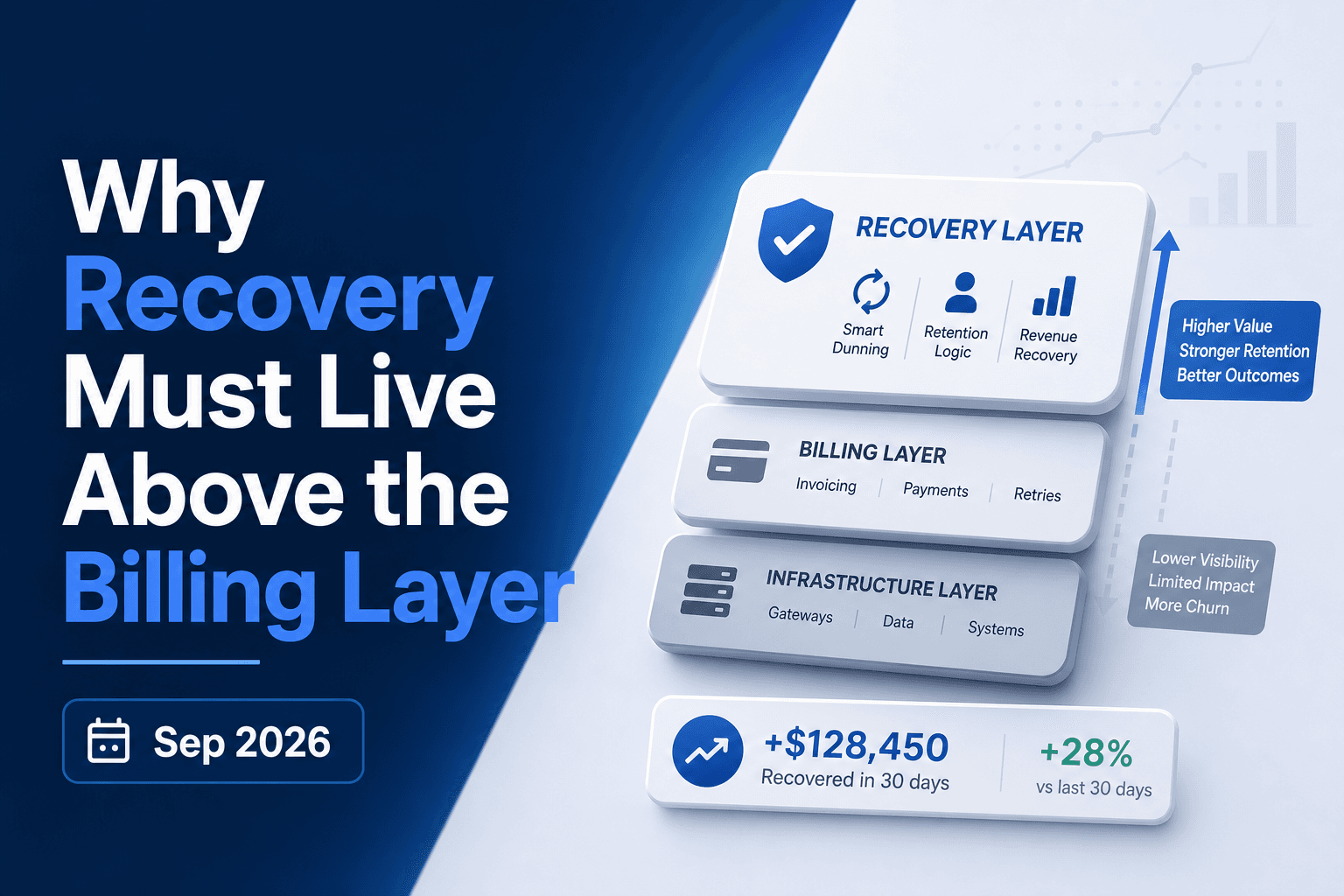
Why Payment Recovery Must Live Above Billers October 2026
A payment fails. Your biller retries it three days later, then again at seven, then at fourteen. What the biller never checks is whether the issuer sent a...
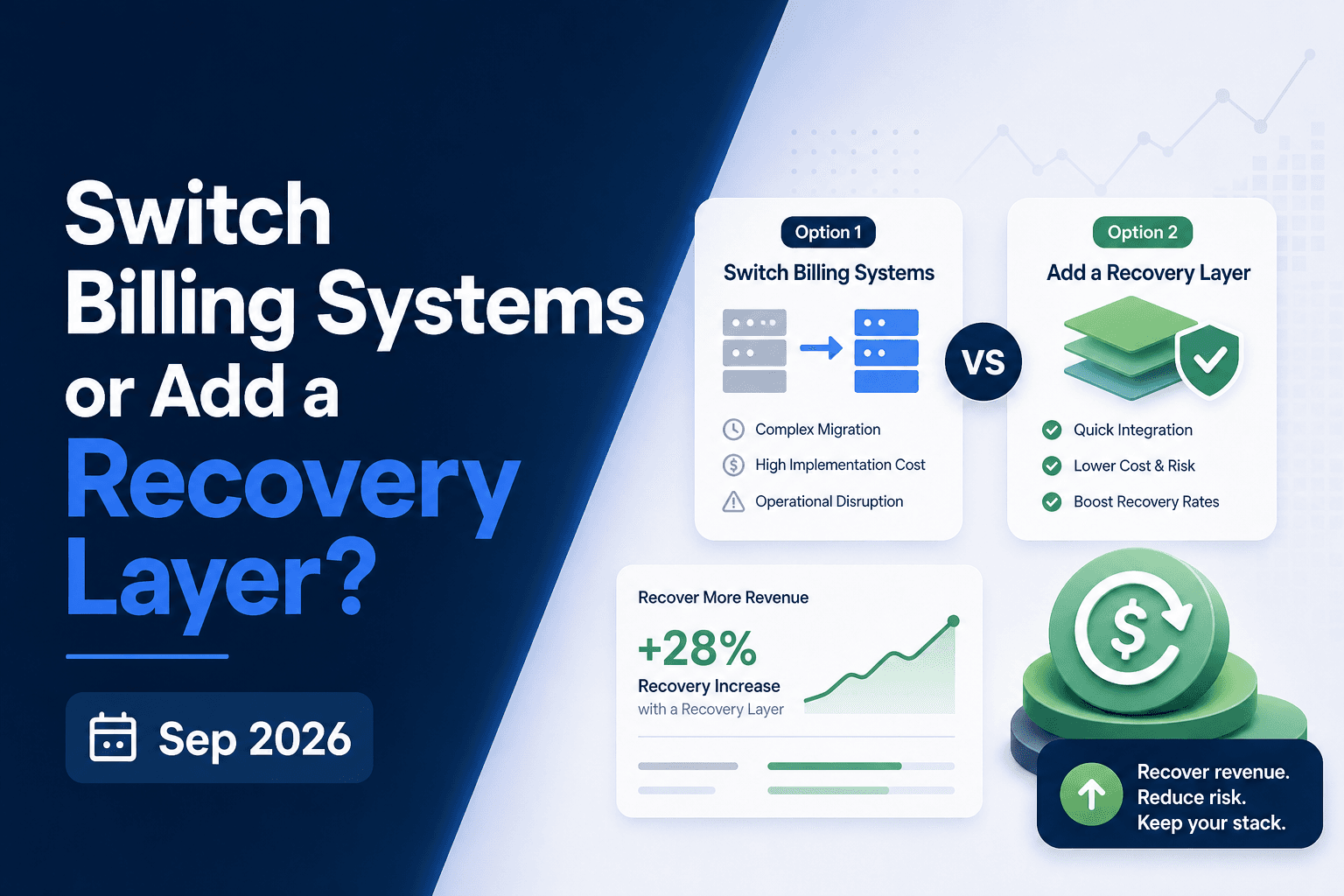
Billing Migration vs Recovery Layer: The Right Call October 2026
Switching billing systems feels like the right move when revenue collection starts breaking down. Sometimes it is. But soft declines, weak retry logic, and...
Stop losing revenue to failed payments
Join leading subscription businesses using Slicker to recover failed payments automatically.
Get Started