Cut Subscription Churn in 2026 with These 15 Strategies
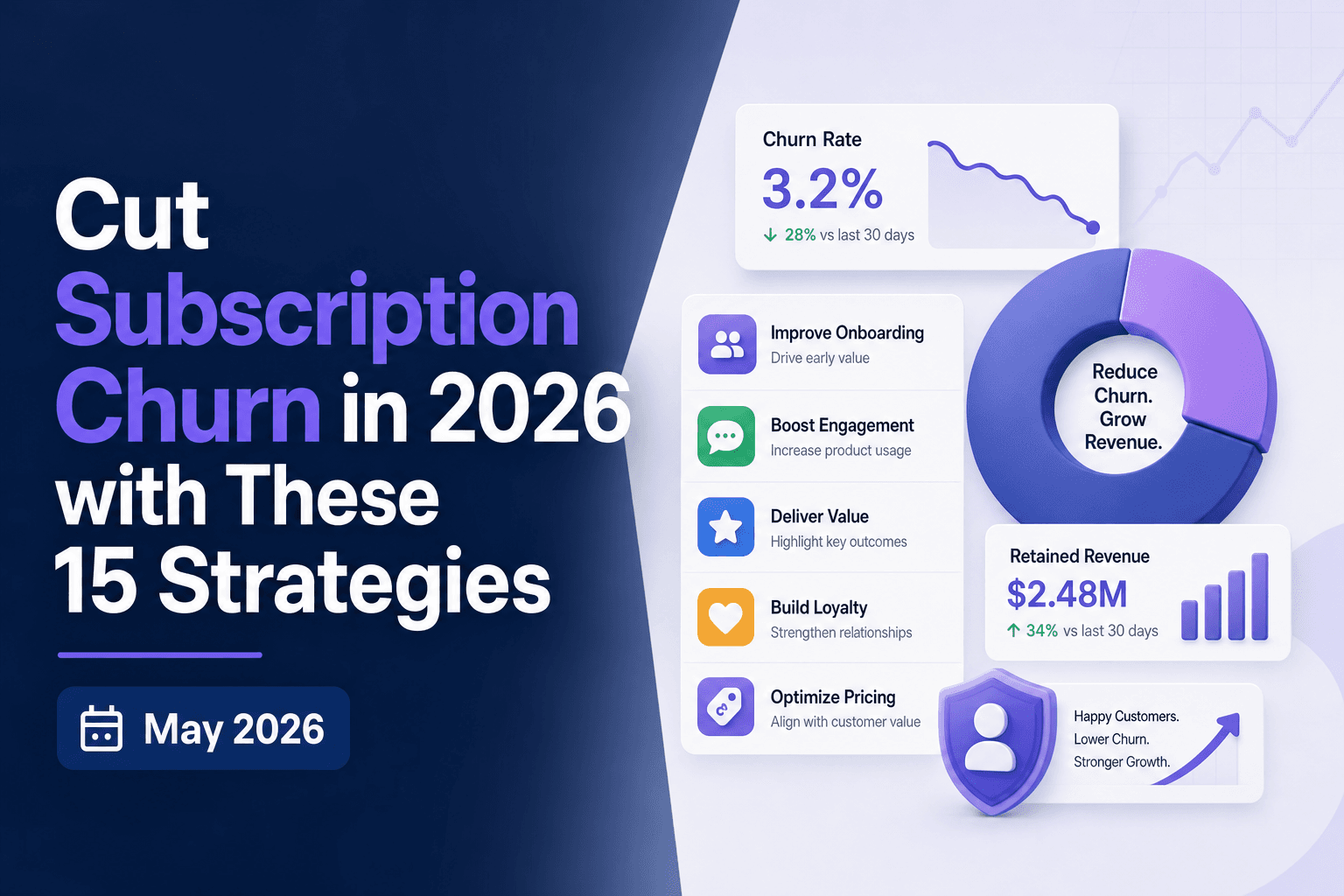
There's a version of customer churn you can fix in days, not quarters. It's called involuntary churn, and it accounts for up to 40% of total subscriber losses at most subscription businesses. These are customers who never chose to cancel. A declined card or an expired payment method made the choice for them. Understanding the full churn rate meaning, separating what is a good churn rate from what's actually recoverable, changes how you think about how to reduce churn and boost retention. Here are 15 strategies that tackle both sides.
TLDR:
- Subscription churn splits into two types: voluntary (active cancellations) and involuntary (failed payments). Each requires a different fix.
- Involuntary churn accounts for 20 to 40% of total subscriber losses, making it the fastest recoverable revenue problem to solve first.
- A 3% monthly churn rate compounds to roughly 31% annually; acquiring a replacement customer costs 5 to 7 times more than keeping one.
- Reduce voluntary churn through health scores, pause options, and exit surveys. Recover involuntary churn through AI-powered smart retries and failure-specific dunning.
- Slicker targets involuntary churn by matching recovery actions to the exact decline reason, running silent retries first and brand-owned outreach as the fallback, with impact measured via AABB (A/A/B/B) testing on your own data.
Voluntary Churn vs. Involuntary Churn
Subscription churn falls into two distinct categories, and confusing them leads to misdiagnosed fixes.
Voluntary churn happens when a customer actively decides to cancel. They found a competitor, lost interest, or no longer see the value. Winning them back requires product, pricing, or engagement work.
Involuntary churn happens when a customer wants to stay but their payment fails. A declined card, an expired number, an insufficient funds error: the subscription dies not by choice, but by friction.
Involuntary churn typically accounts for 20 to 40% of total churn, according to data on involuntary churn, making it the faster, more recoverable problem to solve first.
The True Cost of Subscription Churn
Subscription churn drains more revenue than most finance teams account for. When a customer cancels or fails to renew, you lose their current monthly payment and every future dollar they would have generated. For a business with a $50 average monthly subscription and a 24-month average customer lifespan, each churned customer represents $1,200 in lost lifetime value from failed payments.
The costs compound quickly. High churn forces you to spend more on customer acquisition just to hold MRR (monthly recurring revenue) flat, eroding margin on both ends. Research comparing customer retention versus customer acquisition costs shows that acquiring a new customer costs 5 to 7 times more than retaining an existing one, which means churn isn't a retention metric in isolation; it's a direct drag on CAC (customer acquisition cost) payback and overall unit economics.
There are two distinct types to track. Voluntary churn happens when a customer actively cancels. Involuntary churn happens when a payment fails and the subscription lapses without the customer ever intending to leave. Both hurt revenue, but they require completely different fixes.
How to Calculate Your Churn Rate
Customer churn rate is calculated by dividing the number of customers lost during a period by the number of customers at the start of that period, then multiplying by 100. For example, if you start the month with 1,000 subscribers and lose 30, your monthly churn rate is 3%.
Most subscription businesses track this monthly, but annual churn tells a different story. A 3% monthly churn rate compounds to roughly 31% annually, meaning nearly a third of your customer base turns over each year. That compounding effect is why even a one-percentage-point reduction in monthly churn has an outsized impact on ARR (annual recurring revenue) over a 12-month horizon.
Beyond customer churn, track revenue churn separately. Revenue churn measures the MRR lost from cancellations and downgrades, net of any expansion revenue from upgrades. A business losing mostly low-value accounts while retaining high-value ones will show a healthier revenue churn rate than its customer churn rate implies; the reverse is equally true and more dangerous. Both numbers belong in your retention dashboard.
One more layer worth separating: not all churned customers left by choice. Involuntary churn (subscriptions that lapse because a payment failed, not because the customer cancelled) inflates your headline churn rate with losses that are largely recoverable. Stripping that out gives you a cleaner signal on whether you have a product-fit problem, a pricing problem, or simply a billing infrastructure problem.
Churn Rate vs. Retention Rate
These two metrics are inverses of each other. If your churn rate is 3%, your retention rate is 97%. Both measure the same underlying health, but retention rate tends to resonate more in board-level conversations since it frames the business around what you keep, not what you lose.
What Is a Good Churn Rate for Subscription Businesses
Benchmarks vary by industry, but most subscription businesses aim for annual churn below 5 to 7%. SaaS companies serving small businesses often see 3 to 7% monthly churn, while enterprise-focused businesses typically land closer to 1% per month.
Segment | Typical Annual Churn | Best-in-Class Target | Key Notes |
|---|---|---|---|
Consumer subscriptions (streaming, fitness, media) | 20 to 40% | ~15% | Varies by price point and contract length |
B2B SaaS: SMB (annual contracts) | 5 to 7% | Under 3% | Separating involuntary churn reveals what’s recoverable vs. structural |
B2B SaaS: Enterprise | ~12% (1% monthly) | Under 1% monthly | Longer sales cycles and multi-year contracts compress headline churn |
Usage-based or freemium models | Higher headline churn | Varies | Revenue churn often healthier than customer churn; expansion offsets losses |
A few reference points worth knowing:
- Consumer subscription services (streaming, fitness, media) tend to run higher, with annual churn anywhere from 20 to 40% depending on price point and contract length.
- B2B SaaS with annual contracts typically sees churn in the 5 to 7% annual range, with best-in-class companies holding it under 3%. Understanding your involuntary churn rate benchmarks helps separate recoverable losses from structural ones.
- Usage-based or freemium models often show higher headline churn but lower revenue churn, since expanding accounts offset losses.
Voluntary vs. Involuntary Churn Changes the Benchmark
Not all churn is created equal. Voluntary churn happens when a customer actively cancels. Involuntary churn, sometimes called passive churn, occurs when a payment fails and the subscription lapses without the customer intending to leave. Industry data suggests roughly 20-40% of total churn at most subscription businesses is involuntary.
That distinction matters for benchmarking: a 6% annual churn rate looks very different if 2 percentage points of it are recoverable failed payments. Involuntary churn is largely fixable through smart dunning and retry logic, which means your effective target rate should account for what is recoverable, and not settle for what is merely typical.
Churn Rate vs. Retention Rate
Churn rate and retention rate measure the same underlying health from opposite angles. Churn rate tracks the percentage of subscribers you lose; retention rate tracks the percentage you keep. If your monthly churn rate is 3%, your retention rate is 97%.
The relationship matters because small churn gains produce outsized retention gains. Dropping churn from 5% to 3% raises annual retention from roughly 54% to 70%, a 16-percentage-point swing that compounds directly into MRR (monthly recurring revenue).
One more distinction worth keeping: churn rate is a lagging indicator, while retention rate is easier to tie to proactive interventions like onboarding improvements or recovery programs.
How to Identify Why Your Subscribers Are Leaving
Before you can fix subscriber loss, you need to know what's driving it. The two root causes require completely different responses.
Voluntary churn happens when subscribers actively decide to cancel. Involuntary churn occurs when payments fail and subscriptions lapse without the customer intending to leave. Industry data suggests involuntary churn accounts for 20-40% of total subscriber losses, yet many teams treat every cancellation the same way.
To separate them, segment your cancellation data by exit type: intentional cancellations versus failed payment lapses. From there, survey canceling customers and track which decline codes appear most frequently in your billing data. The split tells you where to focus first.
How to Predict Churn Before It Happens
Churn prediction works best when it's proactive, not reactive. AI-powered tools can flag at-risk subscribers before they cancel by analyzing behavioral signals like declining login frequency, reduced feature usage, and skipped renewals.
A few signals worth tracking:
- Customers who stop engaging with your product 30 or more days before renewal are far more likely to cancel than those with consistent activity. A pre-dunning messaging strategy can reach them before the payment fails.
- Passive churn recovery depends on speed: payment failures that go unresolved for more than 48 hours track strongly with involuntary churn spikes.
- Downgrade requests often precede full cancellations by one or two billing cycles.
Acting on these signals early, whether through targeted outreach or automated recovery, gives your retention team a real window to intervene before the decision is final.
9 Strategies to Reduce Voluntary Churn
Voluntary churn happens when a customer actively decides to cancel. Unlike involuntary churn, which stems from payment failures, voluntary churn reflects a deliberate choice rooted in perceived value, experience, or fit.
Reducing it requires a mix of proactive engagement, smarter pricing, and better exit handling. Here are nine strategies that move the needle.
Invest in Onboarding
Customers who reach their first "aha moment" quickly are far less likely to leave. A structured onboarding flow that connects new users to core value within the first week sets the retention baseline for the entire customer lifecycle.
Use Health Scores to Catch At-Risk Customers Early
Behavioral signals like login frequency, feature usage, and support ticket volume can predict churn weeks before a customer cancels. Building a health score from these inputs lets your team intervene with targeted outreach before intent to cancel solidifies.
Offer Pause Options Before Cancellation
Many customers cancel because life gets busy, not because they dislike the product. Giving subscribers the option to pause their subscription for 30 to 90 days captures revenue you would otherwise lose entirely.
Personalize Retention Offers at the Cancel Screen
Blanket discounts are expensive and often unnecessary. Presenting a tailored offer based on the customer's plan, tenure, and cancellation reason converts a meaningful share of would-be cancellations into saves.
Collect Exit Survey Data Systematically
You cannot fix what you cannot measure. A short exit survey captures the actual reason behind every cancellation, feeding directly into product, pricing, and support decisions that reduce future churn.
Improve Customer Support Response Times
Slow support is a churn accelerant. Customers who get fast, effective resolutions to problems are measurably more likely to stay, particularly in competitive subscription categories.
Build a Loyalty or Rewards Program
Long-tenure subscribers who feel recognized are harder to poach. Simple perks tied to subscription length, whether early feature access or exclusive pricing, raise the perceived cost of leaving.
Run Proactive Win-Back Campaigns
Customers who churned in the past are often warmer prospects than net-new leads. A win-back sequence deployed 30 to 60 days after cancellation, with a clear reason to return, recovers a portion of that lost MRR at low acquisition cost.
Align Pricing to Perceived Value
Price-to-value misalignment is one of the most common voluntary churn drivers. Regular pricing reviews, paired with clear communication of what subscribers are getting for their money, close the gap before customers start shopping alternatives.
6 Strategies to Recover Involuntary Churn from Failed Payments
Involuntary churn, the churn that happens when a willing subscriber loses access because a payment fails, is one of the most recoverable revenue losses in subscription businesses. Unlike voluntary cancellations, these customers never chose to leave. Here are six strategies to win that revenue back.
Retry failed payments with AI-powered smart retries
Smart retries vs fixed retry schedules is not a minor distinction: generic retry logic, retrying on a fixed schedule regardless of decline reason, recovers materially less than AI-driven approaches. Smart retry systems analyze decline codes, card type, issuer behavior, and timing signals to choose the optimal retry moment for each transaction individually. The difference in recovery rates is measurable.
Match dunning to the specific failure reason
A stolen card requires a different message than insufficient funds. Sending a generic "update your payment info" email regardless of why the charge failed is a poor experience that reduces recovery. A structured dunning management recovery process maps each decline reason to the right message. Personalize each outreach to the actual error, and send it from your own domain so it reads as a brand communication, not a third-party notice.
Lead with silent recovery before contacting customers
Automated retries should run first. Customer-facing dunning is the fallback for failure types that genuinely require action, such as expired or stolen cards. Reaching out unnecessarily erodes trust and creates unnecessary friction.
Frame recovery messages around service value, not payment failure
Subscribers respond better to "your access to X is at risk" than to transactional payment reminders. Value-retention framing keeps the emotional weight on what they stand to lose, not on a billing problem.
Use a grace period to reduce accidental cancellations
A short grace period after a failed payment gives retries time to succeed before access is restricted, reducing the number of subscribers who churn simply due to processing timing.
Measure recovery with proper attribution
Recovery efforts without controlled measurement can obscure what is actually working. AABB testing in payment recovery, splitting traffic and comparing outcomes with statistical significance, is the only reliable way to know whether your retry logic or dunning sequence is generating real lift versus baseline.
How to Use Payment and Subscription Analytics to Reduce Churn
Subscription analytics tell you where churn is happening, but the real value comes from knowing why before a cancellation occurs. Track metrics like monthly recurring revenue (MRR) movement, cohort retention curves, and feature engagement rates alongside your churn rate. When you see a cohort's retention curve flatten early, that's a signal to investigate product fit, onboarding gaps, or billing friction.
Payment data is especially telling. A spike in soft declines within a specific billing cycle, card type, or geography often precedes a wave of involuntary churn that looks, in aggregate reporting, like voluntary cancellations. Separating those two categories in your dashboards keeps your diagnosis accurate and your interventions targeted.
How Slicker Helps Subscription Businesses Recover Revenue from Involuntary Churn
Involuntary churn, the revenue lost when willing customers get dropped because of a failed payment, is one of the most recoverable losses in subscription finance. Slicker is built to close exactly that gap.
Instead of sending generic "update your payment info" emails, Slicker's AI reads the exact decline reason and acts accordingly. A soft decline triggers a smart retry. A stolen card routes to a branded dunning email, in your voice, from your domain, telling the customer precisely what they need to do.
Recovery happens silently first. Customer outreach is the fallback, not the default.
Slicker proves its impact through clinical-grade AABB testing: your traffic is split, dollars recovered are measured on your own data, and results are reported with statistical significance before you commit. If Slicker doesn't beat your existing setup, you don't pay.
Setup requires zero engineering lift and takes roughly five minutes.
Final Thoughts on Churn Rate, Retention, and Recovering Subscription Revenue
Voluntary and involuntary churn both hurt your MRR, but they need completely different responses. The good news is that a large portion of total churn is involuntary, meaning those customers are still yours to keep. Getting the right retry logic and dunning in place can recover that revenue without touching your product or pricing at all. If you want to know what recovery looks like on your actual numbers, Slicker is worth a conversation.
FAQ
What is a good churn rate for subscription businesses, and how does involuntary churn affect the benchmark?
Most subscription businesses target annual churn below 5-7%, with enterprise-focused B2B SaaS often holding it under 3% annually. The benchmark changes materially once you separate voluntary cancellations from involuntary churn: if 2 percentage points of a 6% annual churn rate come from recoverable failed payments, your effective target should account for what is fixable, and not settle for what is merely typical.
What is the difference between churn rate and retention rate, and which one should I report to my CFO?
Churn rate and retention rate are inverses: a 3% monthly churn rate equals a 97% monthly retention rate. Retention rate tends to land better in board and CFO conversations because it frames the business around customers kept, though the number that often deserves more attention is the involuntary churn rate, since that portion is recoverable revenue from customers who never chose to leave.
How do I calculate involuntary churn separately from voluntary churn in my subscription data?
Segment your cancellation data by exit type: intentional cancellations versus subscriptions that lapsed due to failed payments. Pull the decline codes from your billing system and separate soft declines and payment failures from explicit cancel events. The split tells you what share of customer churn is recoverable through smart retry logic and dunning versus what requires product or pricing work.
AI-powered smart retries vs. fixed retry schedules: which recovers more failed subscription payments?
Smart retry systems measurably outperform fixed retry schedules, based on industry data. The gap comes from analyzing a broad set of variables per transaction, including card type, issuing bank behavior, time of day, and regional payday cycles, as opposed to firing retries on a fixed calendar regardless of why the charge failed.
How does Slicker prove it outperforms existing retry logic before I commit to paying for it?
Slicker uses clinical-grade AABB testing: your traffic is split 50/50 between your existing retry logic and Slicker's AI, recovery is measured in dollars on your own data, and results are reported with statistical significance including p-values. If Slicker does not beat your current setup with statistical certainty, you do not pay. The first month of the four-month pilot is free, so you see verified results before paying anything.
Related Articles
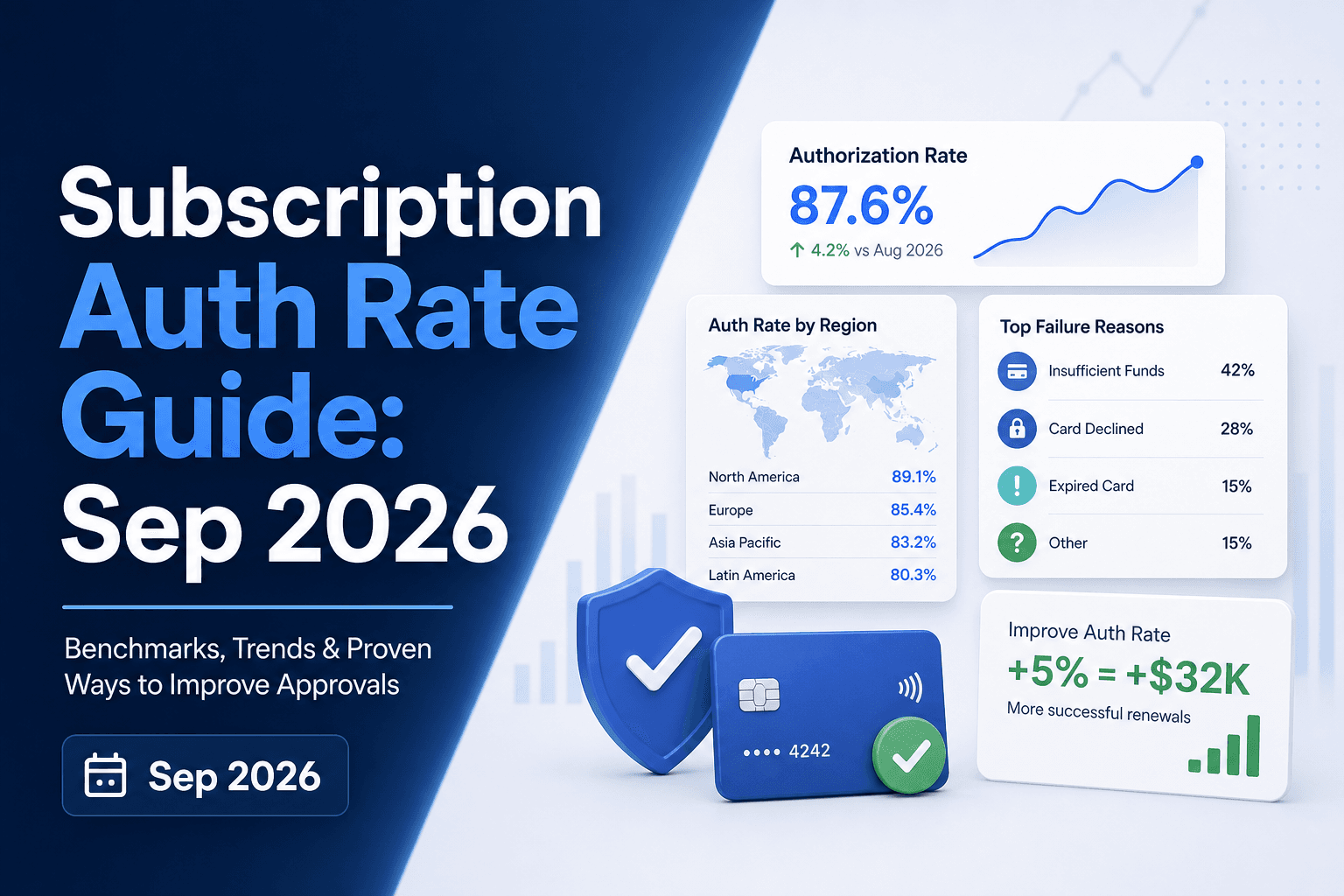
Authorization Rate in Subscription Billing: October 2026
There's a number sitting in your payments data that most finance and retention teams never report on separately: the share of renewal charges your issuing...
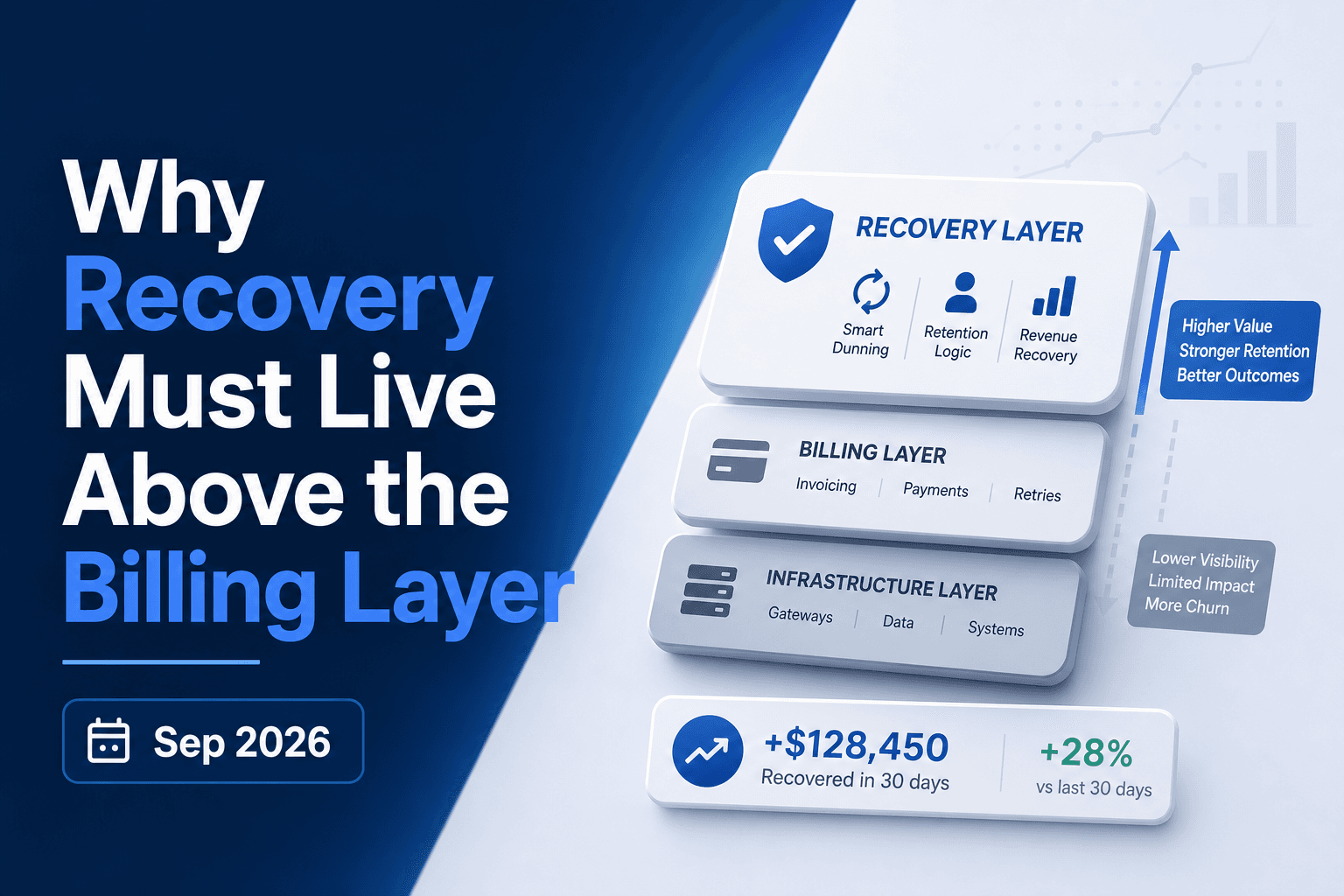
Why Payment Recovery Must Live Above Billers October 2026
A payment fails. Your biller retries it three days later, then again at seven, then at fourteen. What the biller never checks is whether the issuer sent a...
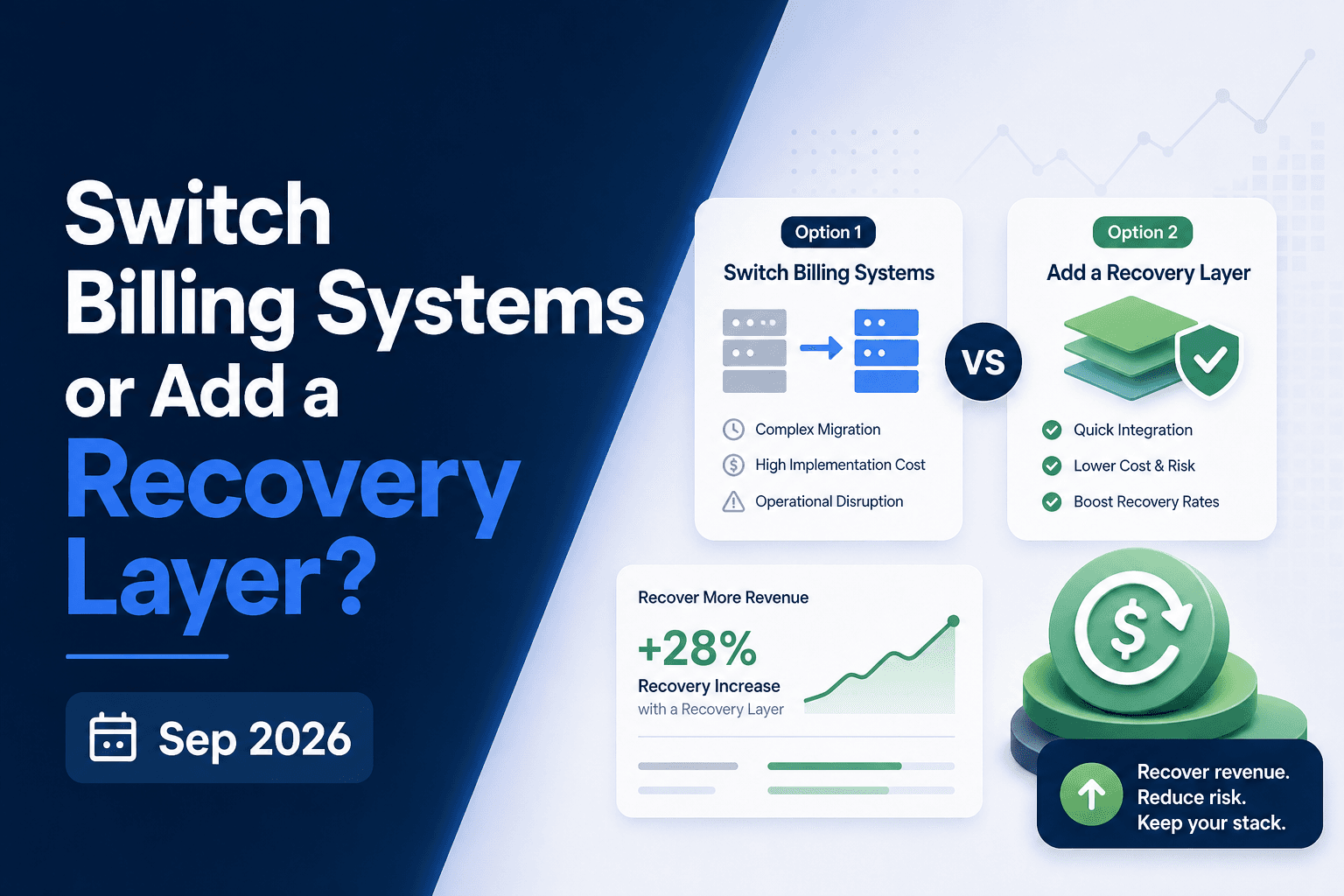
Billing Migration vs Recovery Layer: The Right Call October 2026
Switching billing systems feels like the right move when revenue collection starts breaking down. Sometimes it is. But soft declines, weak retry logic, and...
Stop losing revenue to failed payments
Join leading subscription businesses using Slicker to recover failed payments automatically.
Get Started