15 Proven Strategies to Reduce Subscription Churn (October 2026)
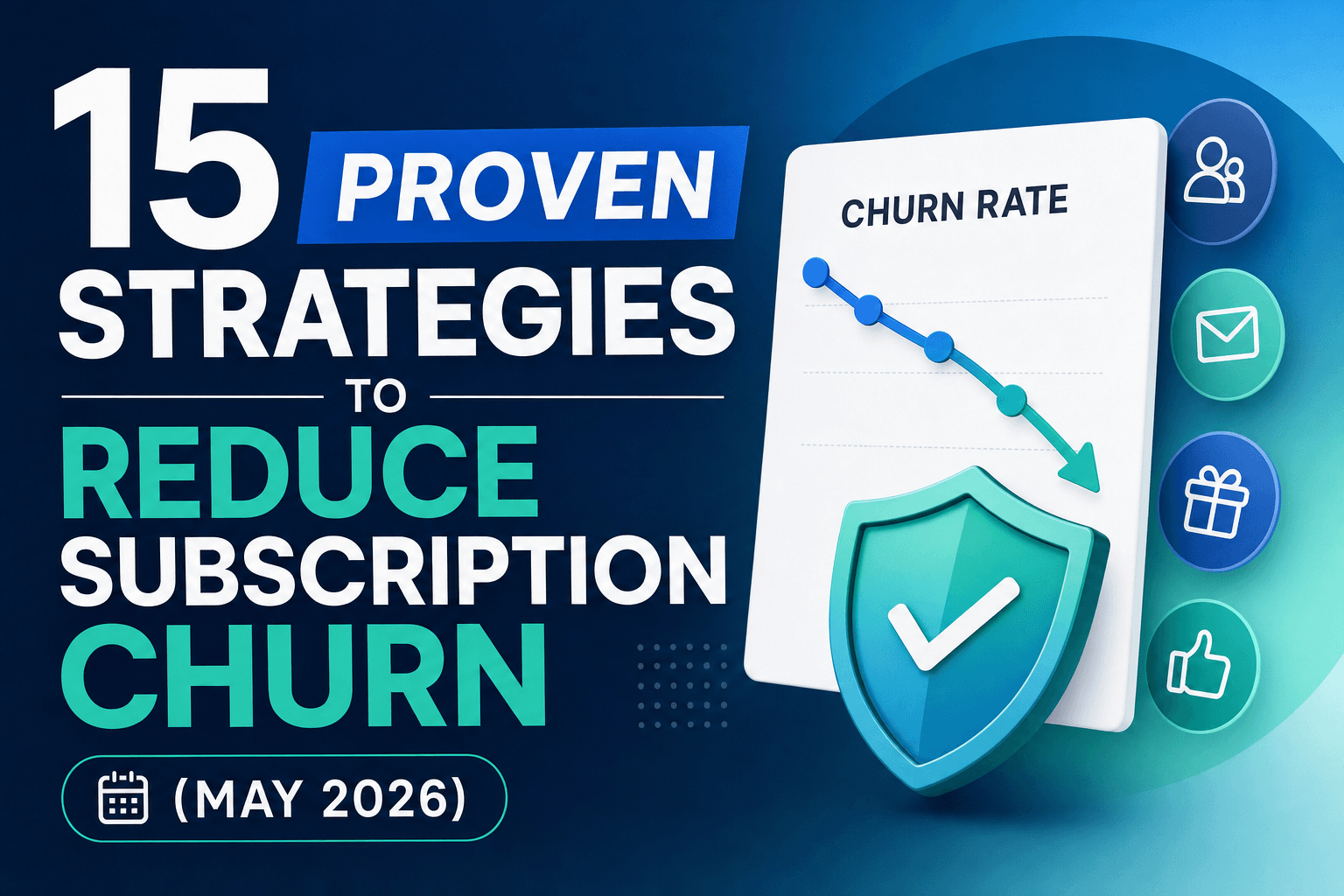
Most finance leaders track customer churn as a single line item, but that number masks a split worth understanding. Voluntary churn signals product or value gaps that need exit surveys and usage analysis to diagnose. Involuntary churn is a billing failure you can recover with the right payment retry logic and dunning campaigns. The strategies to fix each are completely different, and knowing which type is driving your losses changes where you invest retention dollars. A customer who cancels deliberately needs a different response than one whose card expired without anyone noticing.
TLDR:
- A 5% monthly churn rate wipes out 46% of your customer base annually
- 44% of cancellations happen in the first 90 days, signaling an onboarding problem
- Annual plans cut churn by 51% and make subscribers 2.4x more profitable
- Credit cards fail at 7.9% vs 2.9% for ACH/SEPA, hiding involuntary churn in your payment mix
- Slicker's AI models recover 20% more failed payments by analyzing network messages, error codes, and geography
What Is Churn Rate and Why It Matters for Subscription Businesses
Churn rate measures the percentage of subscribers who cancel within a given period. The formula is simple: divide lost customers by total customers at the start of the period, then multiply by 100.
For subscription businesses, churn rate vs retention rate are two sides of the same coin. A 5% monthly churn rate sounds small, but the math is punishing: compounded over 12 months, that rate wipes out 46% of your customer base annually. Industry benchmarks show healthy churn typically runs below 5% monthly for subscription businesses, with top performers hitting under 3%.
Voluntary vs. Involuntary Churn: Two Different Problems
Subscription churn splits into two distinct categories, and conflating them is a costly mistake. Voluntary churn happens when customers actively cancel. Involuntary churn happens when payments fail and no one intervenes. Each requires a different fix.
- Voluntary churn signals a value or experience problem worth investigating through structured exit surveys and usage data.
- Involuntary churn is a billing failure, recoverable with the right retry logic and dunning sequences.
Strategy 1: Implement Intelligent Payment Retry Logic
Not every failed payment deserves the same response. A debit card declined for insufficient funds on the 3rd of the month is a fundamentally different situation from a corporate Amex flagged for fraud. Retry the wrong one aggressively and you'll rack up Visa and Mastercard penalty fees ($0.10 per excess retry) while damaging your merchant reputation with issuers.
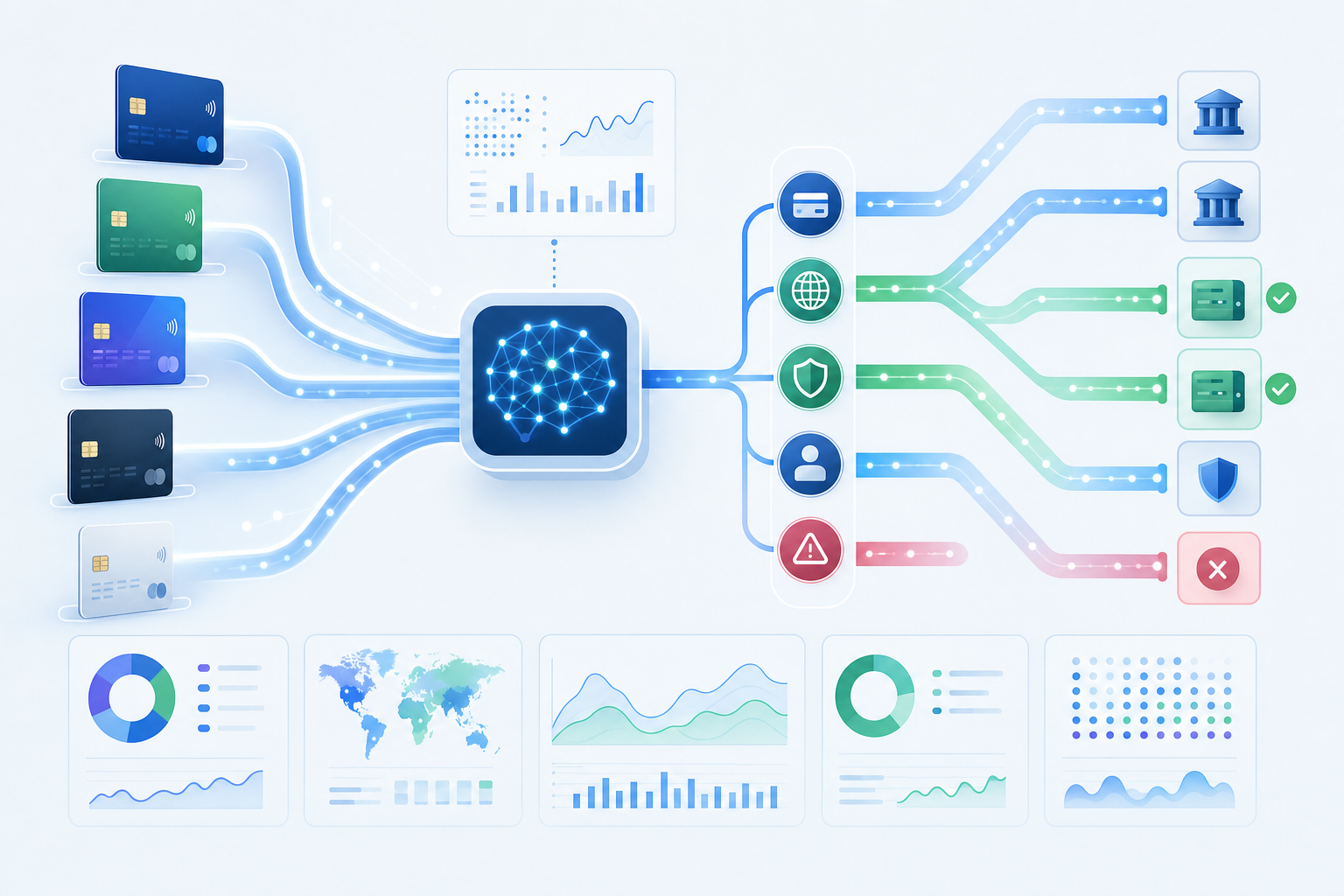
Strategic retry logic considers card type, issuing bank, geography, and the specific error code returned. Insufficient funds on a consumer debit card? Retry timing should align with typical payday windows for that cardholder's geography.
Strategy 2: Deploy Smart Dunning Campaigns
Smart dunning refers to payment-recovery outreach that personalizes each message to the specific failure reason, rather than sending a generic "update your payment method" blast. Generic emails get ignored. Effective dunning matches the message to the failure: an expired card in the US needs different copy than a failed direct debit in the UK or an RBI approval flow in India.
Pre-dunning goes further. Catching an expiring card before it fails removes the problem entirely, at almost no cost.
Reach customers across email, SMS, and in-app notifications, but only contact them when they need to act. Tying an outreach email to every retry creates spam risk, damages your sender reputation, and fatigues customers who might have recovered without any nudge at all.
Strategy 3: Activate Account Updater Services
Industry estimates suggest nearly 30% of U.S. payment cards are reissued each year from expiration, theft, or routine upgrades. Each one is a silent failure waiting to happen if your billing system doesn't know the new details.
Account updater services fix this through direct integrations between payment processors and card networks like Visa and Mastercard. Updated card details sync automatically before the next charge runs, reducing card-related failure churn by 25-35%. No customer outreach required.
Strategy 4: Improve Customer Onboarding and Time-to-Value
Industry research suggests 44% of subscription cancellations happen within the first 90 days. That's an onboarding problem, not a product problem.

Customers who never reach core value have no reason to stay. Shorten the path from signup to first meaningful outcome through guided setup flows, milestone check-ins, and proactive success outreach at day 3 and day 14. Track feature adoption over login counts alone, and intervene before the 30-day mark when disengagement is still reversible.
Strategy 5: Identify and Engage At-Risk Customers Early
By the time a customer clicks "cancel," the decision is usually already made. Proactive engagement consistently outperforms last-minute save attempts.
Monitor these leading indicators to catch risk early:
- Declining login frequency or session depth
- Reduced adoption of core features
- Rising support ticket volume or unresolved complaints
- Payment failure history as a behavioral signal
Assign risk scores based on these signals, segment accounts by probability tier, and trigger the right response. High-value, high-risk accounts warrant an executive call or dedicated CSM attention. Mid-tier risk may need a targeted check-in or personalized offer.
Strategy 6: Personalize Customer Engagement and Communication
Generic emails are background noise. A power user receiving the same "getting started" tip as a day-one trial subscriber signals you're not paying attention.
Segment outreach by usage depth, tier, tenure, vertical, and lifecycle stage. Behavior-based messaging along these lines reduces churn by 17%. Trigger campaigns when usage drops, surface feature recommendations based on similar accounts, and match content to the customer's current stage.
Strategy 7: Build Flexibility Into Subscription Management
Not every "cancel" is permanent. Many customers leave over temporary budget pressure or a seasonal slowdown, not because the product failed them. Companies offering pause options see 18% fewer cancellations from this group.
Give subscribers real control:
- Self-service portals to modify, pause, or downgrade without contacting support
- Plan downgrades that keep the relationship alive at lower revenue instead of losing it entirely
- Skip or pause functionality for subscription boxes when a delivery cycle doesn't work
- Flexible billing frequency (monthly, quarterly, annual) to match varying cash flows
A customer on pause stays in your ecosystem. One who cancels is gone.
Strategy 8: Leverage Annual Plans and Contract Structure
Annual plans reduce churn by 51% compared to monthly plans, and annual subscribers are 2.4x more profitable. The conversion math works even with a 15-20% discount incentive attached to the offer.
Prepayment psychology carries much of the weight. Once a customer commits upfront, perceived switching costs rise sharply, and you gain a full year to prove value rather than re-earning trust every 30 days.
One real tradeoff worth acknowledging: annual contracts can hide product problems. Track feature adoption throughout the contract, instead of only at the 11-month mark when it's already too late to intervene.
Strategy 9: Offer Proactive Customer Support and Success Programs
Proactive support means reaching out before customers ask for help. Companies that invest in dedicated success programs see measurably lower churn, as customers who feel guided rather than abandoned are far more likely to renew.
- Assign success managers to high-value accounts so someone is always monitoring usage, flagging early warning signs, and checking in before renewal windows.
- Build automated health scores that trigger outreach when engagement drops below a threshold, catching at-risk customers weeks before they cancel.
Strategy 10: Create Customer Loyalty and Rewards Programs
Loyalty programs raise switching costs without adding friction. Points tied to tenure, VIP status, and exclusive perks make leaving feel more expensive than staying. Referral incentives turn long-term subscribers into advocates with real skin in the game.
Specific mechanics worth building:
- Tenure-based discounts: automatically apply a rate lock or loyalty discount at 12, 24, and 36 months. The financial benefit anchors customers to their current plan at renewal time.
- Milestone rewards: trigger credits, bonus features, or exclusive access at usage thresholds (e.g., 1,000 API calls, 50 projects completed). Milestones create positive reinforcement loops that deepen product engagement.
- Referral programs with compounding value: reward both the referrer and the new subscriber. Long-tenured customers who refer others have among the highest lifetime values in any cohort — they stay longer and bring in customers who mirror their profile.
- Status tiers: visible progression (Silver, Gold, Platinum) gives subscribers a reason to stay even when a competitor offers a similar product at a lower price. The cost of losing status registers as a real switching cost.
For B2B, the same logic applies through partner benefits, priority support access, and early feature unlocks for tenured accounts. Naming high-value accounts as design partners or beta testers also signals investment in their success, which raises retention independently of any formal rewards structure.
Strategy 11: Continuously Gather and Act on Customer Feedback
Customers rarely cancel at the first sign of friction. They cancel after hitting the same problem repeatedly, concluding that no one is listening.
Exit surveys surface the stated reason for cancellation. In-app NPS surveys track satisfaction before it tips into a decision, and feature request tracking gives input somewhere to go. Closing the loop explicitly, telling customers when something changed because they asked, turns passive users into invested ones.
Product gaps are survivable when customers see a company responding. Silence is what drives churn.
Strategy 12: Optimize Pricing and Show Clear Value
Customers don't churn over price; they churn when price stops feeling worth it.
Usage-based pricing fixes this at the structural level: cost scales with value delivered, so customers who use more pay more and customers who use less aren't paying for air. For B2B accounts, regular ROI reporting does heavy lifting here. If your product saved a customer $200k last quarter, they need to hear that explicitly. Value that goes unannounced gets forgotten.
Price increases are survivable when they're small, infrequent, and anchored to something real. Pair any increase with new capabilities, communicate it clearly, and give customers time to see it coming. Value perception is never automatic. You have to actively maintain it.
Strategy 13: Use Data Analytics and Cohort Analysis
Aggregate churn rates hide more than they reveal. A uniform monthly figure looks manageable until you segment by signup cohort, acquisition channel, and pricing tier, where the actual risk concentrates.
There are a few analytical approaches worth running consistently:
- Cohort retention curves show exactly when customers drop off and from which groups, letting you target intervention at the right moment rather than after the fact.
- Net revenue retention by segment reveals where lifetime value actually concentrates, so you invest retention resources where they generate the most return.
- A/B testing retention initiatives beats assumption every time, replacing gut feel with evidence on what actually moves the needle.
- Leading indicator dashboards turn lagging churn data into something actionable before the month-end number lands.
Strategy 14: Diversify Payment Methods and Optimize Payment Infrastructure
Credit cards carry a 7.9% average payment failure rate. Account-to-account payments like ACH and SEPA direct debit sit at just 2.9%.
That gap is involuntary churn hiding in your payment method mix, not a product problem.
Payment Method | Average Failure Rate | Primary Markets | Churn Reduction Strategy |
|---|---|---|---|
Credit Cards | 7.9% | US, Canada, UK, Australia | Pair with account updater services to catch card expirations before they fail. Route retries based on issuing bank behavior and decline code specificity. |
ACH Direct Debit | 2.9% | United States | Default method for B2B subscriptions and high-value consumer plans. Lower failure rates make it 2.7x more reliable than cards for recurring billing. |
SEPA Direct Debit | 2.9% | European Union, EEA | Mandate-based system reduces involuntary churn across EU markets. Requires customer bank authorization but delivers stable monthly collections. |
BACS Direct Debit | 3.1% | United Kingdom | Standard for UK subscriptions post-Brexit. Three-day processing window requires advance scheduling but failure rates stay well below card networks. |
Digital Wallets | 4.2% | Global (Apple Pay, Google Pay) | Tokenized credentials bypass card expiration issues. Failure rates sit between cards and direct debit, with frictionless customer experience driving adoption. |
Local Payment Methods | Varies by region | India (UPI), Brazil (Boleto), China (Alipay, WeChat Pay) | Reduces cross-border decline friction in markets where cards have low penetration. Match payment method to local banking infrastructure for lowest failure rates. |
Expanding beyond cards directly reduces exposure:
- ACH/direct debit for US subscribers, SEPA for Europe, and BACS for the UK offer lower failure rates than card networks
- Digital wallets like Apple Pay and Google Pay use tokenized credentials that don't expire the way physical cards do
- Local payment methods for international markets where cards aren't the default reduce unnecessary declines at the source
Multi-gateway routing compounds the gains, sending each transaction to whichever gateway has the highest approval likelihood based on geography, card type, and prior performance. Charging in local currency removes cross-border friction before a retry ever runs.
Strategy 15: Win Back Churned Customers Through Reactivation Campaigns
Churned customers aren't a closed door. Winning back someone who already knows your product costs 5x less than acquiring a net-new subscriber, with a shorter education curve and a warmer starting conversation.
Segmentation determines the message. Involuntary churn winbacks are straightforward: confirm the billing issue is resolved and offer a short-term incentive. Voluntary churn requires more directness. "We heard why you left, and here's what we changed" outperforms a generic discount every time.
Timing sets the ceiling on what's recoverable. Reaching out within 30 to 60 days keeps the conversation alive before a competitor gets embedded. Wait six months and the switching cost has already flipped against you.
Returning subscribers frequently outperform first-time subscribers on retention. They're making a deliberate, informed re-commitment, and that intent shows up in the data.
How AI-Powered Payment Recovery Reduces Involuntary Churn at Scale
Involuntary churn is a billing problem, and it's recoverable. Slicker's ensemble of AI models evaluates every failed payment across network-level messages, gateway error codes, issuing bank behavior, and geography to answer three questions per transaction: whether to retry, when to retry, and how much. That precision recovers 20% more failed payments than standard retry logic, with up to 70% of soft declines captured.
Smart retries, hyper-personalized dunning kept separate from retry logic to remove spam risk, and multi-gateway routing all operate through your existing billing infrastructure. Setup takes under 5 minutes for supported integrations. Zero engineering lift required.
What sets Slicker apart from competitors making broad, unverifiable recovery claims is AABB testing: a clinical-grade methodology that proves recovery uplift with statistical significance before any commitment. We measure dollars recovered, not proxy metrics.
Final Thoughts on Cutting Subscription Churn
Cutting subscription churn comes down to fixing what's measurably broken before optimizing what's working.
FAQ
What's the best strategy to reduce subscription churn?
Involuntary churn should be your first target. Up to 40% of all churn is payment-related and fully recoverable with intelligent retry logic and smart dunning. Voluntary churn requires fixing product or value perception issues through better onboarding, proactive engagement, and customer feedback loops.
Churn rate vs retention rate: what's the difference?
Churn rate measures the percentage of subscribers lost in a period, while retention rate measures the percentage who stayed. They're inverse metrics: a 5% monthly churn rate equals a 95% retention rate, but that 5% churn compounds to a 46% annual customer loss.
Can you reduce churn without building custom payment infrastructure?
Yes. AI-powered payment recovery solutions like Slicker integrate with your existing billing infrastructure in under 5 minutes, requiring zero engineering lift. The AI models handle retry timing, payment method routing, and dunning personalization automatically, recovering 20% more failed payments than standard retry logic.
How do you calculate churn rate for a subscription business?
Divide the number of customers lost during a period by the total customers at the start of that period, then multiply by 100. For example: if you started January with 1,000 subscribers and lost 50, your monthly churn rate is (50 ÷ 1,000) × 100 = 5%.
When should you use annual plans to reduce churn?
Always offer annual plans as an option. Annual subscribers churn 51% less than monthly subscribers and generate 2.4x more profit, even with a 15-20% discount incentive. The upfront commitment raises perceived switching costs and gives you a full year to prove value instead of re-earning trust every 30 days.
Related Articles
Stripe Dunning Configuration Guide (September 2026)
A surprising share of the subscribers leaving your list every month never chose to cancel. Their payment failed, your retry window ran out, and Stripe...
Stripe Recovery Add-On Evaluation Guide (September 2026)
Stripe's built-in recovery tools cover real ground. Smart Retries, Account Updater, dunning emails. For a lot of subscription businesses, that's a reasonable...
What Subscription Operators Miss About Built-In Retries (Oct 2026)
If your billing platform retries run on a fixed 14-to-21-day countdown from the failure date, they have no idea when your subscriber's paycheck actually...
Stop losing revenue to failed payments
Join leading subscription businesses using Slicker to recover failed payments automatically.
Get Started