What Is a Dunning Email? How Hyper-Personalized Campaigns Outperform Generic Templates (May 2026)
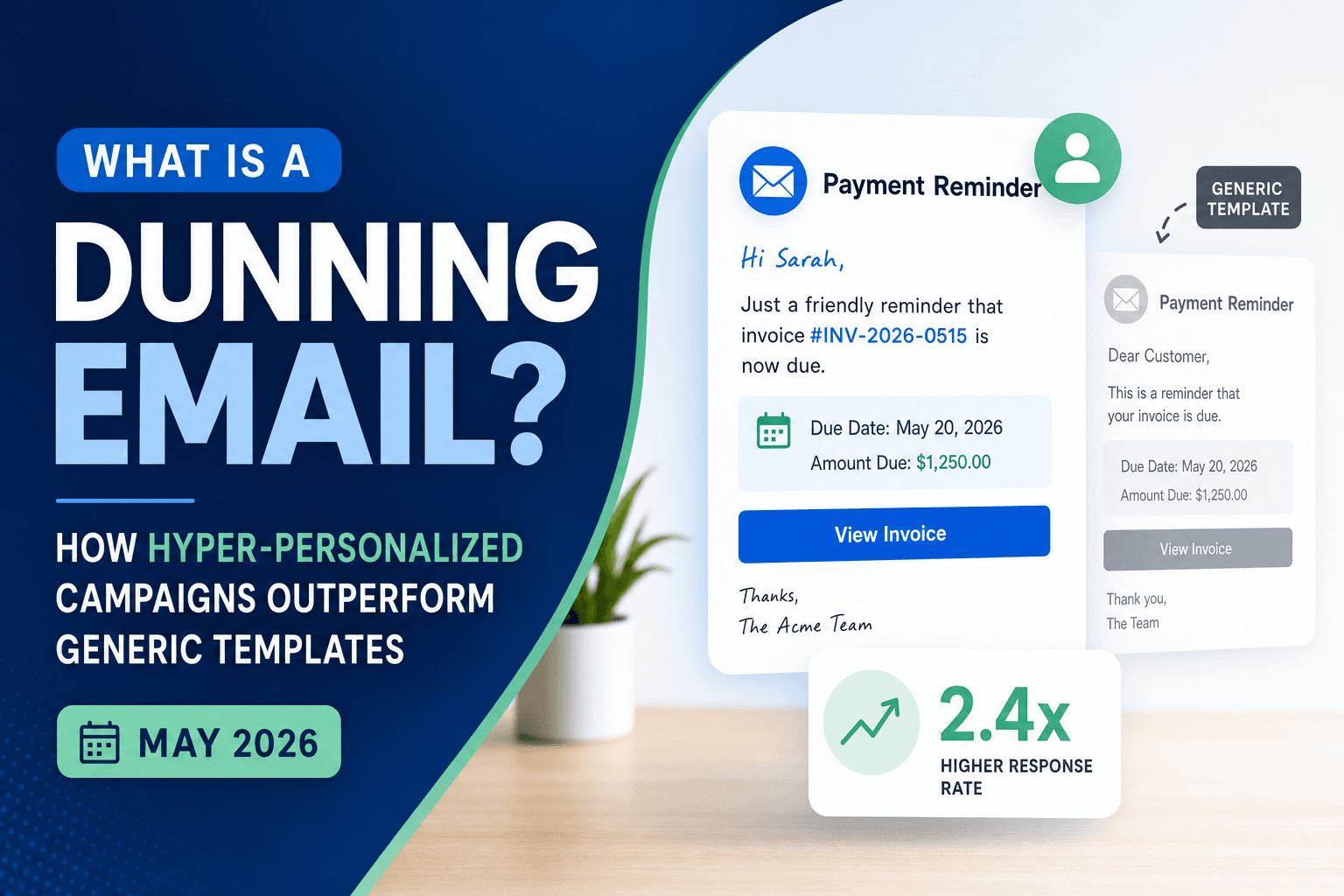
A dunning email lands in your subscriber's inbox after their payment fails, asking them to update their card or complete the transaction. Most billing tools send that exact same failed payment email to every decline, treating a stolen card the same as insufficient funds on a prepaid account. Matching your subscription recovery email to the specific decline reason (what dunning email best practices call failure-specific personalization) is how you stop involuntary churn before it drains MRR from customers who never meant to leave.
TLDR:
- Dunning emails recover failed payments, but generic templates leave revenue on the table.
- Failed payments account for 9% of all transactions; matching message to failure reason lifts recovery rates.
- Send dunning only when customer action is required (expired or stolen cards), not for soft declines.
- Track recovery rate by failure type and revenue recovered per cohort, not open rates.
- Slicker uses AI models to personalize dunning by decline reason and proves uplift via AABB testing.
What Is a Dunning Email?
A dunning email is a automated message sent to a subscriber after a payment fails, asking them to update their billing information or complete a transaction. The term comes from the centuries-old practice of "dunning," which meant persistently requesting payment from a debtor.
In subscription businesses, dunning emails are a core part of failed payment recovery. When a card declines due to expiration, insufficient funds, or a bank-side issue, a well-timed email can be the difference between recovering that subscriber and losing them to involuntary churn (cancellations caused by payment failures, not a conscious decision to leave).
Most billing tools send the same generic "Update your payment method" message to every subscriber, regardless of why the payment failed. That one-size-fits-all approach leaves substantial recovered revenue on the table.
Why Dunning Emails Matter for Subscription Revenue
Involuntary churn quietly drains MRR from subscribers who never intended to leave. A failed payment triggers it, and without a recovery sequence, that subscriber is simply gone.
Dunning emails are the customer-facing side of that recovery sequence. When a payment can't be retried silently, an email sent within 24 hours with failure-specific copy prompts the subscriber to act before cancellation occurs.
The revenue stakes are real. Failed payments account for roughly 9% of all transactions, and for subscription businesses running high volumes, that figure compounds fast. Recovering even a fraction of those customers directly protects ARR without requiring new acquisition spend.
The catch is that most dunning emails are generic. One template, sent to every subscriber, regardless of why their payment failed. That mismatch between message and failure reason is where recoverable revenue slips away.
When Payment Failures Require Customer Action vs. Silent Recovery
Soft declines are temporary. Insufficient funds, generic bank-side errors, and smart retries based on failure type, card network, and issuer behavior handle these automatically."try again later" codes can resolve within hours or days without any subscriber involvement. Silent recovery handles these automatically, retrying at the right time based on failure type, card network, and issuer behavior.
Customer-facing dunning emails belong to a specific subset of failures where the subscriber must take action themselves. Effective dunning requires customer action, usually to update a payment method, which accounts for why message-to-failure matching matters more than volume.
When to Send a Dunning Email
- Expired cards cannot be retried successfully until the subscriber updates their payment method. A direct email with an update link is the only path to recovery.
- Stolen or flagged cards require the subscriber to add a new card entirely. The messaging here should focus on protecting their access to the service they're already paying for.
- Processor-flagged fraud holds sometimes require the cardholder to contact their bank before any retry will succeed.
Treating every decline the same way wastes your sender reputation on recoverable soft declines and dilutes the urgency of emails that actually require action. Routing failure types correctly keeps your dunning email volume lower, your deliverability higher, and your subscriber relationships intact.
Failure Type | Customer Action Required | Dunning Email Approach |
|---|---|---|
Expired card | Subscriber must update their payment method with new expiration date or replacement card | Send immediate update prompt with direct link to billing page on day one |
Stolen or flagged card | Subscriber must add an entirely new payment method to replace the compromised card | Frame message around protecting service access they already pay for with urgent tone |
Insufficient funds (soft decline) | No customer action needed if smart retry logic handles automatic recovery within billing cycle | Skip dunning email and rely on silent recovery, or send reassuring message without alarm |
Processor-flagged fraud hold | Cardholder may need to contact their bank directly before any retry will succeed | Provide clear instructions on contacting issuer while maintaining service value framing |
The Anatomy of an Effective Dunning Email
Every dunning email that performs well shares the same core structure, regardless of the specific failure reason or subscriber segment.

The key components
A high-converting failed payment email typically includes:
- A subject line tied to the specific decline reason, not a generic "payment failed" alert. In Slicker's testing, mentioning the service at risk outperforms transactional subject lines in open rate testing.
- A message body that frames the situation around what the subscriber stands to lose, not around the payment error itself. "Your access to X pauses Friday" converts better than "your card was declined."
- A single, friction-free call to action pointing to a pre-filled update page where possible. Reducing clicks directly reduces drop-off.
- Sender details and branding that match the subscription product, so the email reads as a service communication, not a collections notice.
The failure reason should also shape the copy directly. A stolen card requires different instructions than an expired card or a soft decline from insufficient funds. Treating all failure types with identical copy leaves recovery on the table.
Generic Templates vs. Failure-Specific Personalization
Generic dunning emails treat every failed payment the same. A subscriber whose card was stolen gets the same "please update your payment info" message as someone who simply ran out of funds. The result is friction for customers who can't act on the instructions given, and recovered revenue left on the table.
Failure-specific personalization changes this. When a dunning email reflects the actual reason a payment failed, whether that's an expired card, a soft decline, or a spending limit, subscribers receive instructions they can act on immediately. That alignment between message and failure type is what separates recoverable situations from involuntary churn.
Why Message-to-Failure Matching Matters
Consider the difference in required action:
- A stolen card requires the subscriber to add a new payment method entirely, so the email should make that single step obvious and urgent, framing it around the service value they'll lose.
- A temporary soft decline may need no customer action at all if smart retries handle it automatically; the email, if sent, should reassure rather than alarm.
- An expired card needs a quick update prompt with a direct link to the billing page, keeping friction low.
Sending a generic prompt across all three scenarios reduces conversion on each. Hyper-personalized campaigns map the message to the moment, which is where measurable recovery rate uplift comes from.
Dunning Email Timing and Cadence Strategy
Timing a dunning email sequence matters as much as the message itself. Send too early and you risk frustrating a customer whose bank is still processing a routine retry. Send too late and the subscriber has already mentally cancelled.
A baseline starting cadence looks like this:
- Send the first email on the day of failure, keeping the tone informational rather than alarming. The customer may not even know something went wrong.
- Follow up on day three if the payment is still unresolved, with a clear action prompt and a direct link to update payment details.
- Send a final notice around day seven, framing the message around the value the subscriber stands to lose, not the outstanding balance.
Adjusting Cadence by Failure Reason
Generic schedules ignore the reason a payment failed. A stolen card requires immediate action from the customer, so compressing the cadence to one or two days makes sense. Insufficient funds may resolve on its own within a billing cycle, making a longer, gentler window more appropriate.
Matching your cadence to the decline type reduces friction and respects the customer relationship, which translates directly into higher recovery rates and lower voluntary cancellation risk.
Measuring Dunning Performance Beyond Open Rates
Recovery rate is the metric that matters. Open rates and click-throughs tell you about email engagement; they tell you nothing about whether the payment actually went through.

The metrics worth tracking in any dunning campaign break down into two tiers:
- Recovery rate by failure type: segment results by decline reason (insufficient funds, expired card, stolen card) to see which messages actually resolve each scenario, instead of only tracking clicks. If your expired-card recovery rate sits below 60% but your soft-decline recovery rate is above 80%, that gap points directly to a copy or timing problem in the expired-card sequence, not a general dunning problem.
- Revenue recovered per cohort: measure recovered MRR against the cost of the campaign to understand true ROI, instead of activity alone. A sequence that sends six emails and recovers $4,000 MRR may outperform a two-email sequence recovering $2,500, or it may not, once you factor in unsubscribe rates and sender reputation costs. Cohort-level math makes that visible.
- Time-to-recovery: how many days pass between the initial failure and a successful charge. Shorter windows reduce involuntary churn risk because the longer a subscriber sits in a failed-payment state, the higher the probability they disengage entirely. A well-matched message to the failure reason typically cuts time-to-recovery by compressing the decision the subscriber has to make.
- Sequence drop-off rate: which email in the sequence loses the subscriber, revealing where messaging breaks down. If the majority of recovered payments come from email one and email three sees near-zero action, the third message is either redundant or creating friction. Drop-off by position tells you where to rewrite, not just whether to rewrite.
Why Statistical Rigor Changes Everything
Gut-feel optimization is how teams end up confident about the wrong things. The only way to know whether a dunning sequence is genuinely outperforming is to run controlled AABB tests with enough volume to reach statistical significance. Without that, you're comparing cohorts that differ in ways you can't see, issuer behavior, billing cycle timing, card type, and drawing conclusions from noise.
Track recovery dollars, not recovery emails. Every insight should connect back to MRR retained.
How Slicker Combines AI Retry Logic With Hyper-Personalized Dunning
Slicker takes a different path from generic dunning tools. Rather than sending the same "update your payment info" email to every churned subscriber, Slicker's Artificial Payments Intelligence layer first attempts silent recovery through smart retries, reserving customer-facing dunning only for failure codes that genuinely require subscriber action, like a stolen or expired card.
When dunning is needed, Slicker's ensemble of AI models reads the specific decline reason, subscriber history, and issuer behavior to build a hyper-personalized message sequence. The copy, timing, and channel reflect why that particular payment failed, not a one-size-fits-all template.
Every campaign runs through clinical-grade AABB testing, splitting traffic 50/50 and measuring recovered dollars against a control group until results reach statistical significance. Your recovery rate uplift is proven on your own data before you commit, not taken on faith.
Final Thoughts on Improving Dunning Email Performance
Generic dunning emails treat every failed payment the same, which is why so much recovered revenue walks out the door. When you personalize the message to the decline reason, compress your cadence for hard declines, and measure recovery dollars instead of open rates, you stop losing subscribers who never intended to leave. The gap between what you're recovering now and what's recoverable is measurable. Let's talk if you want to close it.
FAQ
What Is a Dunning Email?
A dunning email is an automated message sent after a payment fails, prompting a subscriber to update billing information or resolve the issue that caused the decline. It's triggered when customer action is required to recover revenue from failed transactions, such as when a card has expired or been flagged as stolen.
Can I recover failed payments without sending dunning emails?
Yes. Soft declines like insufficient funds or generic bank-side errors can be recovered silently through smart retries that execute at optimal times based on failure type, card network, and issuer behavior. Dunning emails should only be sent when the subscriber must take action themselves, such as updating an expired or stolen card.
Dunning email best practices for expired cards vs. soft declines?
For expired cards, send a direct update prompt with a pre-filled link on day one since the payment cannot succeed until the subscriber acts. For soft declines like insufficient funds, silent retry logic should handle recovery automatically without customer contact. Matching the message and timing to the specific failure reason lifts recovery rates by reducing friction and preserving sender reputation.
How do I measure whether my failed payment email campaigns are actually working?
Track recovery rate by failure type and revenue recovered per cohort, instead of open rates or clicks. Segment results by decline reason (insufficient funds, expired card, stolen card) to see which messages resolve each scenario. Run controlled AABB tests with statistical significance to verify that your dunning sequence genuinely outperforms a control group on recovered dollars, not engagement metrics.
Should I send the same subscription recovery email for every payment failure?
No. A stolen card requires the subscriber to add a new payment method entirely, while an expired card needs a quick update link, and a soft decline may need no customer contact at all if smart retries handle it automatically. Generic templates that ignore the failure reason leave recoverable revenue on the table by mismatching the message to the required action.
Related Articles
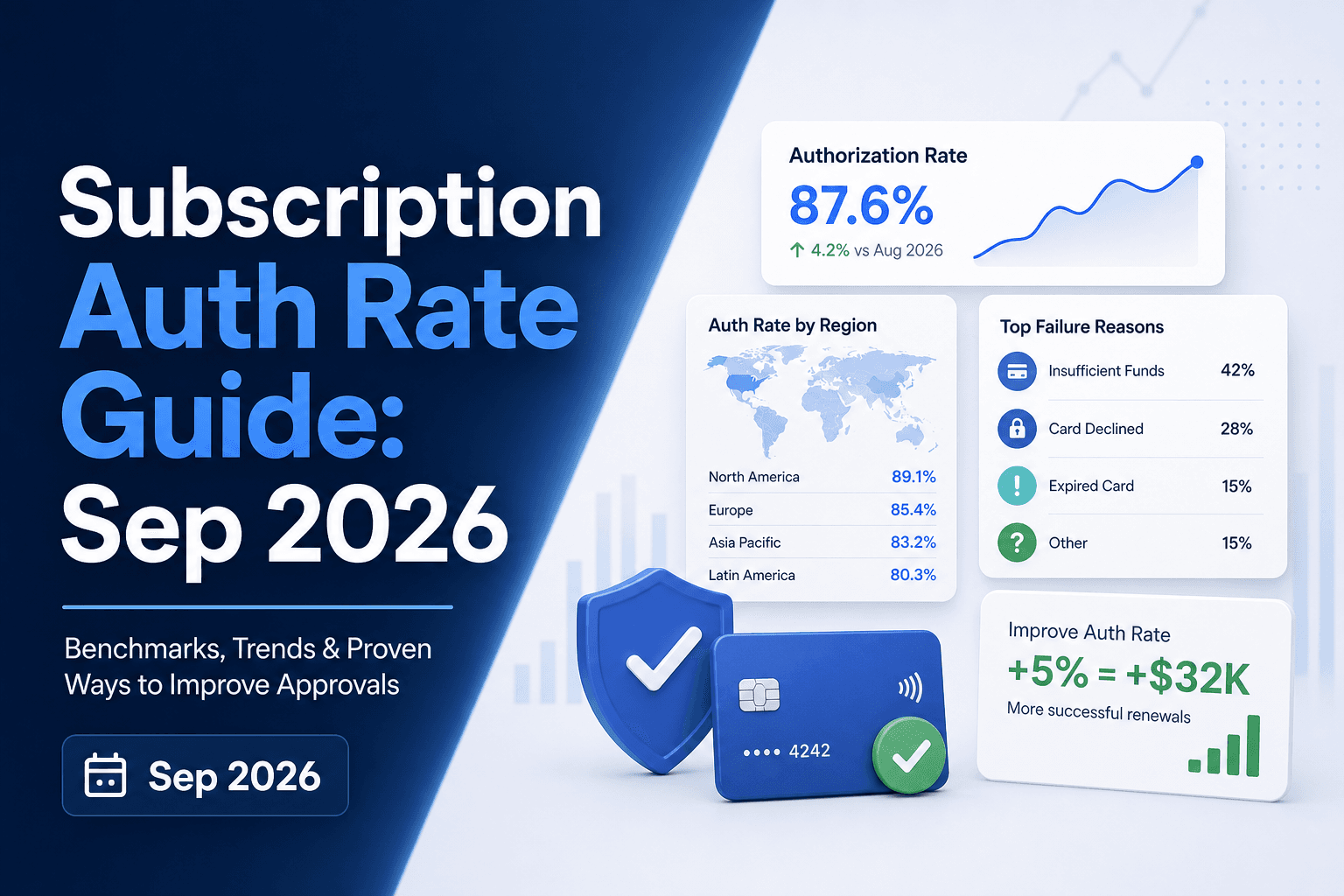
Authorization Rate in Subscription Billing: October 2026
There's a number sitting in your payments data that most finance and retention teams never report on separately: the share of renewal charges your issuing...
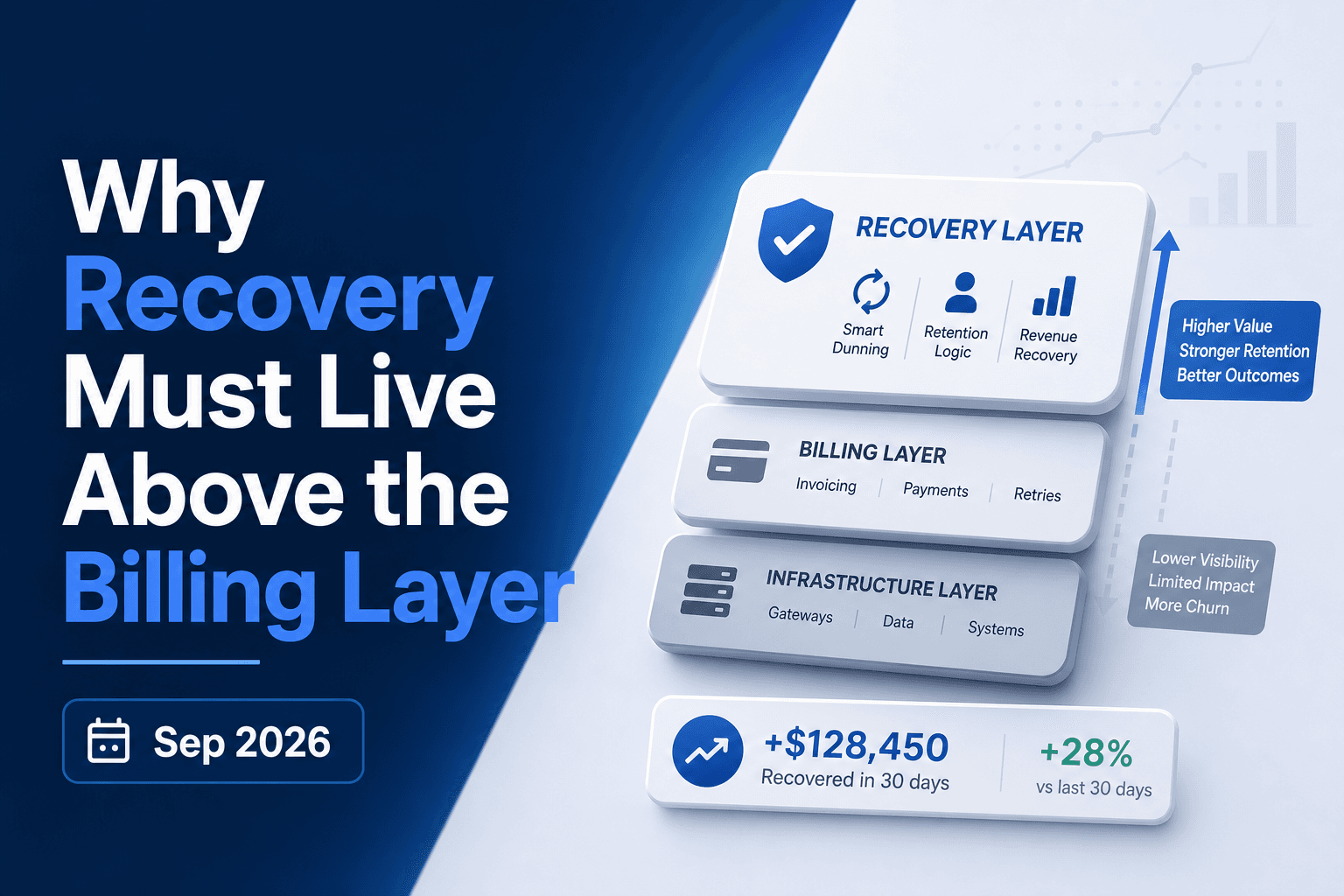
Why Payment Recovery Must Live Above Billers October 2026
A payment fails. Your biller retries it three days later, then again at seven, then at fourteen. What the biller never checks is whether the issuer sent a...
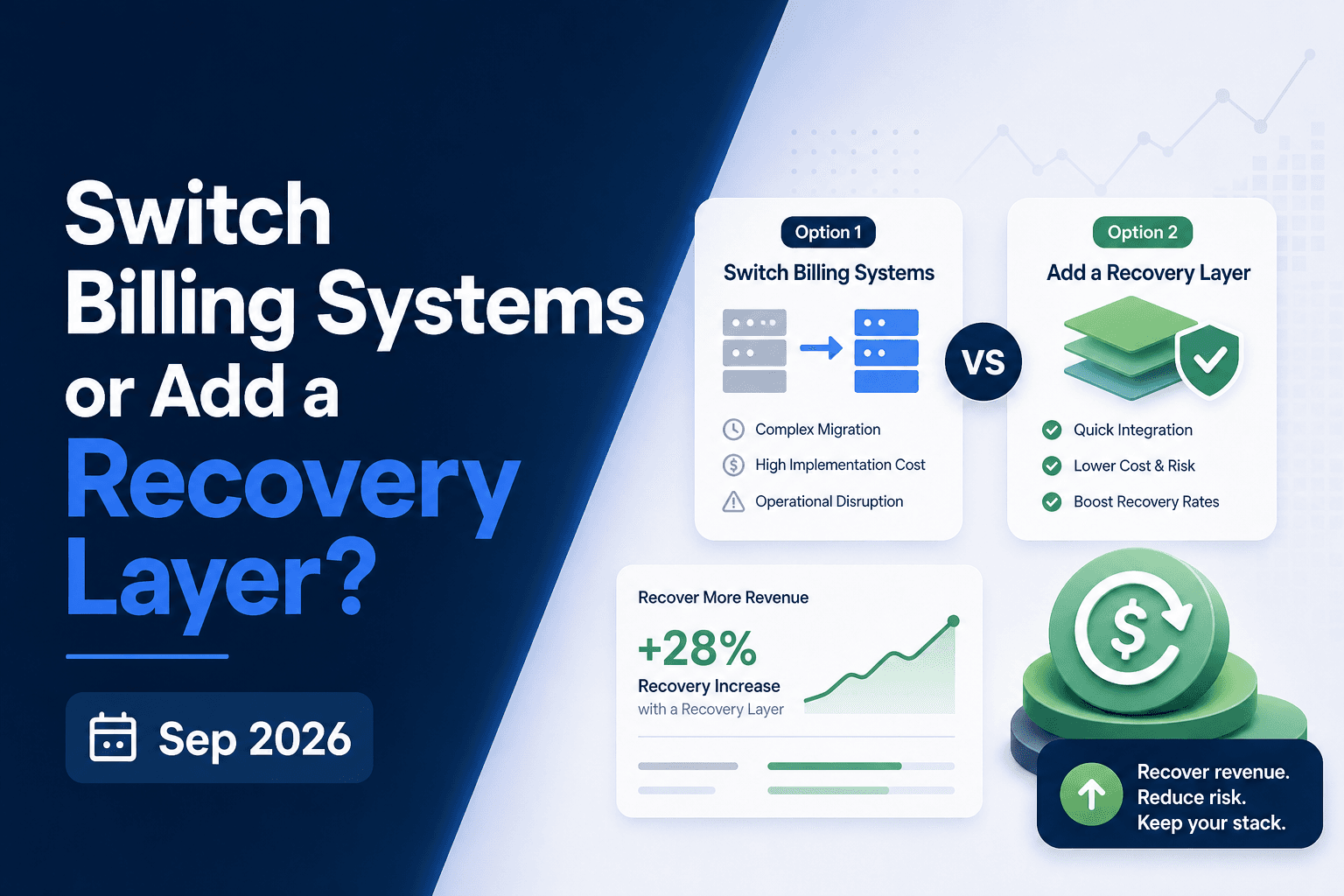
Billing Migration vs Recovery Layer: The Right Call October 2026
Switching billing systems feels like the right move when revenue collection starts breaking down. Sometimes it is. But soft declines, weak retry logic, and...
Stop losing revenue to failed payments
Join leading subscription businesses using Slicker to recover failed payments automatically.
Get Started