Are AI-Driven Payment Retries Truly Intelligent? October 2026

TLDR
- Failed payments cause up to 70% of customer departures in subscription businesses, making intelligent recovery critical for revenue retention (the 40% figure used later in this post is a conservative hypothetical example, not a conflicting estimate)
- True AI engines classify soft vs hard declines and personalize retry timing for each transaction instead of applying static rules
- According to industry-observed benchmarks (Slicker internal data analysis), AI platforms achieve 70-85% recovery rates compared to the industry median of 47.6%
- Red flags for AI-washing include no model transparency, one-size-fits-all schedules, and missing compliance certifications
- Legitimate AI solutions continuously retrain on new outcomes and can explain their decision logic
AI-driven smart payment retries slash involuntary churn by combining granular decline data with real-time machine-learning decisions. In the next few minutes you'll see why static dunning rules fall short, how true intelligence works, and how to spot vendors that are merely riding the AI hype wave.
Why do failed payments need smarter recovery, and where does AI fit?
Failed payments are not a minor nuisance; they are a revenue emergency hiding in plain sight.
"Involuntary churn has become the silent killer of subscription revenue, with up to 70% of customer departures stemming from failed transactions instead of intentional cancellations." (Slicker, based on internal customer data analysis)
Those numbers become even more alarming when you factor in the cost of acquiring a replacement customer. Recurly research compiled from more than 2,000 businesses shows that acquiring a new customer is anywhere from 5 to 25 times more expensive than retaining an existing one. A monthly churn rate of just 5% translates to losing nearly half of your customers, and half of your revenue, in a single year.
Credit card declines alone leave roughly 15% of monthly revenue uncollected. With more than 2,000 potential reasons a payment transaction can fail, recovering that revenue through generic retry schedules is like playing darts blindfolded.
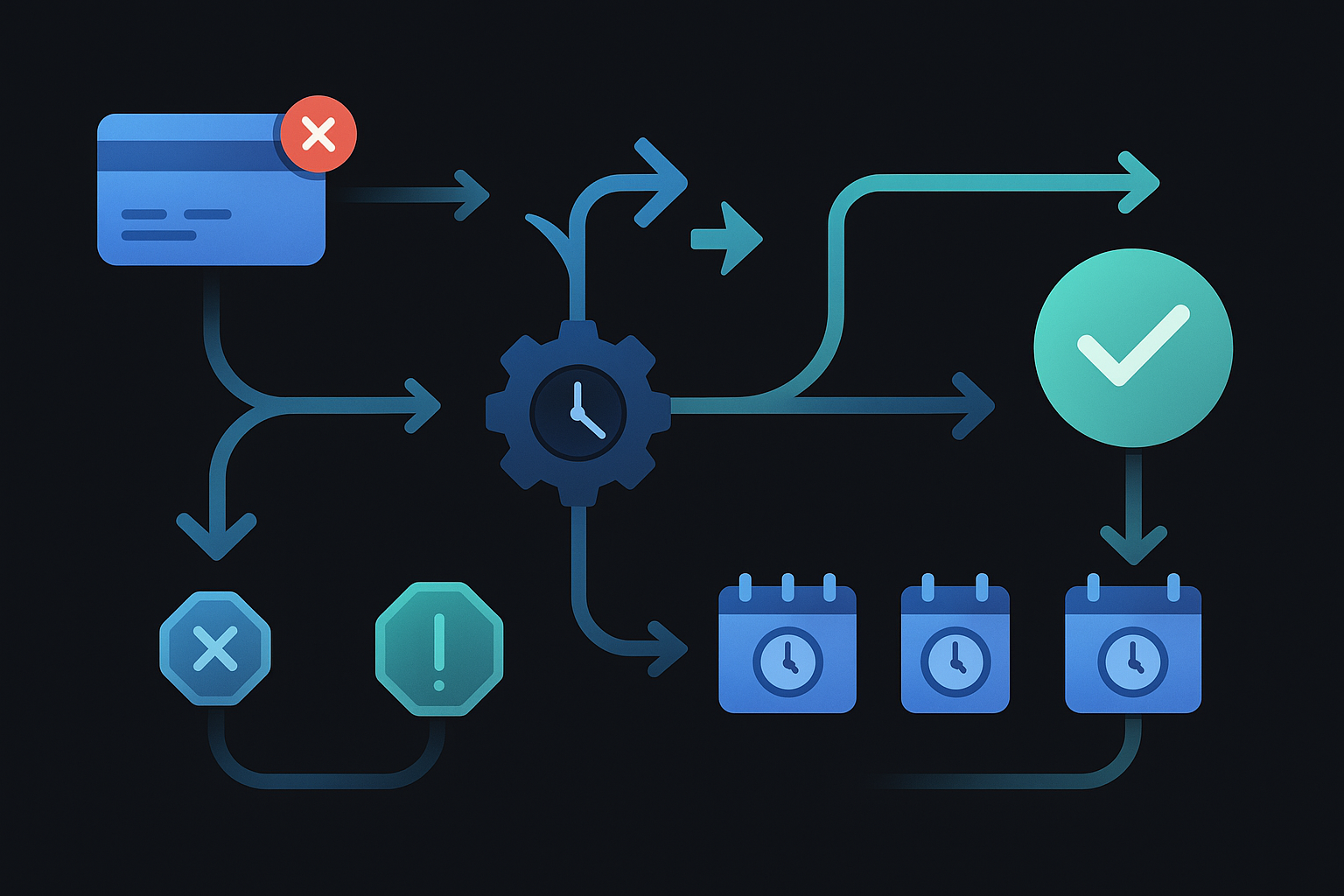
This is where AI-driven recovery enters the picture. Instead of applying the same retry timing to every decline, AI models interpret the specific decline reason, analyze customer and issuer context, and dynamically adjust retry timing to maximize success.
Key takeaway: Failed payments cause most involuntary churn, and static retry rules cannot adapt to the thousands of variables that determine whether a retry succeeds.
What makes a payment retry engine truly intelligent?
Not every system that carries an "AI" label actually learns. A truly intelligent retry engine combines several layers of AI capability, a distinction covered in depth in AI vs rules-based recovery explained.
1. Granular failure classification
"Machine learning unlocks granular segmentation, predicting which failures are 'soft' (temporary) vs. 'hard' (permanent) and tailoring actions accordingly." (Slicker)
Soft declines, such as insufficient funds or a temporary hold, can often be resolved with a well-timed retry. Hard declines, like a stolen-card flag, require customer intervention and should not be repeatedly retried, because doing so wastes authorization attempts and can trigger network penalties. For a deeper breakdown, see soft vs hard declines explained.
2. Real-time, transaction-level decisions
Unlike traditional static retry systems that follow generic decline-code rules, modern AI engines process each failed payment individually and schedule intelligent, data-backed retries. The difference is most visible in timing: a static dunning scheduler might retry every failed payment at 9am the next morning regardless of context. An AI engine reads the decline signal differently depending on circumstances: a soft decline at 2am for a customer whose paycheck historically clears on Friday gets queued for a Friday morning retry; that same decline for a customer on a corporate card with a recurring authorization pattern gets retried within hours. The model is making a per-transaction call, not running a calendar. See how static retries differ from adaptive AI.
3. Continuous model refinement
Zuora's documentation describes how its AI model analyzes numerous characteristics and payment transactions to identify optimal retry times. When models continuously ingest new outcome data, they improve over time instead of relying on a static ruleset.
Key takeaway: True intelligence requires per-transaction analysis, soft/hard classification, and a feedback loop that trains the model on every new outcome.
How much can AI lift your payment-recovery benchmarks?
Numbers tell the story best.
The median recovery rate across the industry hovers around 47.6%. AI-powered platforms, however, consistently achieve 70-85% success rates, a potential two- to four-fold improvement.
Slicker's proprietary AI engine delivers 2-4× better recovery than native billing-provider logic as an industry-observed benchmark. For many subscription businesses, every 1% lift in recovery can translate into tens of thousands of dollars in annual revenue.
These gains compound quickly. For example, if you cut your involuntary churn in half (regardless of what share of total churn it currently represents), you dramatically extend customer lifetime value without spending another dollar on acquisition.
Key takeaway: AI-driven retries routinely double or triple recovery rates compared with static billing logic.
AI-washing red flags: how can you separate buzzwords from real ML?
The term "AI" appears on nearly every fintech landing page. Gartner cautions that security and risk management leaders must rigorously assess AI progress in light of disappointments from early generative AI deployments and amid widespread "AI agent washing."
Here is a practical checklist to vet vendor claims.
Red flags to watch for
- No model transparency. If a vendor cannot explain what inputs the model uses or how it improves, the "AI" may be simple if/then rules.
- One-size-fits-all retry schedules. Genuine ML produces different retry timing for different transactions.
- No published benchmarks. Legitimate platforms share recovery-rate data or offer proof-of-concept trials.
- Missing compliance certifications. SOC 2 compliance has become table stakes for payment platforms handling sensitive data.
Questions to ask vendors
- Does the model classify soft vs. hard declines, and how?
- How frequently does the model retrain on new transaction outcomes?
- Can you share anonymized recovery benchmarks from similar customers?
- What compliance certifications (e.g., SOC 2) do you hold?
Gartner's Hype Cycle framework notes that AI investment remains strong, but focus is shifting from GenAI hype to foundational advances like AI-ready data, AI engineering, and ModelOps. Vendors stuck on buzzwords without proven execution depth are likely still riding inflated expectations.
Meanwhile, Gartner research indicates that nearly 60% of finance functions plan to increase AI investments by at least 10% in the next two years. The pressure to deliver real ROI means AI-washed products will face increasing scrutiny.
Key takeaway: Demand transparency on model inputs, retraining cadence, and compliance certifications before trusting any "AI" label.
How to reduce involuntary churn in 2026: the complete SaaS toolkit
AI-powered smart retries are the highest-impact tool, but they work best as part of a layered strategy. The SaaS businesses posting the lowest involuntary churn rates in 2026 combine three complementary tools.
1. Smart retries with per-merchant ML
AI-powered retry engines analyze each decline individually, classifying soft vs. hard declines, reading issuer patterns, and timing retries to match cardholder pay cycles. As covered throughout this guide, best-in-class platforms achieve 70-85% recovery rates versus the industry median of 47.6%. The key differentiator in 2026 is whether the model trains on your transaction data or an anonymized industry pool; per-merchant models outperform global ones in both precision and recovery rate.
2. Account Updater
Account Updater (AU) services, offered natively by Visa, Mastercard, and most major processors, automatically refresh expired or replaced card credentials before a payment attempt fails. Activating AU removes an entire category of preventable declines: expired cards alone account for a measurable share of monthly recurring payment failures. Most billing platforms (Stripe, Chargebee, Recurly, Zuora) provide AU as an opt-in feature; turning it on is one of the fastest zero-code wins available.
3. Network tokens
Network tokens replace a customer's primary account number (PAN) with a payment-network-issued token tied to a specific merchant. Because the token stays valid even when the underlying card is reissued, network tokens structurally reduce a class of declines that Account Updater alone cannot prevent, namely card replacements that happen between AU refresh cycles. Issuers also authorize network-tokenized transactions at higher rates than raw PANs, which compounds the recovery benefit.
Used together, smart retries recover revenue after a decline occurs; Account Updater prevents a large subset of those declines from happening; and network tokens shrink the addressable failure pool further still. The CFOs seeing the largest involuntary-churn reductions in 2026 are running all three in parallel, not choosing between them.
Key takeaway: Layering smart retries, Account Updater, and network tokens tackles involuntary churn at every stage: before, during, and after a payment attempt fails.
What's changed in 2026: three changes raising the stakes
The intelligent retry market has moved fast. Three developments make the conversation more urgent heading into Q4 2026.
Foundation models entered payments at scale. Stripe's Adaptive Acceptance, which retries legitimately declined payments in real time, recovered over $6 billion in falsely declined transactions in 2024, with a 60% year-over-year increase in retry success rate. That benchmark has reset buyer expectations: if a baseline processor-level tool can move the needle that sharply, a dedicated AI engine layered on top should move it further.
The failure rate problem is getting harder to ignore. Approximately 15% of recurring card transactions are declined across the industry, per Visa and Mastercard data, and failed subscription payments cost businesses an estimated $129 billion in lost revenue in 2025. At that scale, even a 5-percentage-point improvement in recovery rate translates into material dollars per quarter.
Per-merchant AI is proving out the next performance tier. Global models trained on industry-wide transaction pools are giving way to models tuned on each merchant's own decline patterns, issuer mix, and customer behavior. The gap between a globally-trained retry engine and a per-merchant one is widening, and it shows up directly in recovery-rate benchmarks. For subscription businesses vetting vendors in late 2026, the key question is no longer does this vendor use AI? but is the model trained on my data or everyone else's?
The Q4 2026 cost picture is clarifying. As the year closes out, new cross-industry analysis puts the annual cost of involuntary churn at over $440 billion globally (more than ten times the revenue lost to payment fraud), with the average subscription business surrendering roughly 10% of ARR to failed payments each year (Butter Payments, 2026). Separate PYMNTS research confirms that approximately 50% of involuntary subscription churn traces directly to failed payments, and industry estimates attribute roughly 40% of involuntary churn directly to credential churn: expired, replaced, or reissued cards whose details were never refreshed. Taken together, these numbers reframe the problem for any CFO still treating failed-payment recovery as a billing-ops footnote. At $10M ARR, that's $1M or more leaving annually from customers who never chose to leave, recoverable with the right infrastructure, and now measurable with enough precision to make it a board-level line item.
Key takeaway: The 2026 market rewards specificity. Platforms that personalize retry logic to the individual merchant, and beyond the individual transaction, are pulling ahead on recovery rates and revenue impact.
Slicker vs. other payment retry engines: where does intelligence really show?
Several platforms now offer some form of automated payment retry. The depth of their ML capabilities varies a great deal.
Zuora Configurable Payment Retry
Zuora allows users to configure retry logic for specific customer groups and payment gateway response codes. Its AI-driven smart retry option uses machine learning to identify optimal retry times. The Cascading Payment Method feature, which dynamically retries with alternative payment methods, is still in the Early Adopter phase and is not supported with the Advanced Payment Manager.
FlexPay
Revaly (formerly FlexPay, rebranded November 2025) positions itself around payment performance management and AI-driven precision to recover failed payments. The service focuses on helping merchants optimize payment success across the full subscription billing lifecycle.
Slicker
Slicker brings Silicon Valley-caliber engineering to payment recovery with a proprietary AI engine that delivers 2 to 4× better recoveries than static retry systems. As a Y Combinator-backed company, the firm uses AI models to create personalized retry strategies for each business, analyzing payment error codes, issuer details, and customer behavior.
Key differentiators include:
- Per-transaction classification engine that reads issuer codes and timing signals for each failed payment instead of applying generic schedules.
- Pay-for-success pricing that aligns incentives with merchant outcomes; you pay only when recoveries succeed.
- Direct integration with existing payment rails and billing systems like Chargebee and Zuora, with a 5-minute setup process requiring no engineering resources.
Capability | Zuora | FlexPay | Slicker |
|---|---|---|---|
AI-based retry timing | Yes | Yes | Yes |
Per-transaction analysis | Partial | Yes | Yes |
Pay-for-success pricing | No | No | Yes |
5-minute setup | No | No | Yes |
Assessing and implementing an AI-first retry strategy
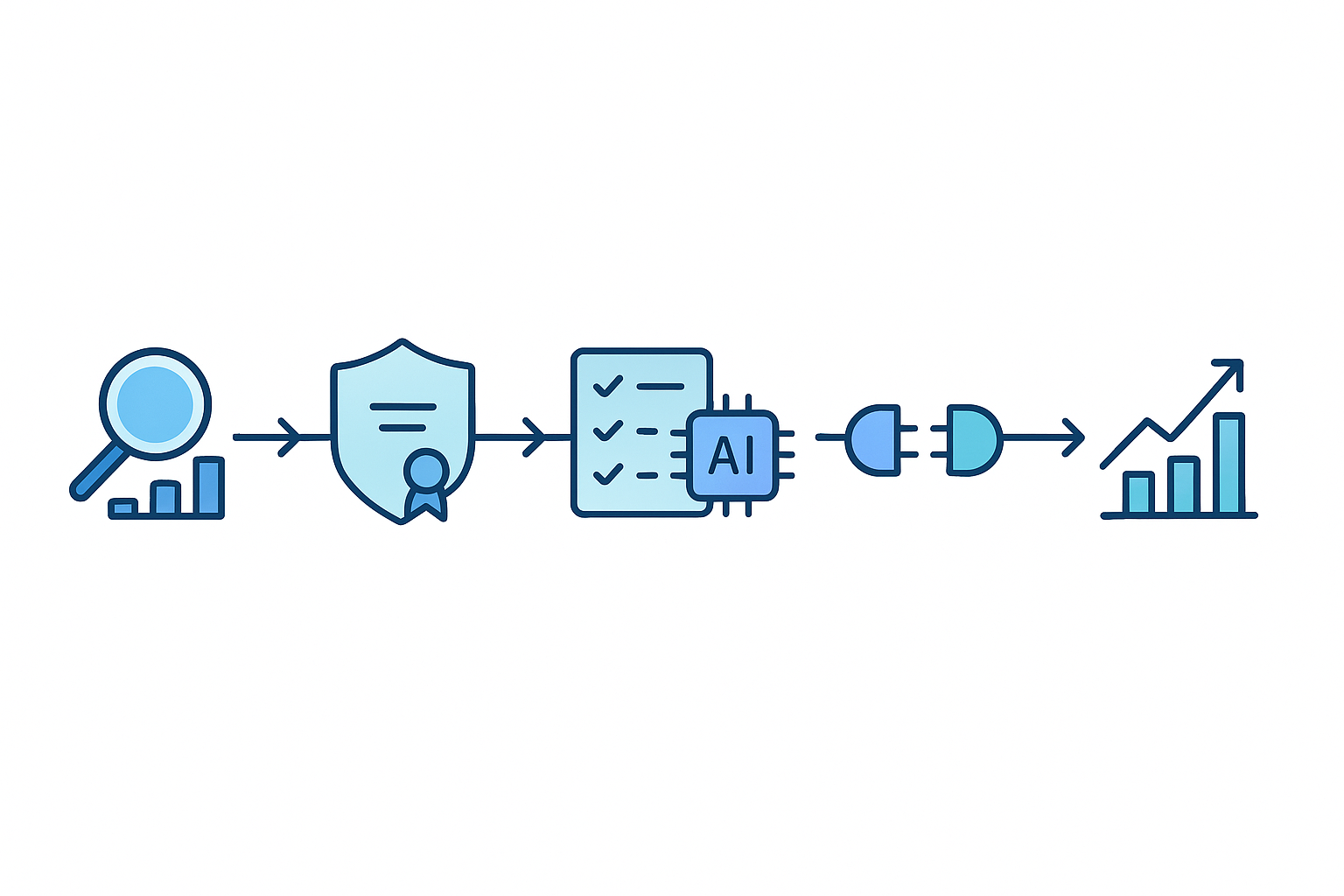
Rolling out an intelligent retry engine does not have to be a multi-quarter project. Follow this framework to assess and deploy quickly.
Step 1: Audit your current recovery baseline
Pull your existing recovery rate, average retry count, and involuntary churn percentage. These numbers become your benchmark.
Step 2: Map compliance requirements
Visa has tightened its monitoring of merchant behavior, particularly regarding fraud, disputes, and authorization attempts. Verify that any vendor you consider maintains SOC 2 compliance and adheres to card-network rules.
Step 3: Focus on rapid deployment
Slicker's 5-minute setup process connects to major billing platforms without engineering resources. Solutions that require months of integration work delay time-to-value.
Step 4: Align pricing with outcomes
Slicker only charges for successfully recovered payments, so the company's success moves in lockstep with your revenue recovery. This pay-for-success model eliminates risk and keeps incentives aligned.
Step 5: Monitor and iterate
Once live, track recovery rate improvements weekly. A true AI engine should show incremental gains as it learns from new transaction data.
Phase | Action | Timeline |
|---|---|---|
Audit | Baseline metrics | Week 1 |
Compliance check | SOC 2, network rules | Week 1 |
Vendor selection | Assess ML depth, pricing | Week 2 |
Deployment | Connect billing system | Day 1 of Week 3 |
Optimization | Monitor, iterate | Ongoing |
Key takeaways
- Up to 70% of involuntary churn stems from failed transactions, not intentional cancellations.
- AI models deliver granular segmentation, predicting which failures are 'soft' (temporary) vs. 'hard' (permanent) and tailoring actions accordingly.
- AI-powered platforms consistently achieve 70-85% recovery rates versus an industry median of 47.6%.
- Every 1% lift in recovery can translate into tens of thousands of dollars in annual revenue.
- Spotting AI-washing requires asking vendors about model transparency, retraining cadence, and compliance certifications.
For high-volume subscription companies using Chargebee, Zuora, or in-house billing systems, Slicker offers a best-in-class recovery service, pay-for-success pricing, and direct integration with existing payment rails. If you are ready to turn failed payments into recovered revenue, see how AI enhances payment recovery and see the difference true AI makes.
Frequently Asked Questions
What is involuntary churn and how does it affect businesses?
Involuntary churn occurs when customers unintentionally stop using a service due to failed payments. It has a heavy impact on businesses by reducing revenue and increasing the cost of acquiring new customers, as retaining existing ones is more cost-effective.
How do AI-driven payment retries differ from traditional methods?
AI-driven payment retries use AI models to analyze each transaction individually, adjusting retry timing based on specific decline reasons and customer context. This contrasts with traditional methods that apply static rules and schedules, often leading to lower recovery rates.
What are the benefits of using AI for payment recovery?
AI-powered platforms can achieve recovery rates of 70 to 85%, compared to the industry median of 47.6%. This improvement can greatly increase revenue by reducing involuntary churn and extending customer lifetime value without additional acquisition costs.
How can businesses identify AI-washing in payment recovery solutions?
Businesses should look for transparency in model inputs, retraining frequency, and compliance certifications. Genuine AI solutions will offer detailed explanations of their processes and share recovery benchmarks, unlike those merely using AI as a buzzword.
What makes Slicker's AI engine stand out in payment recovery?
Slicker's AI engine offers personalized retry strategies, pay-for-success pricing, and direct integration with existing systems. It delivers 2-4× better recovery rates than static systems, making it a strong choice for high-volume subscription companies.
What is the difference between soft declines and hard declines in recurring billing?
In recurring billing, every failed payment falls into one of two categories, and the category determines whether retrying makes sense.
Soft declines are temporary failures where the underlying card and account are still valid. Common causes include insufficient funds at the moment of the attempt, a temporary issuer hold, a velocity limit triggered by recent activity, or a processor timeout. Because the barrier is situational and not permanent, a well-timed retry, scheduled after a paycheck cycle for example, has a realistic chance of succeeding. Soft decline codes include insufficient funds (Stripe: insufficient_funds), do not honor (do_not_honor), and transaction not permitted in many issuer contexts.
Hard declines are permanent failures where the issuer has definitively rejected the transaction. Causes include a stolen or blocked card, a closed account, an invalid card number, or a card reported as fraudulent. Retrying a hard decline does not change the outcome; it only wastes authorization attempts and risks triggering Visa and Mastercard excessive-retry fees. Hard decline codes include card blocked (card_declined with reason stolen_card or lost_card on Stripe), invalid account, and revocation of authorization.
Why it matters for AI retry engines: A static dunning scheduler cannot distinguish between these two categories; it retries every failure on the same schedule. An AI-powered engine classifies each decline at the code level before deciding whether to retry, when, and how many times. This is the single most important capability to verify when vetting a recovery platform: ask the vendor directly how their engine handles hard decline suppression and what evidence they can show that retries on hard declines are blocked and not merely delayed.
What revenue operations tools should I use to stop involuntary churn from hurting my MRR?
Involuntary churn is a revenue operations problem, not solely a billing-ops problem. The right stack tackles it at three layers: prevention, real-time recovery, and visibility.
Prevention layer
- Account Updater (Visa, Mastercard, or processor-native): automatically refreshes expired or reissued card credentials before an attempt fails. Activate it inside Stripe Billing, Chargebee, Recurly, or Zuora; it is typically an opt-in setting, not a default.
- Network tokens (Visa Token Service, Mastercard Digital Enablement Service): replaces the raw PAN with a network-issued token that stays valid across reissuance events, eliminating a class of declines Account Updater cannot catch.
- RevenueCat (mobile-first): for mobile subscription businesses on iOS/Android, RevenueCat surfaces billing status in real time and can trigger in-app payment-update prompts before an invoice fails.
Recovery layer
- Billing-native smart retries: Stripe Smart Retries, Chargebee Smart Retry, and Recurly Intelligent Retries all apply a degree of AI-backed retry timing. These are a useful baseline but train on industry-wide data, not your specific merchant profile.
- Dedicated recovery engine (e.g., Slicker): sits above your billing system, classifies soft vs. hard declines per transaction, and schedules retries using a model trained on your own decline patterns and issuer mix. Typically delivers 70-85% recovery versus the industry median of 47.6%.
Visibility layer
- Billing analytics dashboards: Chargebee's Revenue Recovery report, Recurly's churn analytics, and Stripe's Billing Portal surface MRR-at-risk from failed payments. Use these to set a baseline before deploying any recovery tool.
- AABB testing: any recovery vendor worth using should offer split-test instrumentation so you can measure incremental lift, in dollars not percentages, above your existing baseline. Slicker's clinical-grade AABB testing reports p-values so you know whether the improvement is real, not a noise artifact.
For most SaaS businesses, the highest-ROI sequence is: activate Account Updater first (near-zero cost, eliminates preventable declines), then layer a dedicated AI retry engine on pay-for-success pricing, then build out the visibility layer so failed-payment recovery appears on the CFO dashboard as a revenue line item, not a billing footnote.
How do I avoid Visa and Mastercard retry fees when retrying failed subscription payments?
Both Visa and Mastercard impose excessive-retry fees on merchants who re-attempt a declined transaction too many times without a meaningful change in circumstances. Visa's rules limit retries on a hard-declined transaction to 15 attempts within 30 days; Mastercard's excessive-retry framework similarly penalizes high-frequency retries on the same decline code. Fees are assessed per-transaction and can accumulate quickly on high-volume subscription billing.
An intelligent retry engine protects you here in two ways. First, by correctly classifying hard declines (stolen card, closed account, do-not-honor flags), it suppresses retries that networks would penalize; those transactions are routed to customer-notification flows instead. Second, by spacing retries intelligently and varying attempt timing based on issuer signals, the engine stays inside network-compliant windows on soft declines. When vetting vendors, ask directly whether their retry logic is calibrated to Visa and Mastercard's current retry rules; a static scheduler almost certainly is not.
What tools should a SaaS CFO use to recover lost revenue from failed payments in 2026?
The highest-ROI stack for a SaaS CFO in 2026 combines three layers. Start with your billing system's native capabilities: Stripe Billing's Smart Retries and Adaptive Acceptance handle basic AI-backed retries and real-time authorization optimization; Chargebee's Smart Retry and Recurly's Intelligent Retries provide configurable dunning on top of gateway logic. Then activate Account Updater at the processor or billing-system level to eliminate preventable card-expiry declines. Finally, layer a dedicated failed-payment recovery engine like Slicker on top; it operates across all three billing stacks, trains on your specific transaction data, and runs on pay-for-success pricing so there is no upfront cost. The combination of billing-native tools plus a specialized AI layer consistently outperforms any single-vendor approach.
What are the best practices for dunning emails that actually get customers to update their payment info?
Dunning emails are the customer-facing complement to automated retries: they handle the cases where automation alone cannot resolve a failure, most commonly hard declines, expired cards that Account Updater missed, and customers who need to switch payment methods entirely. Most businesses send them; very few send them well.
Timing matters more than frequency. The highest-converting window for a payment-update email is within two hours of the initial failure, when the customer is most likely to still be in an active session or checking their inbox. Sending on day 3 of a dunning cycle (the default in most billing platforms) misses this window entirely. Chargebee's own data shows that the first email in a dunning sequence drives the majority of payment updates; subsequent emails have steeply diminishing returns.
Subject lines and sender identity are the primary lever. Transactional emails sent from a recognizable sender (e.g., billing@yourcompany.com instead of a generic platform email) clear spam filters and earn opens. Subject lines that lead with the consequence, such as "Your subscription pauses [date]", consistently outperform vague "Action required" copy because they surface the stakes without being alarmist.
Make the CTA a single click. Pre-authenticate the update link so customers land directly on a payment update page, not a login screen. Every additional step between the email and the update form drops conversion. Stripe's Customer Portal, Chargebee's hosted pages, and Recurly's self-service portal all support magic-link or authenticated-redirect patterns.
Sequence design: 3 emails, not 7. Research across subscription businesses consistently shows that most payment recoveries from dunning email happen within the first three emails. Beyond that, you are more likely to prompt a voluntary cancellation than a payment update. A practical sequence: immediate notification (within 2 hours), a reminder at day 3 with a direct update link, and a final "your access ends in 24 hours" notice. After the third email without resolution, route the customer to a cancellation-save or account-pause flow instead of continuing to send.
Segment by decline type. Customers with a soft decline (temporary funds issue) need different messaging than customers with a hard decline (card blocked or replaced). Soft-decline emails can be softer in tone, such as "We had trouble processing your payment," because a retry may already succeed in parallel. Hard-decline emails need to be explicit: "Your card on file is no longer active; please add a new payment method." Merging these two audiences into one email template leaves recovery on the table.
Key takeaway: Dunning email performance lives or dies on timing, sender identity, and a frictionless update path. The email is not a replacement for automated retries; it handles the cases retries cannot. Run both in parallel, segment by decline type, and measure the update rate per email position, beyond the aggregate recovery rate alone.
What tools should I use to recover failed payments on a Zuora or Recharge billing stack?
On Zuora, the built-in Configurable Payment Retry App provides AI-backed retry scheduling, and the Advanced Payment Manager adds gateway-routing rules. For merchants who want recovery rates beyond what Zuora's native logic achieves, Slicker integrates directly with Zuora via API and layers a per-merchant AI model on top, with no engineering resources required. On Recharge (common for Shopify-native subscription businesses), the service's built-in retry settings handle basic dunning cadences, but Recharge does not expose a native ML retry layer. Slicker fills that gap with a direct integration that takes effect within minutes, applying the same granular decline classification and personalized retry timing available to Chargebee and Zuora merchants.
How do I handle failed ACH and direct debit payments differently from failed card payments?
ACH and direct debit failures operate on fundamentally different mechanics than card declines, and conflating the two is one of the most common mistakes in subscription payment operations.
Settlement timing. Card declines are synchronous: you get an authorization response, approve or decline, within seconds. ACH and SEPA Direct Debit are asynchronous: the payment is initiated, appears to succeed, and then fails 1-5 business days later when the bank returns a debit. By that point, your billing system may have already provisioned access, sent a receipt, and updated the subscriber's status before you know the payment failed.
Return codes, not decline codes. ACH failures arrive as NACHA return codes, not ISO 8583 decline codes. The most common ones subscription businesses encounter:
- R01: Insufficient Funds: equivalent to a soft decline; retrying after a paycheck cycle (typically 3-5 business days) often succeeds.
- R02 (Account Closed): equivalent to a hard decline; do not retry. Route to a payment-update flow immediately.
- R03 (No Account / Unable to Locate Account): hard decline; likely a data-entry error at enrollment.
- R10 (Customer Advises Not Authorized): the customer disputes the debit; retrying is a compliance violation and can trigger a NACHA fine.
- R29 (Corporate Customer Advises Not Authorized): same as R10 for corporate accounts.
For SEPA Direct Debit (European equivalent), return codes differ but the same logic applies: R-transactions flagged as "refusal" or "revocation" must not be retried; "insufficient funds" returns can be retried with appropriate spacing.
Retry rules are stricter for ACH. NACHA's rules allow a maximum of two retries on an R01 (insufficient funds) return within a 180-day window, far tighter than card-network retry limits. Exceeding this threshold exposes you to NACHA fines and potential suspension from the ACH network. Stripe's ACH implementation enforces this automatically; if you are managing ACH via a third-party processor or direct ODFI relationship, you need to track retry counts closely.
Dunning email timing must shift. Because ACH failures land days after the transaction, the "within 2 hours" dunning email window that works for card failures is irrelevant. For ACH, send the payment-update notification the same day the return code arrives at your billing system (typically day 2 to 4 after the original debit) and make the CTA a card-on-file update, since most subscribers can resolve an ACH failure faster by switching to a card than by resolving the bank-side issue.
What AI retry engines do differently for ACH. Most dedicated retry platforms, including Slicker, treat ACH and card retries as separate logic paths. For ACH soft returns (R01), the engine schedules a retry at the next likely funds-available window based on the customer's historical payment patterns. For hard returns (R02, R03, R10), retries are suppressed and the transaction is routed to a customer-notification flow. If you are vetting a recovery vendor for an ACH-heavy subscription portfolio, ask explicitly whether their retry logic is NACHA-compliant and whether return-code suppression is applied at the R-code level, beyond generic failure flags alone.
What tools should I use to reduce payment failures on a Chargebee or Recurly billing stack?
On Chargebee, activate Smart Retry (AI-backed timing for soft declines), turn on the Account Updater integration for your connected gateway (Stripe, Braintree, or Adyen all support it), and consider network-token enrollment if your gateway supports Visa Token Service or Mastercard Digital Enablement Service. On Recurly, turn on Intelligent Retries and Revenue Recovery, which apply Recurly's own AI model to retry scheduling, and activate the Account Updater feature under payment settings. For both stacks, Slicker integrates as a complementary layer sitting between your billing system and your gateway, and typically adds measurable recovery lift on top of the billing system's native capabilities, charged only on successfully recovered revenue.
Chargebee smart dunning vs a dedicated recovery platform: which recovers more failed payments?
Chargebee Smart Retry is a solid baseline, and for many early-stage subscription businesses, it is the right starting point. The question of whether to layer a dedicated platform on top comes down to volume, decline mix, and how much involuntary churn costs your business annually.
What Chargebee Smart Retry does. Chargebee's Smart Retry applies AI-backed timing to soft declines, spacing retries based on Chargebee's aggregate transaction data instead of a fixed calendar schedule. It is included in Chargebee's plans, requires no integration work, and handles the most common soft-decline scenarios reasonably well. The model trains on Chargebee's global transaction pool, not your individual merchant data.
Where a dedicated platform adds lift. A dedicated recovery engine like Slicker sits above Chargebee and applies a per-merchant model: trained on your decline codes, your issuer mix, and your customer payment patterns instead of industry averages. In head-to-head deployments measured with AABB testing, the per-merchant model consistently outperforms the global baseline, particularly for merchants with a high concentration of a specific issuer, a geographic payment mix that differs from the broader Chargebee customer base, or a high percentage of corporate cards with unusual authorization behavior.
The published industry median recovery rate for smart-retry tools is approximately 47.6%. AI platforms with per-merchant models achieve 70-85%. If Chargebee's native retry is already in use and your recovery rate sits below 60%, that gap is the clearest signal that a dedicated layer would produce measurable lift.
The pricing question. Chargebee Smart Retry is included in your plan; its marginal cost is zero. A dedicated platform like Slicker charges only on successfully recovered revenue (pay-for-success), so the financial risk of layering it on top is low: if Slicker does not beat Chargebee's native recovery rate on your data, you pay nothing. That structure makes the comparison less about "either/or" and more about whether the incremental lift warrants the per-recovery fee.
When Chargebee alone is sufficient. If your MRR is below ~$500K, your decline rate is low, and you are not yet tracking recovery rate as a formal metric, Chargebee's built-in retry logic is probably adequate. Activating Account Updater within Chargebee (via your connected Stripe, Braintree, or Adyen gateway) will deliver more lift per effort at that scale than adding a dedicated recovery engine.
Key takeaway: Chargebee Smart Retry and a dedicated recovery platform are not mutually exclusive. The dedicated platform earns its fee by outperforming the global model on your specific data, and the pay-for-success pricing structure means the comparison can be run on real transaction evidence, not theoretical projections.
What does the technical integration and onboarding process look like, and what is required from my engineering team?
Almost nothing. Slicker connects to your billing system (Stripe, Chargebee, Recurly, Zuora, or Recharge) via a read/write API integration that is completed in approximately five minutes. The setup requires no custom code, no data pipeline work, and no engineering sprint. You authenticate Slicker against your billing system using OAuth-scoped API keys, select the invoice cohorts you want Slicker to manage, and the retry engine begins processing failed payments immediately. For merchants on Chargebee or Zuora, the integration writes retry outcomes back to the same billing-system records automatically, keeping your revenue recognition and dunning history in sync. The most common engineering-team involvement is a brief review of the API permission scope during security onboarding, typically under an hour. Slicker's onboarding team maps the configuration to your specific billing setup (automatic collection vs. manual invoice flows, retry cadence exclusions) and confirms alignment before go-live.
What can payment analytics tell you about the root causes of customer churn, and how is it different from native Stripe reporting?
Native Stripe reporting tells you that a payment failed and which decline code was returned. It does not tell you why the failure rate for a given issuer or BIN range is trending up, which customer cohorts are disproportionately affected, or how much MRR is recoverable versus permanently lost. Slicker's analytics layer sits above the processor and surfaces decline patterns across dimensions that Stripe's dashboard does not expose natively: recovery rate by issuer, decline-code distribution over time, retry success rate by billing cycle and geography, and the incremental MRR impact of each recovery cohort. For a CFO, the key difference is framing: Stripe reports payment events; Slicker reports revenue impact. That distinction matters when you need to bring involuntary churn to a board deck as a line-item revenue figure instead of an ops metric. Slicker's AABB testing framework also lets you measure the incremental lift attributable to the retry engine directly, with p-values, instead of blending recovery into a single aggregate recovery rate that mixes baseline billing-system retries with dedicated-engine retries.
What personal data does Slicker need to send dunning emails, and does GDPR data minimization allow for this?
For automated retry logic alone, Slicker requires no PII: only tokenized payment references, decline codes, issuer identifiers, and transaction timestamps. Dunning email workflows introduce the question of PII because delivering an email requires a contact email. Slicker handles this in two ways to satisfy GDPR data minimization. For standard deployments, the customer's email contact is passed as part of the billing-system event payload, processed in memory to trigger delivery via your configured email service provider, and not persisted in Slicker's databases, logs, or cloud infrastructure beyond that moment. For enterprise customers with stricter data-residency or PII-sharing restrictions, Slicker supports a tokenized mode: email delivery is routed via a customer-side identifier, so Slicker never holds a plaintext email contact at any point. In this configuration, your own email service provider receives the send instruction using an internal customer token, and Slicker's infrastructure never touches the raw contact. Either way, raw PII such as cardholder names, billing contact details, and full card numbers is not required for retry logic and is not stored. Enterprises should request the current DPA, SOC 2 Type II report, and sub-processor list during vendor onboarding to confirm these commitments contractually.
How does Slicker handle data privacy and GDPR compliance when processing customer payment data?
Slicker operates as a data processor (sub-processor) under GDPR and executes a Data Processing Agreement (DPA) with every customer before going live. For the retry engine itself, Slicker requires only the minimal payment-processor signals needed to classify declines and schedule retries: tokenized card references, decline codes, issuer identifiers, and transaction timestamps. Raw PII such as cardholder names, full card numbers, and billing contact details is not required for retry logic and is not persisted in Slicker's databases, logs, or cloud infrastructure beyond the moment of processing. For dunning email workflows, Slicker can operate in a tokenized or anonymized mode for enterprise customers who cannot share non-anonymized PII: email delivery is handled via your own email service provider using a customer-side identifier, so Slicker never holds a plaintext email contact. Enterprises should request Slicker's current DPA, SOC 2 Type II report, and sub-processor list as part of vendor onboarding. If your data-residency requirements restrict cross-border transfers, confirm the applicable Standard Contractual Clauses (SCCs) are in place before go-live.
How do Slicker retries work with Stripe Billing, and what settings need to be aligned to avoid conflicts?
When Slicker runs alongside Stripe Billing, the key risk is duplicate retry attempts, with both systems attempting the same failed invoice on overlapping schedules, which can trigger Visa and Mastercard excessive-retry fees. To avoid conflicts, the standard configuration is to disable or narrow Stripe's built-in Smart Retry cadence for the invoice cohorts Slicker is managing, then allow Slicker's ML engine to own retry timing for those transactions entirely. In practice you set Stripe's subscription retry settings to a minimal fallback (typically one or two attempts at a long interval) and let Slicker handle the optimized window in between. Slicker connects to Stripe via API using read/write permissions scoped to payment intents and invoice objects, and it does not require access to your full Stripe account. Configuration specifics depend on whether you are using Stripe Billing's automatic collection or manual invoice flows; Slicker's onboarding team maps this during the 5-minute setup process.
What are the risks of giving a third-party payment recovery vendor access to your Stripe account, and what happens to that data if you stop using the service?
The primary risks are credential scope, data retention, and contractual clarity on termination. On scope: Slicker uses OAuth-scoped API keys with the minimum permissions required to read failed payment events and trigger retry attempts, and it does not need (and should not be granted) access to payouts, balance transfers, or customer PII beyond what retry logic requires. On data retention: your DPA should specify that all transaction data Slicker holds is deleted or returned within a defined window (typically 30 to 90 days) after contract termination, with a written confirmation of deletion. On contractual safeguards: enterprises should require a DPA with explicit liability clauses for data breaches, evidence of SOC 2 Type II certification, and confirmation of cyber insurance coverage before granting any third-party payment vendor API access. Reviewing the sub-processor list in the DPA tells you exactly which downstream vendors (cloud providers, analytics tools) also touch your data.
What data signals and integrations does Slicker need to run its retry engine, including the Mastercard partnership and billing system data requirements?
Slicker's retry engine is trained on decline codes, issuer identifiers, transaction timestamps, card BIN data, and historical retry outcomes for each merchant. It does not require access to customer names, billing contact details, or full card numbers; the model operates on tokenized payment references and network-level signals. A planned (not yet available) Mastercard network-data partnership would extend the signal set with network-level issuer intelligence, giving Slicker visibility into issuer-side patterns (such as funds-availability cycles and authorization-rate trends by BIN range) that are not available through standard processor API responses alone. On the billing-system side, Slicker reads failed invoice events from your billing system (Stripe, Chargebee, Recurly, Zuora, or Recharge) via API and writes retry outcomes back to the same system so your revenue recognition and dunning records stay in sync. No data warehouse or custom pipeline is required; the integration is read/write API-only and is completed during the 5-minute setup.
How does Slicker handle A/B testing and invoice segmentation when running manual payment runs outside of Zuora CPR, and can it support multi-way splits across multiple vendors?
Slicker uses clinical-grade AABB testing to measure recovery lift on your own transaction data, not industry averages. For merchants running manual payment runs outside of Zuora's Configurable Payment Retry (CPR), for example bulk invoice cohorts triggered outside the standard dunning cycle, Slicker can ingest those invoice segments via API and apply its retry logic independently of the Zuora CPR scheduler. Invoice segmentation is supported by any dimension exposed in the billing-system event payload (subscription plan, billing cycle, geographic region, payment method type), allowing you to measure lift separately across customer cohorts. Multi-way splits across multiple vendors (for example, routing 50% of a cohort to Slicker and 25% each to two other recovery tools) are supported in principle via API-level segmentation, though the exact configuration depends on how your billing system routes invoice ownership. This is best scoped during onboarding, and Slicker's team has run multi-vendor split tests for enterprise customers vetting more than two recovery platforms simultaneously.
Sources
- https://www.slickerhq.com/blog/2025-failed-payment-benchmarks-ai-beats-industry-averages
- https://www.slickerhq.com/blog/top-7-ai-payment-recovery-platforms-2025-comparison-success-rates
- https://recurly.com/resources/report/churn-benchmarks/
- https://www.slickerhq.com/blog/top-7-ai-retry-engines-2025-yc-backed-slicker-flexpay-gocardless
- https://docs.zuora.com/en/zuora-payments/payment-orchestration/payment-retry
- https://www.gartner.com/en/documents/6162523
- https://www.gartner.com/en/articles/hype-cycle-for-artificial-intelligence
- https://www.gartner.com/en/newsroom/press-releases/2026-02-10-gartner-research-reveals-cfos-budget-plans-focus-on-grotwth-functions-tech-and-ai-in-2026
- https://docs.zuora.com/en/zuora-payments/payment-orchestration/cascade-payment-methods
- https://www.revaly.co/guides-reports/optimizing-payment-success-across-all-subscription-billing-events
- https://www.slickerhq.com/blog/how-ai-enhances-payment-recovery
Related Articles
Authentication Required Declines on Subscription Renewals: SCA, MIT Exemptions and Recovery
A renewal that has charged cleanly for a year suddenly comes back declined with authentication_required. The card is valid, the customer has money, and nobody...
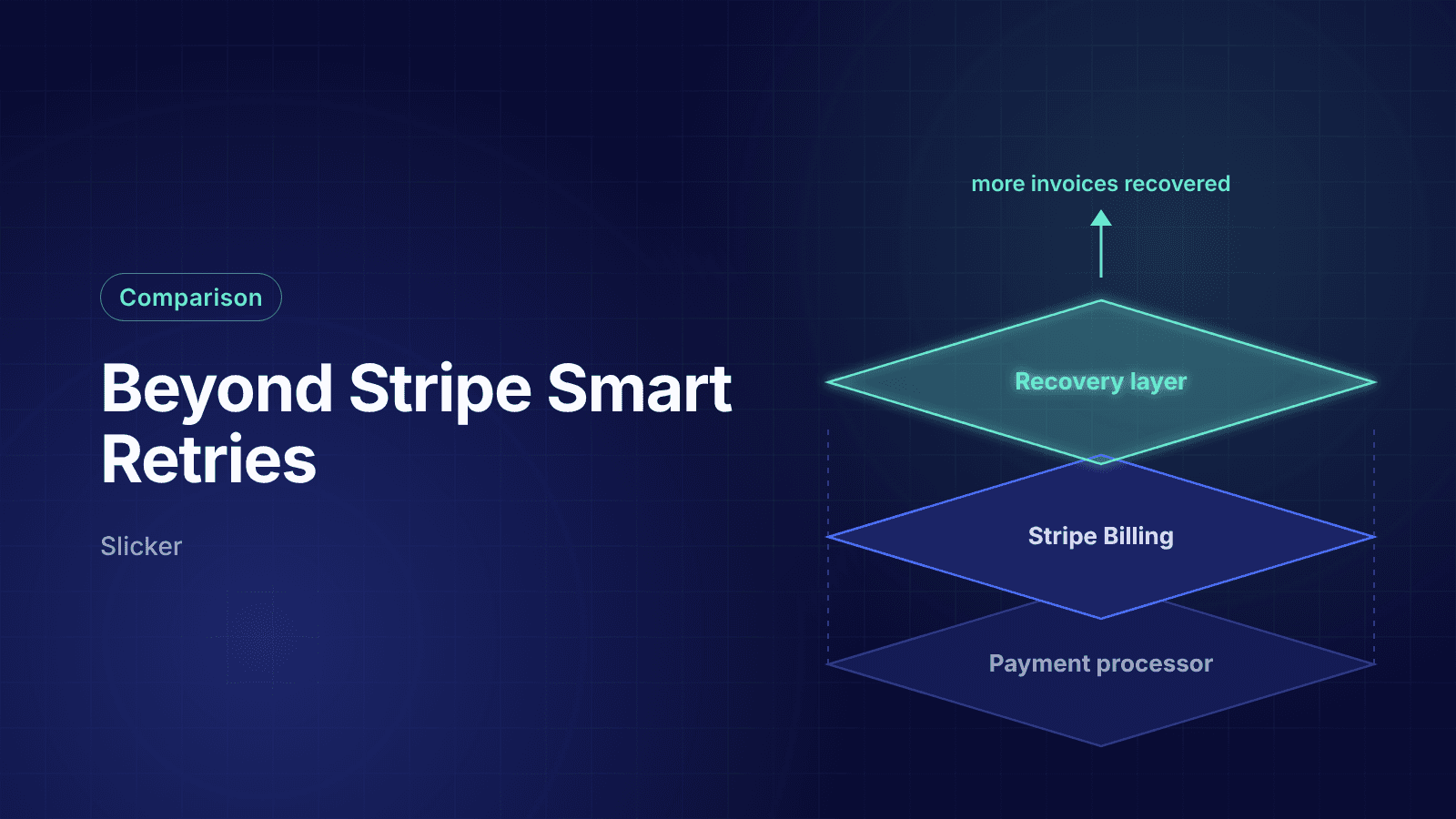
Stripe Smart Retries Alternatives for Subscription Businesses (October 2026)
You turned on Stripe Smart Retries because it was free, it was one toggle, and Stripe said it beats a fixed schedule. Months later your past-due list still...
Authorization Rate in Subscription Billing: October 2026
There's a number sitting in your payments data that most finance and retention teams never report on separately: the share of renewal charges your issuing...
Stop losing revenue to failed payments
Join leading subscription businesses using Slicker to recover failed payments automatically.
Get Started