Best Dunning Email Tools for Subscription Businesses in October 2026
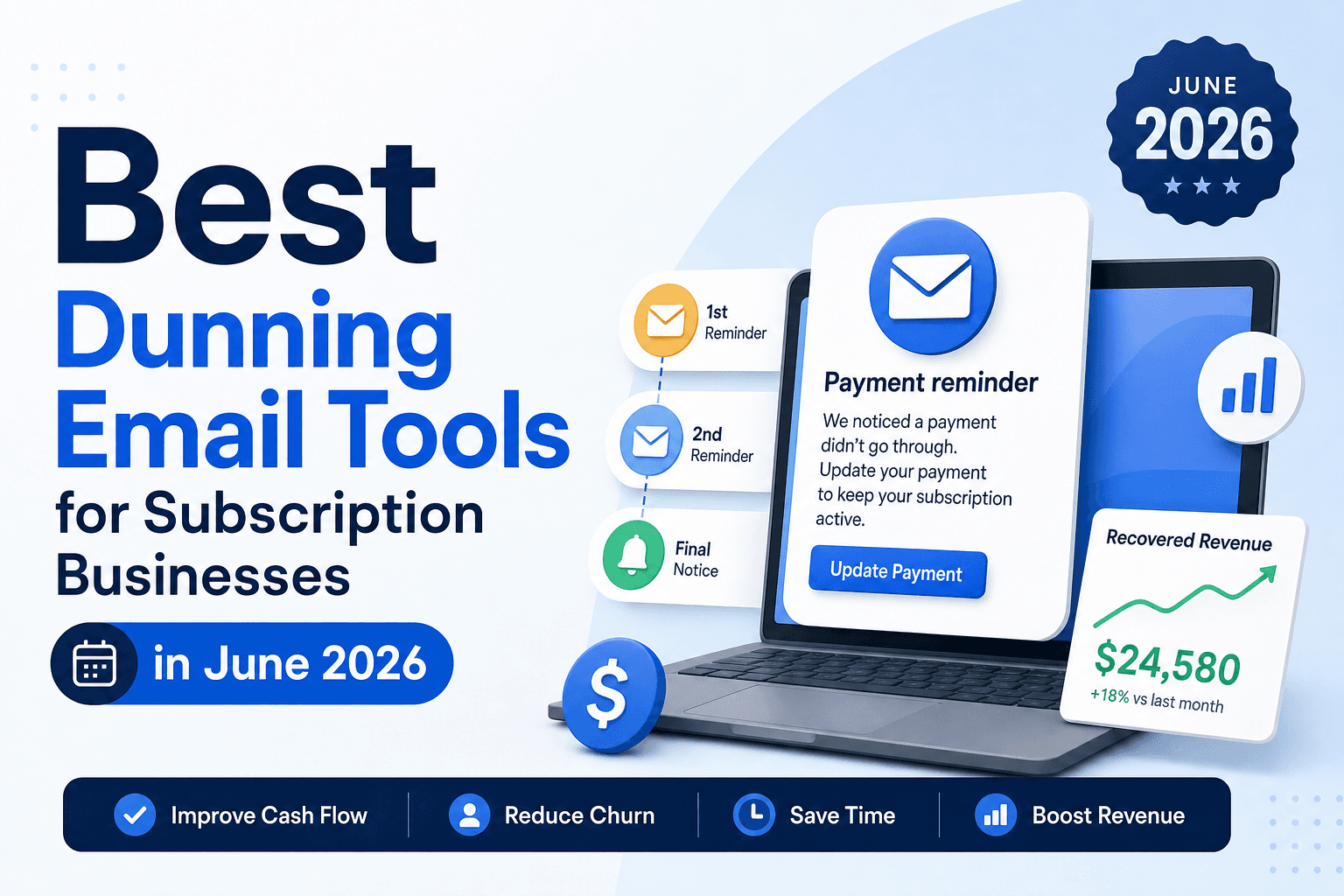
Most subscription businesses lose 20 to 40% of their churn to failed payments, not cancellations. Customers who wanted to stay, cards that expired or hit limits, billing systems that retried blindly and gave up. By the time you notice, the revenue is gone. Dunning email software is supposed to fix that by reaching out when a charge fails, but the majority of tools send a single generic prompt to every decline, whether the card was stolen, expired, or flagged by the issuer. The tools ranked below are separated by whether their subscription dunning emails adapt to the actual failure reason, whether recovery claims are backed by transparent testing on your own data, and whether setup requires engineering resources or happens in minutes. Automated dunning emails only recover revenue if they say the right thing to the right failure at the right time.
TLDR:
- Failed payments cause 20 to 40% of subscription churn—customers who wanted to stay but whose cards expired, hit limits, or were flagged by issuers.
- Generic dunning tools send the same "update your card" email to every decline type on fixed schedules; Slicker sends failure-specific messages only when customer action is required.
- Slicker proves recovery lift through AABB testing with statistical significance on your own transaction data before you pay beyond the pilot.
- Silent automated retries recover revenue first; dunning emails trigger only for declines that require subscriber involvement, keeping your brand from pestering customers.
- No other tool in this comparison offers statistically validated testing: you measure exact dollar recovery on your data, not vendor benchmarks.
What Are Dunning Email Tools?
Dunning email tools are software products that automatically send payment recovery emails to subscribers when a charge fails. Instead of manually reaching out each time a card declines, these tools trigger a sequence of messages that ask customers to update their payment details, often with personalized copy and timing logic built in.
Subscription businesses rely on them because involuntary churn (cancellations caused by failed payments instead of a deliberate decision to leave) quietly erodes MRR at scale. Automated dunning emails are one layer of defense against that revenue leak, targeting customers whose cards expired, hit a limit, or were flagged by their issuer.
How We Ranked Dunning Email Tools
With 20 to 40% of subscription churn tied directly to failed payments instead of deliberate cancellations, picking the right dunning tool is a revenue decision. We ranked each tool against five criteria:
- Retry intelligence: does it account for failure type, card characteristics, and issuer behavior, or does it run a flat schedule regardless of context?
- Email personalization: are sequences adapted to the specific decline reason, or is it the same generic "please update your card" message every time?
- Performance measurement: can recovery lift be verified through A/B testing or transparent analytics, instead of vendor benchmarks you can't independently check?
- Integration breadth: how well does it connect with the billing systems and payment providers you already use?
- Pricing transparency: is cost tied to actual recovered revenue, or are fees front-loaded regardless of results?
No tool scores perfectly across every criterion. The rankings below show how each performs against this framework so you can identify the right fit.
Best Overall Dunning Email Tool: Slicker
Slicker is built for subscription businesses dealing with involuntary churn from failed payments. Instead of treating dunning emails as generic "update your payment info" blasts, Slicker anchors every message to the specific decline reason. A stolen card gets a different email than an expired one or a prepaid card with insufficient funds.
Every dunning sequence runs through clinical-grade AABB testing, so you see exactly how much revenue each email variant recovers on your own data, with statistical significance confirmed before you commit. Setup takes about five minutes with no engineering required.
Slicker leads with silent automated retries first, deploying customer-facing emails only when the decline code requires customer action. That means fewer unnecessary touchpoints and a cleaner subscriber experience.
- Decline-specific messaging tied to the actual payment failure reason (for example, a stolen card triggers a fraud-alert message prompting the subscriber to contact their bank, while an expired card gets a card-update request), not a one-size-fits-all prompt
- Hyper-personalized sequences sent from your own domain and brand
- AABB testing with p-value reporting so recovery lift is proven, not promised
- No engineering lift required; live in roughly five minutes
- SOC 2 Type 2 certified; payment credentials flow through your existing PCI-compliant infrastructure
Pricing starts with a four-month pilot: the first month is free, followed by three paid months with the option to cancel anytime.
Vindicia
Vindicia is a legacy subscription billing and revenue recovery vendor that has served enterprise media, publishing, and streaming companies for over two decades. It combines subscription management, payment processing, and retention tooling in one product suite.
Its dunning approach relies on rules-based retry logic and templated email sequences. You get configurable retry schedules and basic email triggers, but the personalization stops there. Emails are not tailored to the specific failure reason, and retry timing follows static schedules instead of subscriber-level signals.
For large enterprises already invested in Vindicia's billing stack, the built-in dunning may cover baseline needs. For teams expecting hyper-personalized, AI-driven recovery that ties directly to provable revenue uplift, the tooling falls short.
Churnkey
Churnkey focuses on cancellation flows and win-back sequences instead of payment recovery. Its dunning tools are built around customer-facing messaging: pausing subscriptions, offering discounts, and collecting updated payment details through hosted cancel flows.
For teams focused on voluntary cancellations, Churnkey has real utility. But its automated dunning email capabilities are limited compared to tools built for failed payment recovery. There is no smart retry logic, no AI-driven send-time optimization, and no AABB testing to prove whether your dunning sequence is actually recovering revenue. It also lacks a card updater service, decline-code-level email branching, and native integrations with enterprise billing systems like Zuora or Chargebee. Pricing is available only through a custom demo quote, making cost comparisons difficult before you commit to an evaluation.
If involuntary churn is your primary problem, Churnkey is not the right fit.
FlyCode
FlyCode is an AI-powered dunning tool built for Shopify and Recharge merchants, making it a narrow fit for subscription businesses running on those two stacks.
Its retry logic uses AI to time payment attempts, and it includes basic dunning email sequences to follow up on failed charges. Setup is straightforward for Shopify users, but merchants outside that ecosystem will find the integration options limited.
Where FlyCode falls short is transparency. There is no AABB testing or statistical significance reporting, so you have no independent way to verify whether its retry sequences are outperforming your baseline.
Revaly
Revaly positions itself as a dunning email tool built for subscription businesses, offering pre-built email sequences, basic payment failure segmentation, and integrations with billing systems like Stripe, Recurly, Chargebee, and Zuora. Setup typically requires configuration support from their team, adding days to your go-live timeline rather than the self-serve, minutes-to-live experience some teams expect.
Where it falls short is in recovery intelligence. Revaly relies on fixed retry schedules and rule-based email triggers instead of AI-driven timing or subscriber-level personalization. There is no AABB testing framework, so you have no statistically verified way to know whether its sequences are actually recovering more revenue than your existing setup.
For teams that want a lightweight, low-configuration dunning tool, Revaly may be worth considering. For high-volume subscription businesses where recovered MRR moves the needle, the absence of provable lift is a real gap.
Butter
Butter is a failed payment recovery tool built for subscription businesses. It focuses on card updater services, connecting to Visa Account Updater and Mastercard Automatic Billing Updater to refresh expired card details before a charge attempt, and smart retry logic, giving teams a way to recover more revenue without manual intervention. It integrates with Chargebee but does not support Zuora, and setup requires engineering involvement, not a self-serve no-code flow.
Where Butter does well is in its simplicity. Setup and retry logic are straightforward without requiring engineering resources. For smaller subscription businesses, that accessibility is genuinely useful.
The gap shows up in testing and personalization. Butter does not offer AABB testing with statistical significance, so you never get proof that its logic is outperforming your baseline on your own data.
Feature Comparison Table of Dunning Email Tools
Each tool reviewed above handles dunning differently, and the gaps show up quickly when you put the features side by side.
Feature | Slicker | Vindicia | Churnkey | FlyCode | Revaly | Butter |
|---|---|---|---|---|---|---|
AABB Testing with Statistical Validation | Yes | No | No | No | No | No |
No-Code Integration | Yes | No | Yes | Yes | No | No |
AI-Powered Retry Logic | Yes | No | Yes | Yes | Yes | Yes |
Failure-Specific Dunning Emails | Yes | Yes | Yes | Yes | Yes | Limited |
Multi-Gateway Routing | Yes | Limited | No | No | Yes | No |
Transparent Pricing Published | Yes | No | No | No | No | No |
Proven Enterprise Customers | Yes | Yes | No | No | Yes | Yes |
Integration with Chargebee | Yes | No | Yes | No | Yes | No |
Integration with Zuora | Yes | Yes | No | No | Yes | No |
SMS Dunning Capability | No | No | Yes | Yes | No | No |
The AABB testing row is the most telling. Every other tool asks you to take recovery performance on faith.
Why Slicker Is the Best Dunning Email Tool
Slicker is built for subscription businesses that need more than a generic "update your payment info" email. Where most dunning email software fires off a templated sequence on a fixed schedule, Slicker routes each failed payment through an ensemble of AI models that read the decline reason, card type, issuer behavior, and customer history before deciding whether to retry silently or escalate to a customer-facing email.
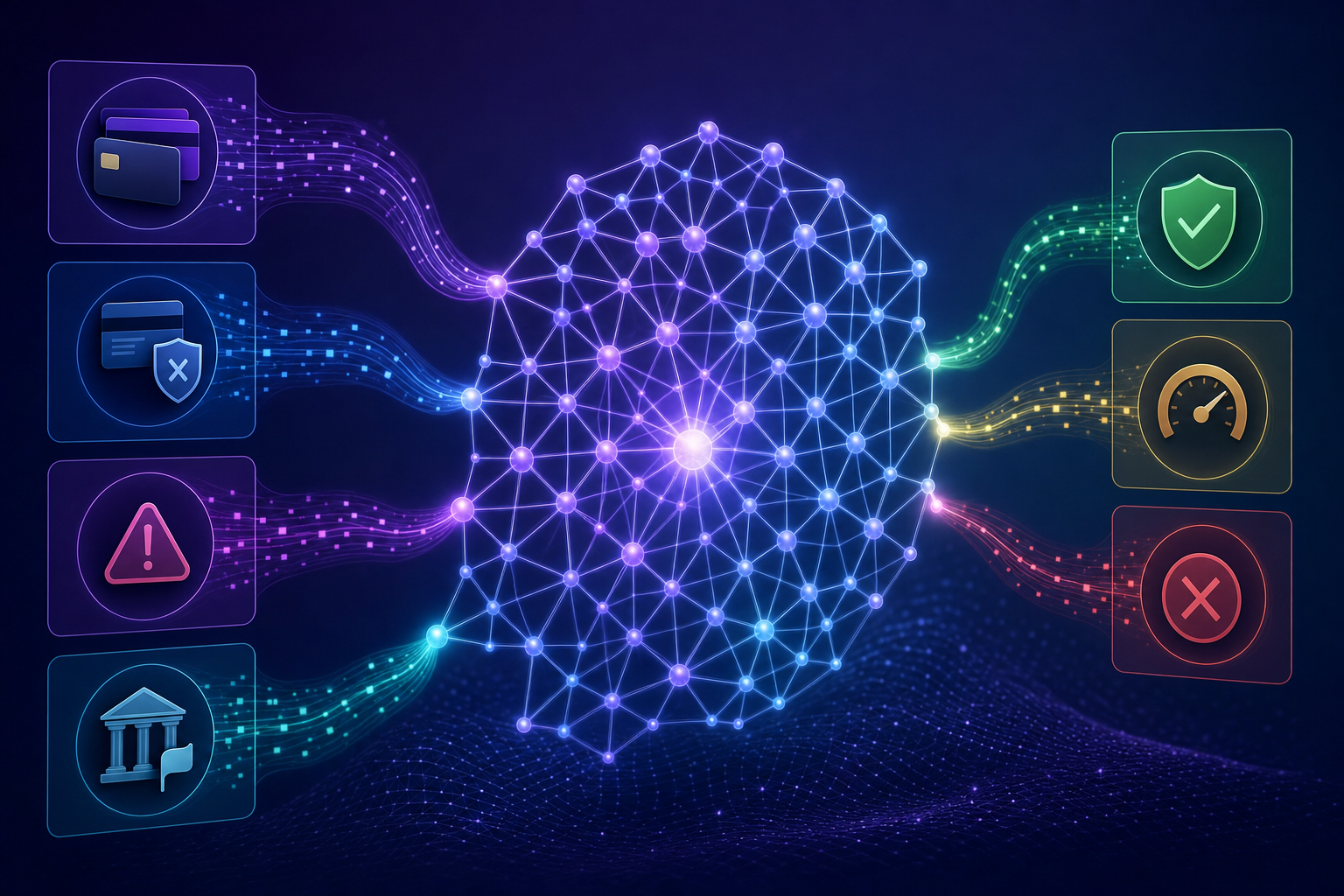
That distinction matters. A stolen card requires a different response than a soft decline on a prepaid account with insufficient funds. Slicker sends emails only when the failure specifically requires customer action, keeping your brand from pestering customers over issues your system can resolve without their involvement.
What Sets Slicker Apart
- Dunning emails go out under your brand, not Slicker's, so the communication feels like a natural part of your product experience, not a third-party collection notice.
- Email copy is anchored to the specific failure reason, giving customers the exact action they need to take instead of a one-size-fits-all prompt.
- Recovery is measured through AABB testing with statistical significance, so you see exactly how many dollars Slicker recovered versus your existing approach, on your own data, before you commit beyond the pilot.
- Setup takes roughly five minutes with zero engineering required.
The pilot starts with the first month free, followed by three paid months with the option to cancel at any time.
Final Thoughts on Dunning Email Software for Subscription Revenue Recovery
Failed payments quietly drain MRR from subscription businesses every month, and generic dunning tools asking you to trust their claims won't fix it. The right software shows you exactly how many dollars it recovered compared to your baseline, with statistical significance, before you pay for anything beyond the pilot. You need failure-specific messaging, intelligent retry timing, and transparent testing if involuntary churn is more than a rounding error on your P&L. Reach out to see how Slicker's four-month pilot works and what statistically proven recovery looks like on your own subscriber data.
FAQ
How do I choose the right dunning email tool for my subscription business?
Start by identifying whether your primary issue is involuntary churn from failed payments or voluntary cancellations, then pick tools that offer AABB testing or transparent performance measurement so you can verify recovery lift on your own data. For businesses processing over $50k MRR with meaningful payment failure rates, tools with AI-powered retry logic and failure-specific email personalization will recover more revenue than generic, rules-based systems.
Which dunning tool works best for teams without engineering resources?
Slicker and Churnkey both offer no-code setup that goes live in minutes, while FlyCode provides straightforward integration for Shopify and Recharge merchants. Vindicia requires more technical involvement during implementation, and Revaly typically needs configuration support, making both less suitable if engineering bandwidth is limited.
Can I verify dunning tool performance before committing to a contract?
Only Slicker provides clinical-grade AABB testing with statistical significance reporting, allowing you to see exactly how much incremental revenue the tool recovers on your own transaction data before you move beyond the pilot. The other tools reviewed rely on vendor benchmarks, case studies, or claims you cannot independently verify with your own payment data.
What's the difference between smart retries and dunning emails in payment recovery?
Smart retries attempt to charge the card again at optimal times based on failure type, card characteristics, and issuer behavior, recovering revenue without customer involvement. Dunning emails are customer-facing messages sent only when the decline code requires the subscriber to take action, such as updating an expired card or resolving a fraud block, making retries the first-line recovery method and emails the fallback.
When should I send a dunning email versus running another payment retry?
Send a dunning email only when the payment failure requires customer action, such as an expired card, a stolen card report, or a hard decline that cannot be resolved through automated retries. For soft declines like insufficient funds, temporary limits, or issuer holds, run intelligent retries first since these often resolve without bothering the customer.
Related Articles
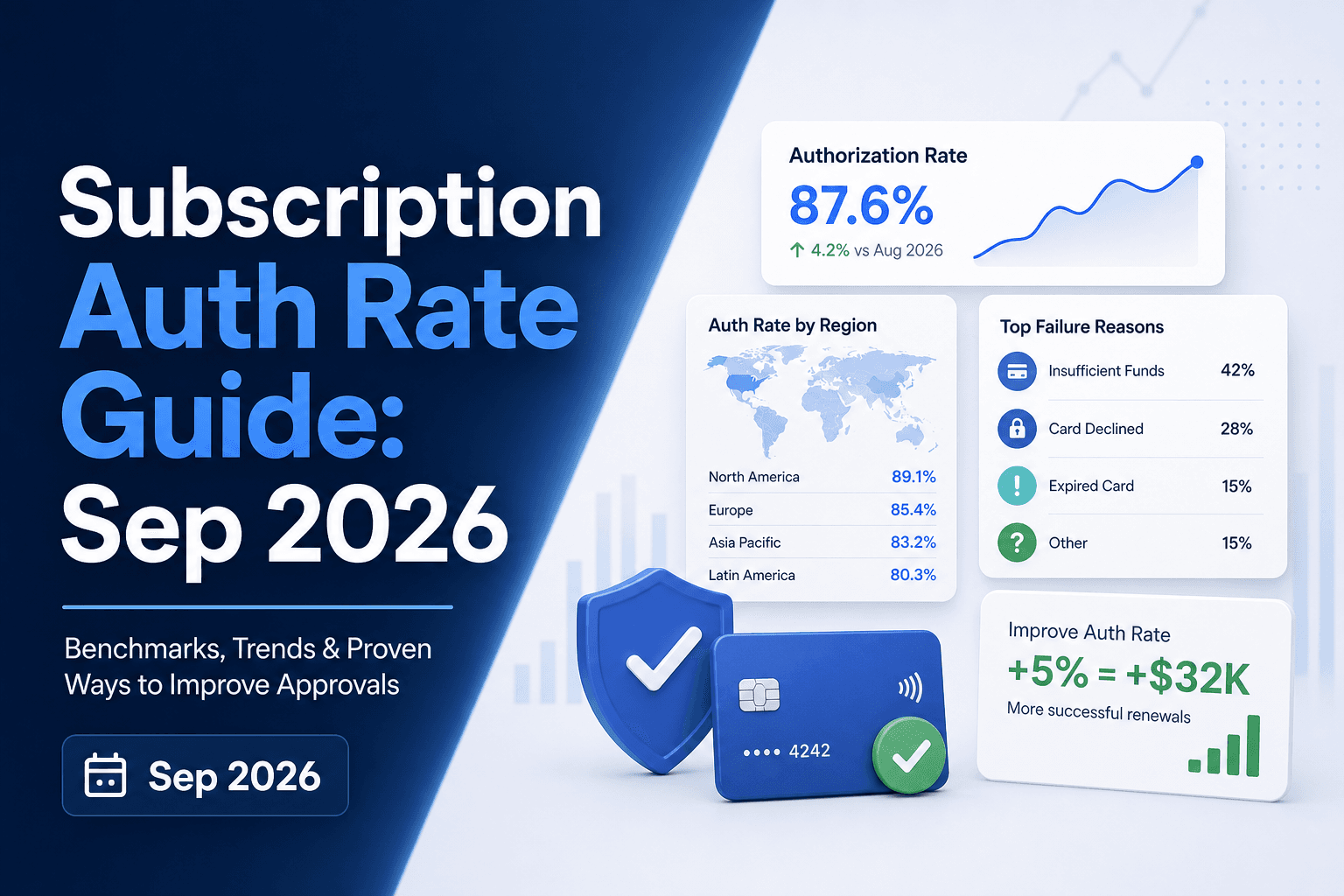
Authorization Rate in Subscription Billing: October 2026
There's a number sitting in your payments data that most finance and retention teams never report on separately: the share of renewal charges your issuing...
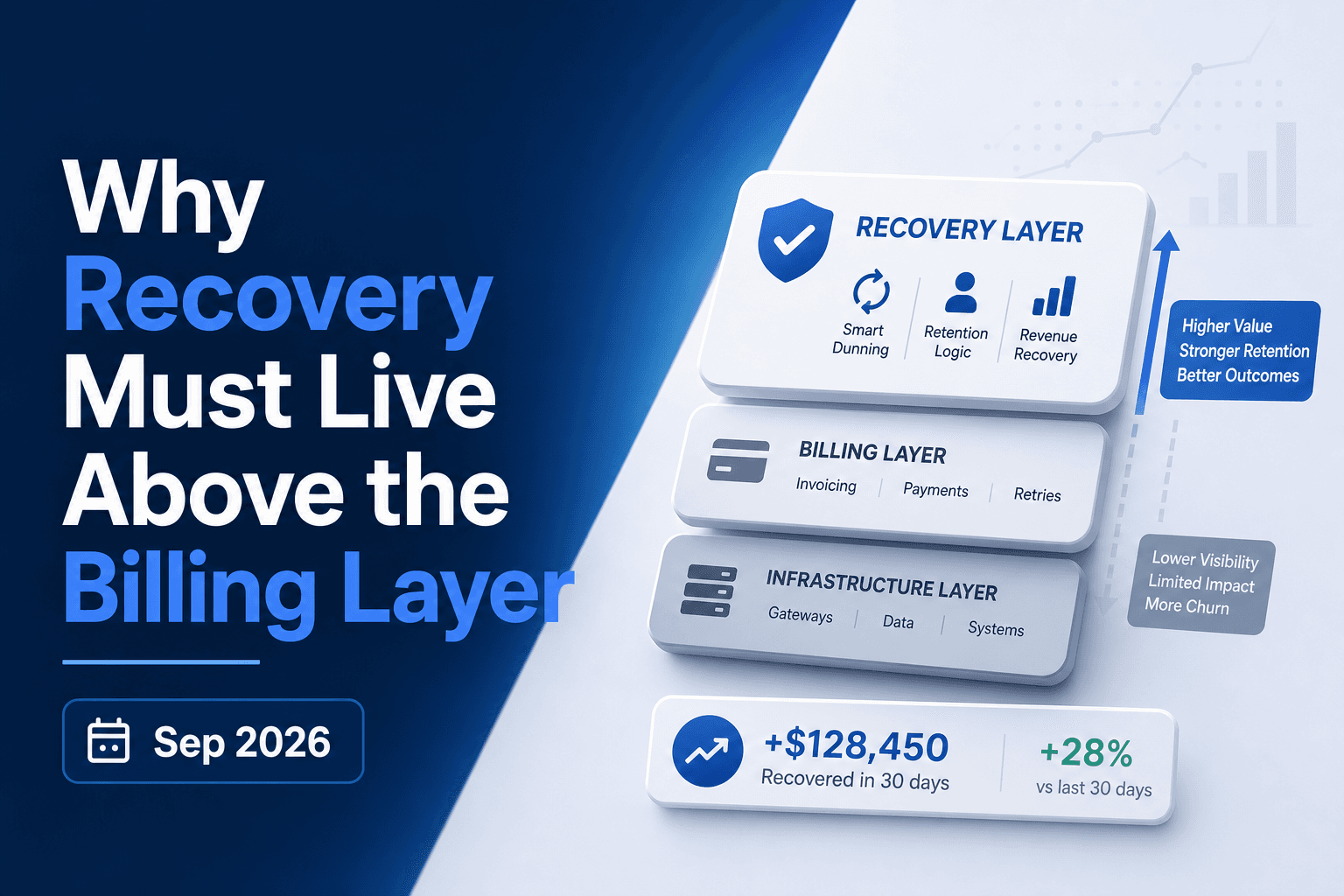
Why Payment Recovery Must Live Above Billers October 2026
A payment fails. Your biller retries it three days later, then again at seven, then at fourteen. What the biller never checks is whether the issuer sent a...
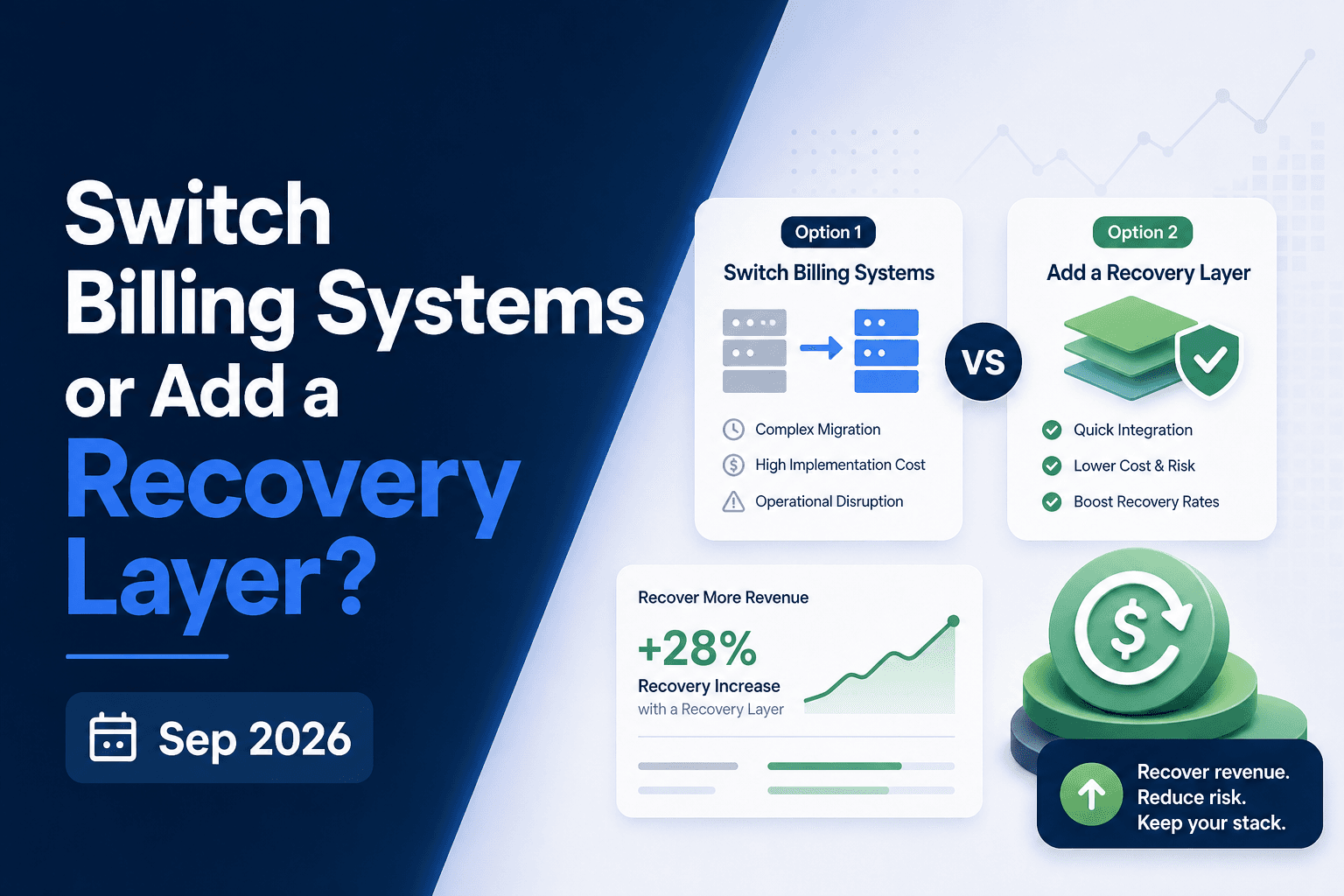
Billing Migration vs Recovery Layer: The Right Call October 2026
Switching billing systems feels like the right move when revenue collection starts breaking down. Sometimes it is. But soft declines, weak retry logic, and...
Stop losing revenue to failed payments
Join leading subscription businesses using Slicker to recover failed payments automatically.
Get Started