What Is a Recurring Payment? Examples & How It Works (October 2026)
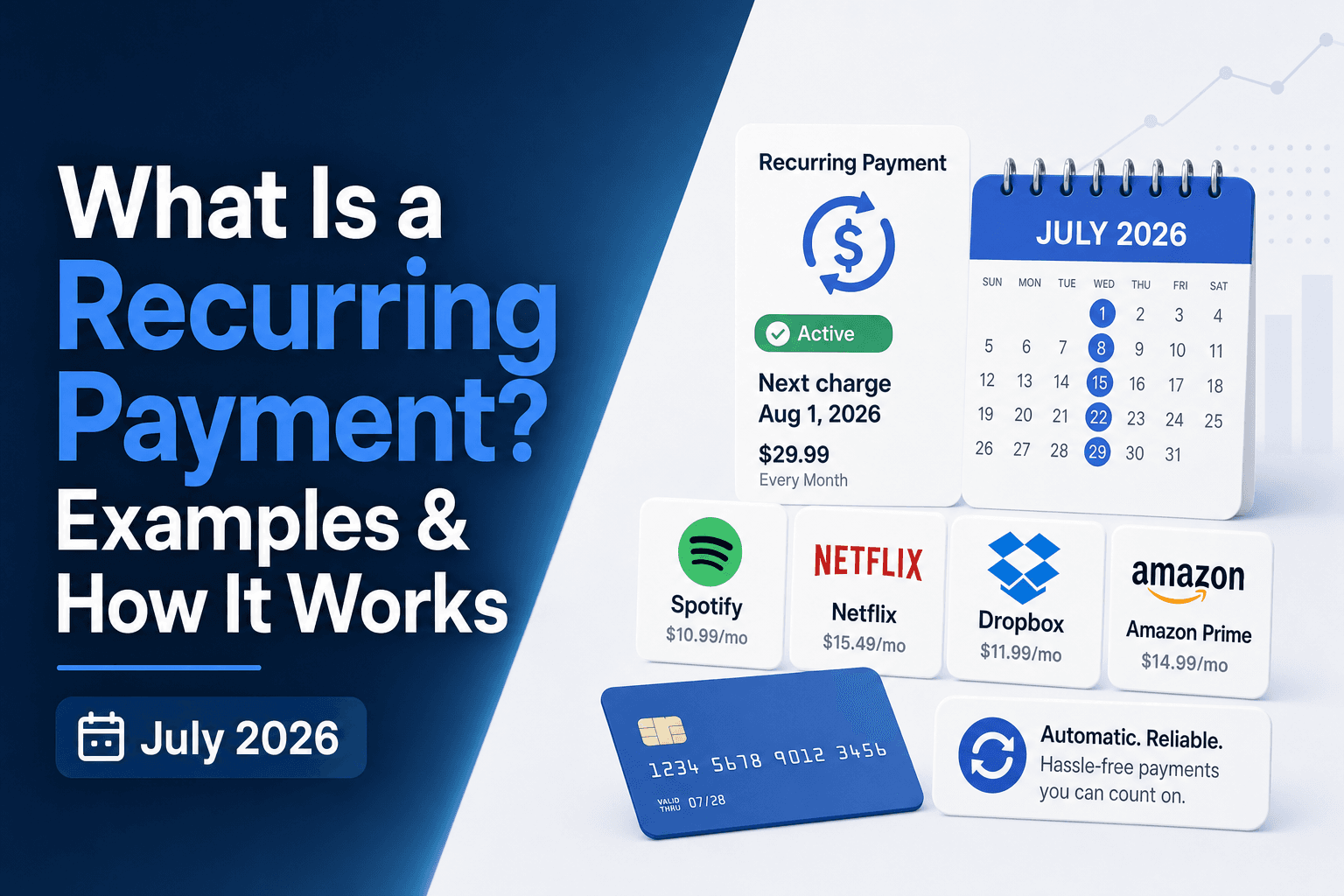
Most of us have more recurring payments running in the background than we realize. Your monthly streaming subscriptions, your phone plan, maybe a PayPal or Apple Cash recurring charge, and that Starbucks auto-reload that triggered a $25 charge you weren't expecting: they're all the same thing: pre-authorized charges your card or bank account pays out on a schedule, without you doing anything. Understanding what a recurring payment actually is, how it differs from a non-recurring payment or a standard autopay, and exactly how to stop one when you need to is the kind of thing that saves you real money.
TLDR:
- A recurring payment is a pre-authorized charge collected on a fixed schedule, with no manual approval needed per cycle.
- Autopay is a subset of recurring payments; every autopay is recurring, but not every recurring charge is autopay.
- 73% of consumers prefer subscriptions because predictable costs require no action each billing cycle.
- To stop a recurring payment, cancel with the merchant first; contact your card issuer if charges continue after cancellation.
- Slicker's ensemble of AI models analyzes over 40 variables per transaction to find the optimal retry window for failed recurring charges, verified on your own data via AABB (A/A-B/B) testing.
What Is a Recurring Payment?
A recurring payment is a pre-authorized charge that a business collects from a customer on a fixed schedule, whether weekly, monthly, or annually, without requiring the customer to manually approve each transaction. You give your payment details once, and the business pulls the agreed amount automatically on each due date.
Fixed vs. Variable Recurring Payments
Recurring payments split into two broad categories based on how the charge amount behaves over time.
Fixed recurring payments charge the same amount every cycle. A $15.99 Netflix subscription or a $99/year software license hits your account for the exact same figure each period, no surprises.
Variable recurring payments fluctuate based on usage, consumption, or agreed-upon terms. Your electricity bill, a metered SaaS seat, or a pay-as-you-go phone plan all fall into this bucket.
Type | Amount | Examples |
|---|---|---|
Fixed | Same every cycle | Streaming subscriptions, annual software licenses |
Variable | Changes each cycle | Utility bills, metered SaaS, usage-based phone plans |
Understanding which type you are dealing with matters for budgeting and for managing your bank statement, since variable charges can trigger fraud flags if they swing too far from a cardholder's expected spending pattern, contributing to the hidden cost of failed payments that businesses often underestimate.
Recurring Payment Examples
Recurring payments show up across nearly every area of consumer and business spending. A few common examples:
- Streaming services like Netflix or Spotify charge a fixed monthly fee automatically to your card on file.
- SaaS subscriptions such as Adobe Creative Cloud or Slack bill monthly or annually without requiring manual payment each cycle.
- Gym memberships and insurance premiums follow a set schedule, debiting your account on the same date each month.
- Utility autopay enrollments charge whatever the variable balance is, pulling the amount directly from your bank account.
- Starbucks Rewards reloads are a frequently searched case: the app charges your card when your balance drops below a threshold you set.
The unifying thread across all of these is that the merchant has authorization to charge you on a defined schedule without you initiating each transaction.
How Recurring Payments Work
When you pay for a subscription, the merchant stores your payment credentials (card number, bank account details, or digital wallet token) after your initial authorization. Each billing cycle, they submit a charge request to their payment processor, which routes it through the card network to your issuing bank for approval. This is made possible by payment tokenization, which replaces raw card data with a secure surrogate value.
Most recurring charges run as merchant-initiated transactions (MITs), meaning the merchant triggers the charge without you actively approving each one.
The Core Steps in Every Cycle
- Your card details are stored securely via tokenization, replacing raw card data with a unique token that the processor can charge on a schedule.
- On the billing date, the merchant submits a charge request flagged as recurring, which signals to your bank that prior authorization exists.
- Your bank approves or declines based on available funds, fraud signals, and card status, then returns a response code to the merchant.
- If approved, funds settle within one to three business days depending on the card network and processor.
A decline at step three breaks the cycle and triggers involuntary churn (losing a subscriber due to a payment failure, not a cancellation decision), which is why retry logic and recovery systems matter.
Common Payment Methods for Recurring Billing
Credit cards and debit cards are the most widely used methods, accepted by nearly every subscription service. ACH and SEPA bank transfers are common for larger B2B invoices where lower processing fees matter. Digital wallets like PayPal, Apple Pay, and Google Pay are growing fast, especially for consumer subscriptions. Some services also accept prepaid cards, though these carry higher decline rates since balances can run out unexpectedly.
Benefits of Recurring Payments
For businesses, recurring billing converts lumpy one-time revenue into forecastable monthly recurring revenue (MRR), which makes cash flow planning and headcount decisions far more grounded. Charges process automatically, cutting billing administration, and subscribers on auto-pay tend to stay longer, lifting customer lifetime value (CLV) and reducing the risk of involuntary churn vs voluntary churn confusion that can skew retention reporting.
On the consumer side, 73% of consumers prefer subscriptions because costs are predictable and access continues without any action required each cycle.
Challenges and Risks of Recurring Payments
Recurring payments are convenient by design, but that convenience comes with real risks worth understanding before you sign up for anything.
Common challenges to watch for
- Failed payments happen more often than most people expect. Cards expire, banks flag unusual charges, and insufficient funds can trigger automatic cancellations without any warning to you. Businesses increasingly look to recover failed subscription payments without email dunning to minimize customer friction.
- Forgotten subscriptions quietly drain accounts over months or years. Many consumers report paying for services they stopped using long ago.
- Unauthorized charges do occur. If a merchant continues billing after you cancel, disputing the charge through your bank or card issuer is your primary recourse.
- Subscription fatigue is real. When too many recurring charges stack up, tracking total monthly spend becomes genuinely difficult.
Understanding these risks puts you in a better position to manage recurring payments proactively, staying ahead of problems before they compound.
What Does a Recurring Payment Mean on a Bank Statement?
When a recurring payment shows up on your bank statement, it typically appears with a label like "Recurring Payment," "Autopay," or "ACH Debit," followed by the merchant name. The exact wording depends on your bank and how the merchant submitted the transaction.
Chase, for example, flags these as "Recurring Payment" in online banking. Apple Cash shows them under scheduled or automatic transfers. If a charge looks unfamiliar, check the merchant name against any subscriptions you may have set up and forgotten.
Is a Recurring Payment the Same as Autopay?
Autopay is a consumer-facing label for instructing a biller to pull payment automatically on a due date. Recurring payment is the broader technical category that contains it. Every autopay arrangement is a recurring payment by definition, but the reverse is not true. Subscriptions, direct debits (ACH in the US, SEPA in Europe), and standing orders all qualify as recurring payments, even when no one used the word "autopay" at signup.
What Is a Non-Recurring Payment?
A non-recurring payment is a one-time transaction with no automatic repeat. In consumer banking, it flags a charge outside your normal spending pattern: a single wire transfer or a standalone fee that won't appear on your statement again.
In business finance, the term covers two distinct categories:
- Non-recurring expenses are unusual costs excluded from run-rate analysis, such as restructuring charges, legal settlements, and asset write-downs.
- Non-recurring income covers proceeds from one-off events like asset sales or insurance payouts.
Finance teams strip both out when modeling ongoing performance, since including them distorts period-over-period comparisons.
How to Stop a Recurring Payment
Four practical paths exist for stopping a recurring payment, and the right one depends on how urgently you need the charge blocked.
- Cancel directly with the merchant through their app or account settings. This is the cleanest route and stops future charges before they queue.
- Contact your card issuer to revoke the authorization and request a chargeback on any post-cancellation charges that slipped through.
- For debit card recurring charges, notify both the merchant and your bank in writing before the next billing date. Written notice creates a paper trail if a charge processes anyway.
- Use a virtual card number locked to that merchant and delete it. Future charges get declined without affecting your primary account.
In most jurisdictions, you have a legal right to revoke a recurring payment authorization at any time. Cancel before your next billing date to block that cycle's charge; cancel after it posts and you'll need to dispute it.
What Happens When a Recurring Payment Fails?
When a recurring payment fails, the outcome depends on why it failed. Soft declines (temporary issues like insufficient funds) are often recoverable through retries. Hard declines (stolen cards, closed accounts) require the customer to act.
Most billing systems respond with a basic retry sequence, but timing and frequency matter; understanding why smart retries beat fixed retry schedules is key to avoiding additional declines or card network penalties.
Unrecovered failures become involuntary churn: lost revenue from subscribers who never intended to cancel, which is why a subscription payment retry strategy is a core requirement for every recurring billing business.
How Slicker Recovers Failed Recurring Payments for Subscription Businesses
For subscription businesses, unrecovered failed payments are revenue that was already earned. Slicker's ensemble of AI models analyzes over 40 variables per transaction, including card type, issuing bank, geographic payday patterns, and time of day, to find the optimal retry window for each individual charge.
Before any commitment, that lift is verified through AABB testing in payment recovery: a crossover clinical-trial design that splits your real transaction traffic, measures dollars recovered, and reports statistical significance on your own data. Setup takes under 5 minutes with no-code integration across Stripe Billing, Chargebee, Recurly, Zuora, and Recharge, and requires zero engineering resources from your team, making it easy to follow automatic payment retry best practices from day one.
Final Thoughts on Recurring Payments
Recurring payments are simple by design: agree once, get charged on schedule. The nuance is in knowing when something has gone wrong, how to read a charge on your bank statement, and how to stop a payment before it posts again. For subscription businesses, the real cost is in the failed payments that never recover. Connect with Slicker to see how AI models can find the right retry window for each individual charge, verified on your own data.
FAQ
Is a recurring payment the same as autopay?
Autopay is a consumer-facing label for instructing a biller to pull payment automatically on a due date; recurring payment is the broader technical category that contains it. Every autopay arrangement is a recurring payment by definition, but not every recurring payment uses the word "autopay" at signup. Subscriptions, direct debits (ACH in the US, SEPA in Europe), and standing orders all qualify as recurring payments regardless of how they were labeled when you authorized them.
What does a recurring payment mean on a bank statement from Chase or Apple Cash?
The label depends on how your bank displays the merchant's transaction type: Chase typically flags these as "Recurring Payment" in online banking, while Apple Cash shows them under scheduled or automatic transfers. If a charge looks unfamiliar, match the merchant name against any subscriptions you may have set up and forgotten, since the displayed name often reflects the merchant's legal entity and not the product name.
How do I stop a recurring payment on a credit card or debit card?
Cancel directly with the merchant through their app or account settings first, since this is the cleanest route and stops future charges before they queue. If a charge processes after you cancel, contact your card issuer to revoke the authorization and request a chargeback on any post-cancellation amount. For debit cards, notify both the merchant and your bank in writing before the next billing date to create a paper trail if a charge processes anyway.
Recurring payment vs. direct debit: what is the actual difference?
A direct debit is one specific mechanism within the broader recurring payment category, where the merchant pulls funds directly from your bank account on a schedule (ACH in the US, SEPA in Europe, BACS in the UK). Recurring card payments work differently: the merchant stores a card token and submits charge requests to the card network each billing cycle. Both qualify as recurring payments, but they run through entirely different payment rails with different failure modes and recovery paths.
What happens to a subscription business when a recurring payment fails and goes unrecovered?
An unrecovered failed payment becomes involuntary churn: lost revenue from a subscriber who never chose to cancel. Industry data shows 9% of subscription revenue is lost to failed payments, and 20 to 40% of all churn is involuntary, meaning it is not a deliberate cancellation decision. Slicker's AI models analyze over 40 variables per transaction, including card type, issuing bank, and geographic payday patterns, to find the optimal retry window for each individual charge and recover that revenue before it becomes a lost subscriber.
Related Articles
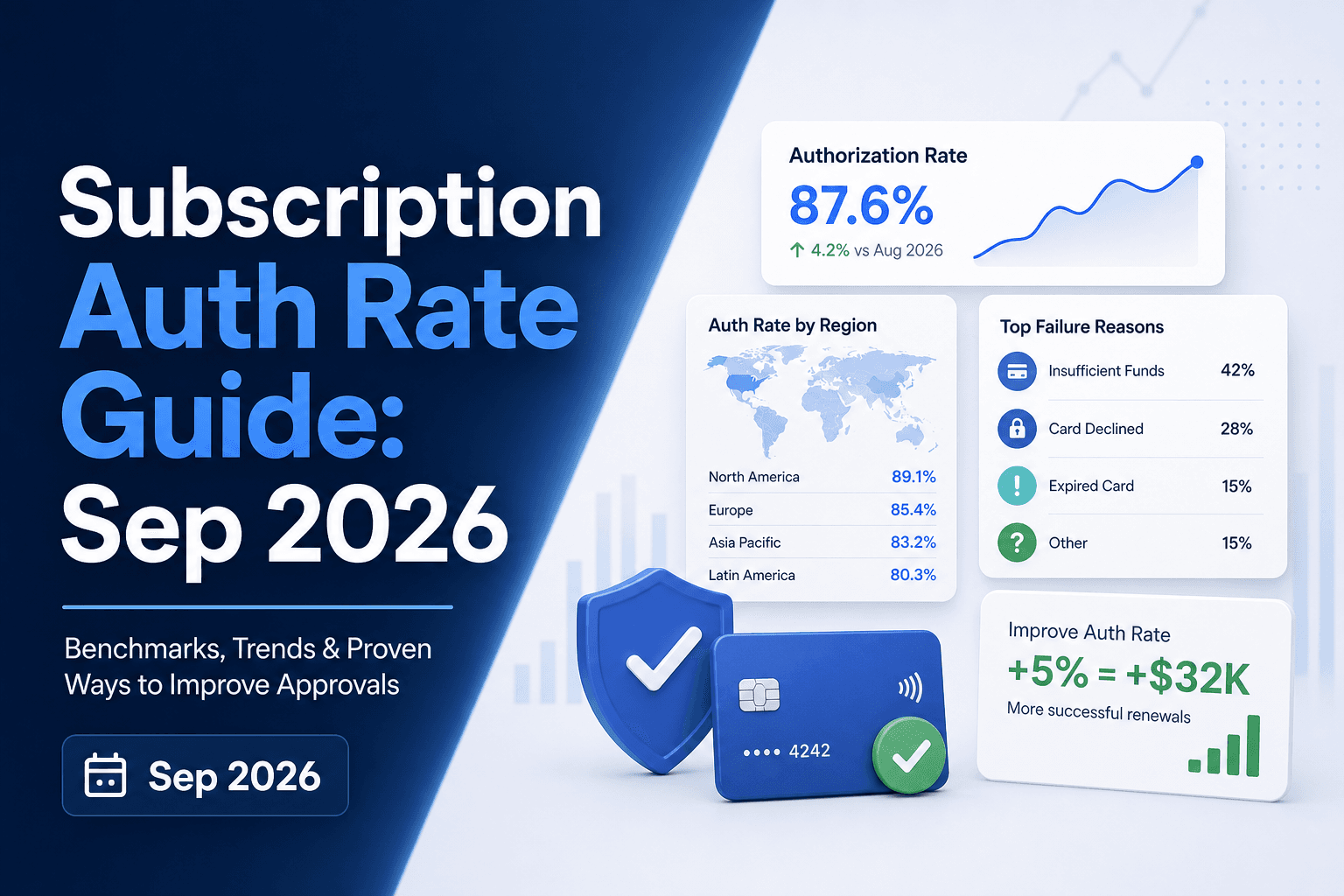
Authorization Rate in Subscription Billing: October 2026
There's a number sitting in your payments data that most finance and retention teams never report on separately: the share of renewal charges your issuing...
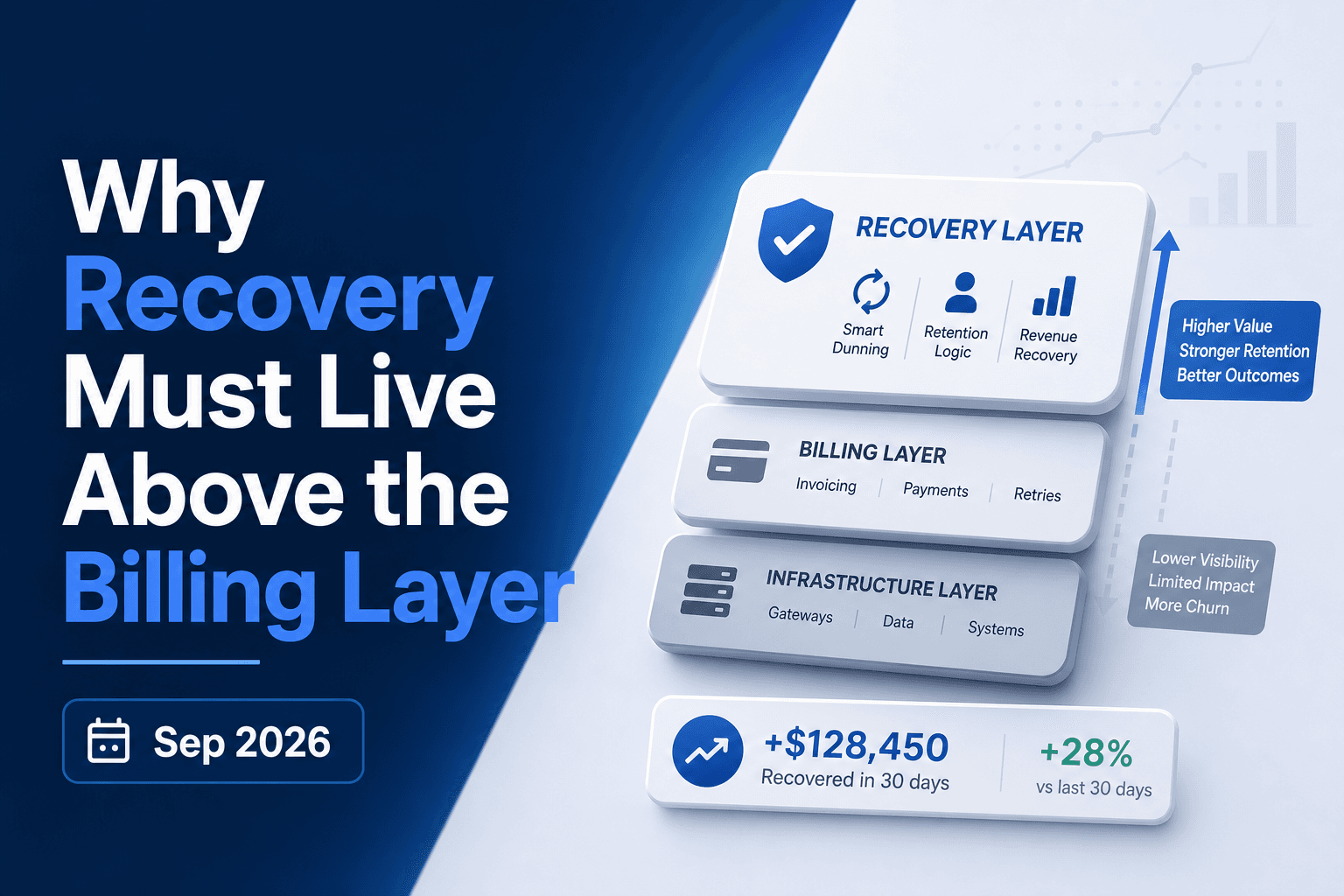
Why Payment Recovery Must Live Above Billers October 2026
A payment fails. Your biller retries it three days later, then again at seven, then at fourteen. What the biller never checks is whether the issuer sent a...
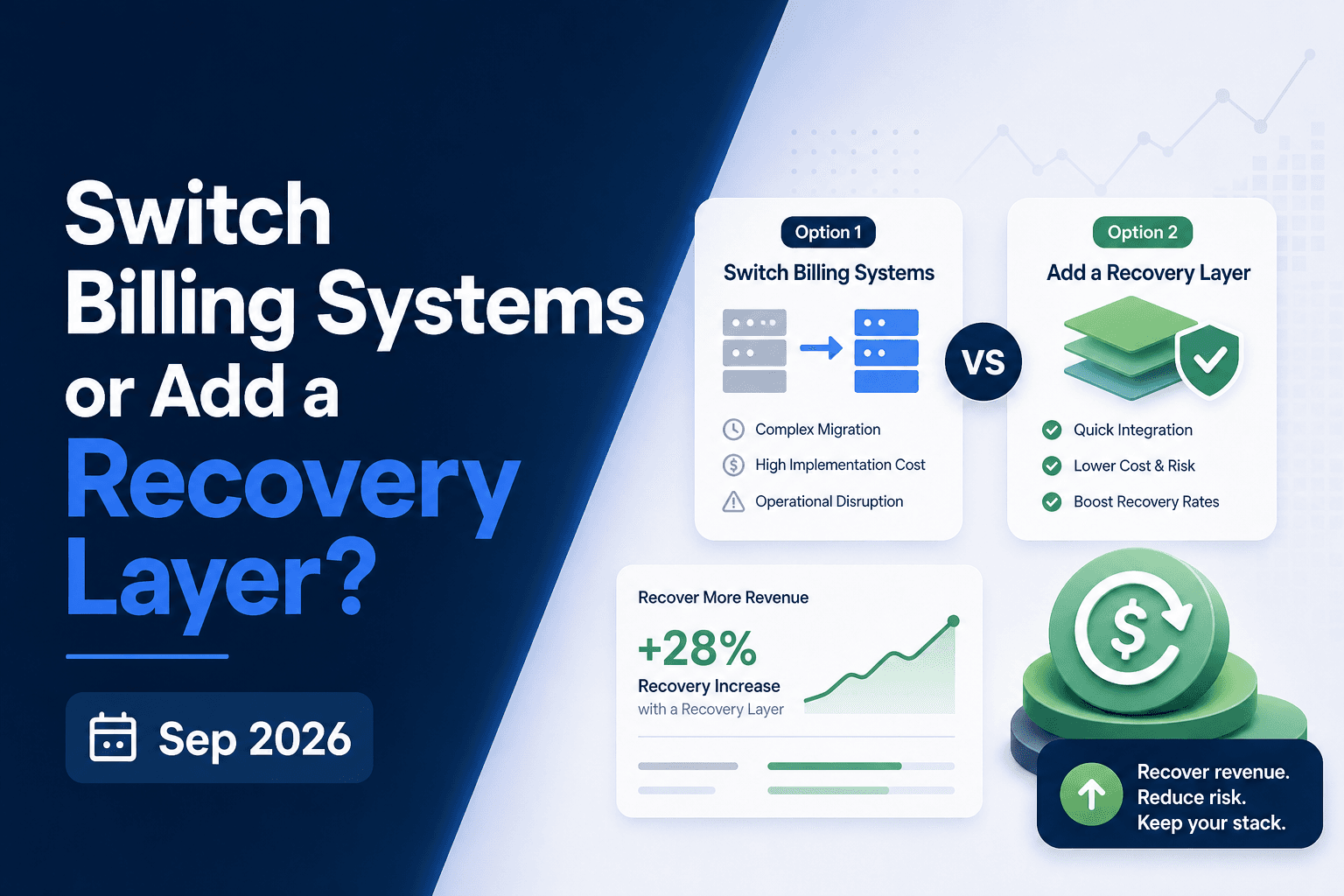
Billing Migration vs Recovery Layer: The Right Call October 2026
Switching billing systems feels like the right move when revenue collection starts breaking down. Sometimes it is. But soft declines, weak retry logic, and...
Stop losing revenue to failed payments
Join leading subscription businesses using Slicker to recover failed payments automatically.
Get Started